
Customer relationship is a special type of relationship. It begins when a customer starts dealing with your company. Every company is responsible for building customer satisfaction and loyalty. Every customer interaction with the company has an impact on clients. The relationship includes sales support, technical support, and marketing communications. Customer relationships can be measured by customer satisfaction.
Benefits of Good Customer Relationships
- Competitive advantage - Stand out from competitors through superior customer relationships
- Customer retention - Keep customers coming back for repeat business
- Customer loyalty - Build brand advocates who recommend you to others
- Increased revenue - Loyal customers spend more and have higher lifetime value
- New customers - Satisfied customers refer friends and family
- Brand awareness - Strong relationships amplify your brand message
- Customer satisfaction - Happy customers are the foundation of business success
What Are the Principles of Good Customer Relationships?
- Active listening - Truly hear what your customers are saying and understand their needs
- Showing empathy - Put yourself in your customer’s shoes and respond with understanding
- Personalized customer experience - Treat each customer as an individual with unique needs
- Understanding/knowing your customers - Use CRM systems to maintain comprehensive customer data and insights
How Do You Build Customer Relationships?
Automate Processes
To retain customers, your company needs to establish automation processes. Let’s divide them into categories to explain this. There can be ‘internal automation" and “external automation”.
Internal automation is to make the internal processes work smoothly. For example, for different departments and agents, you can set automated ticket distribution. This helps your agents work efficiently.
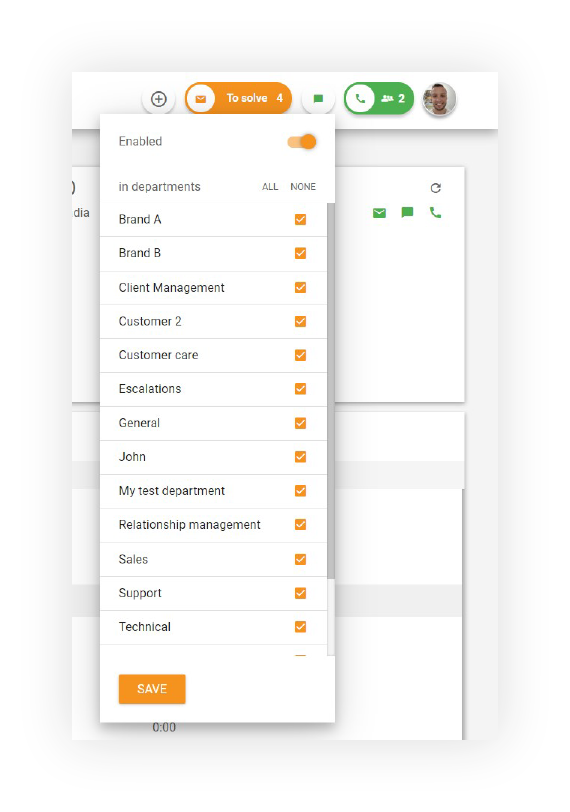
On the other hand, creating external automation, such as email marketing, can help you keep in touch with your customers. Both automation processes have one thing in common, which is that they help you retain your customers in different ways.
Share Customer Data with Different Departments
To share customer data safely, you can use customer service software. This software will help you create SLAs, Rules, and more. Thus, the customer information will be only shared with employees/departments that are allowed to view this.
Personalize Each Customer Experience
Here are a few ways to create a personal customer experience:
- Call the customer by their first name - Use their name to make interactions feel personal
- Use the customer data for better customer experience - Leverage information you have about them
- Keep it positive - Maintain an upbeat, helpful tone in all interactions
- Self-service option/experience - Empower customers to find solutions independently
Communicate
Communication is key in any relationship. So, it should not surprise you that it is no different from customer relationships. To establish these, you need to communicate with customers on many platforms. For instance: Facebook, Twitter, Email, or in real life. Everywhere you get a chance! This is where your customer service usually comes in.
How Can Customer Service Software Help Your Customer Relationships?
It can be difficult for customer service to take care of all customer inquiries. On top of that, they need to engage with customers on different posts on social media. Thus, having customer service software can help them prioritize the importance of tickets and still managing to answer the posts from social media or other platforms.


Customer service software, such as LiveAgent, can automatically distribute the tickets. Your company can set their preferences based on their needs. This ensures you engage with your customers while also answering regular customer inquiries.
Building Strong Customer Relationships
Building strong customer relationships is vital for the success of any business. Just like in a committed relationship, it requires nurturing and meeting customer expectations. Utilizing customer service software streamlines support, resolves issues promptly, and tracks interactions, improving response times and providing personalized service. Investing in such tools demonstrates a commitment to meeting customer needs, strengthening relationships as the business grows.