
It is a computer system that manages and registers lists of requests for assistance or problems, organized according to the needs of the service provider. Trouble ticketing tool is often linked to a database that contains customer information, products and solution to common problems.
When you receive a new request, tickets are created or open and the goal is to close or fix them, providing the solution to the reported problem.
The main objective of a trouble ticketing tool is to streamline the process of resolving reported problems, ensuring that customer issues are addressed and resolved in a timely manner. By utilizing a reliable tool, businesses can enhance their customer support operations and deliver satisfactory resolutions to customer problems.
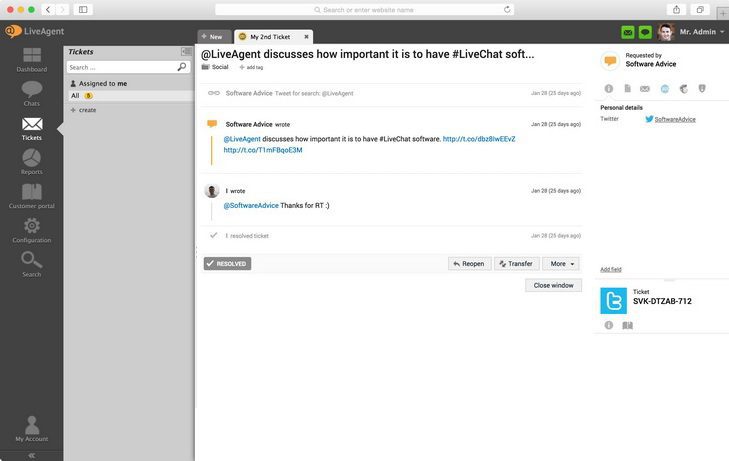
What is the Trouble Ticket Process?
A trouble ticket process is a structured approach for managing and resolving customer-reported issues or service requests. It starts with customers reporting problems through various channels. A customer service representative creates a trouble ticket, documenting details like contact info, issue description, attachments, and priority.
Each ticket receives a unique ID and is directed to the appropriate support team. The assigned person reviews and addresses the issue, updating the ticket’s status as it progresses (e.g., ‘Open," “In progress”, " “Pending”, " “Resolved). Communication with the customer occurs to provide updates.
Once the problem is resolved, the ticket is closed with a summary of actions taken. Some companies perform post-incident analysis for improvements. In essence, the trouble ticket process ensures structured and efficient problem resolution, enhancing the customer experience.
Key Steps in the Trouble Ticket Process
- Problem Reporting - Customers report issues through various channels (email, phone, chat, social media, web form)
- Ticket Creation - Support representative creates a ticket with all relevant information
- Assignment - Ticket is routed to the appropriate support team or agent
- Investigation & Resolution - Agent works on resolving the issue
- Status Updates - Regular communication with customer about progress
- Closure - Ticket is closed once the issue is resolved
- Follow-up - Optional post-incident analysis for process improvement
Benefits of Using a Trouble Ticket System
- Organization - All customer issues are tracked and organized in one place
- Efficiency - Streamlined workflow reduces response and resolution times
- Accountability - Each ticket has a unique ID and assigned owner
- Documentation - Complete history of all customer interactions and resolutions
- Analytics - Track metrics like resolution time, customer satisfaction, and agent performance
- Scalability - Handle increasing volume of customer requests without losing track
- Customer Satisfaction - Faster resolutions lead to happier customers