
It is a commonly used telecommunications term. It describes a type of phone transfer that puts the caller on hold while a customer support rep communicates with the transfer recipient – another agent. If a transfer destination isn’t available, the initial caller is forwarded to another transfer recipient while still having the caller on the line.
The goal of this type of transfer is to avoid forwarding the original caller to an unavailable customer support agent while keeping transfer waits at a minimum. You can even fill the other agent in on any important information about the customer, ticket, or customer’s inquiry.
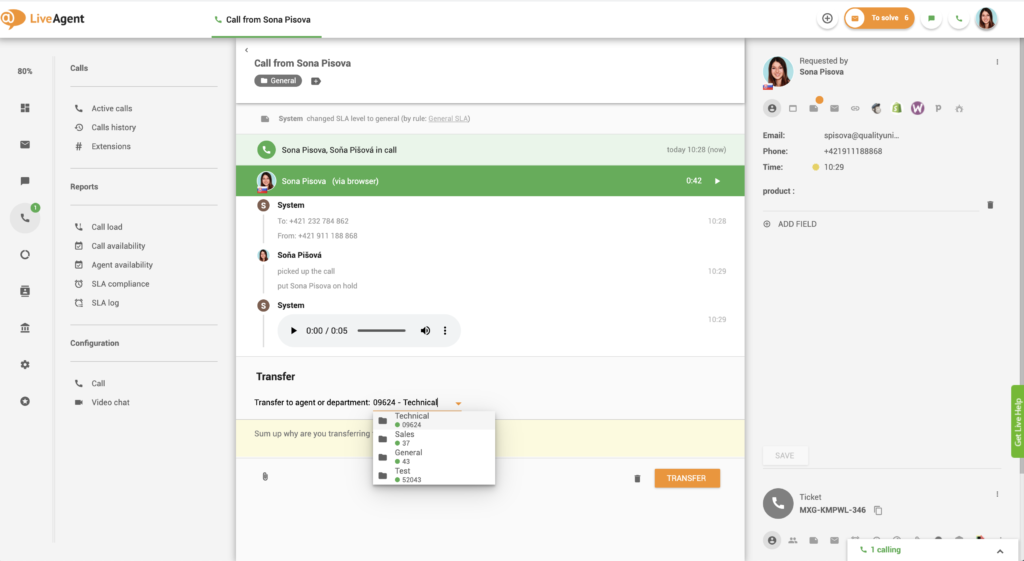
In LiveAgent, the attended transfer option waits until it is picked up, rejected, or simply not answered. If that is the case, the call is transferred to another agent.
Benefits of an attended transfer
Lower abandonment rate – If a customer doesn’t reach the desired agent or department on the first try, or they contact an unavailable representative, they might leave and not come back. This transfer method allows you to forward them right to the person they need to talk to.
Higher customer satisfaction levels – When clients don’t have to spend time on hold just to get forwarded around results in a frustrated caller. With the attended transfer method, the waiting times are reduced and the chances of reaching an informed person that can help them resolve their issues are much higher.
Increased productivity – When agents can get valuable details before picking up a forwarded call, they can improve their call resolution rates. Moreover, keeping the customer on the line while communicating with other agents is an effective way of reducing agents’ idle time.
Lower average handle time – Forwarding incoming calls to available and well-informed agents can significantly reduce the average handle time in your contact center.