



How to End an Email (Tips + Templates)
Learn how to end business emails effectively with tips and templates. Include a smooth closing line, professional sign-off, and contact info. Avoid informal lan...
11 min read
LiveAgent
Email Templates
+1

Discover tips and templates for starting professional emails with appropriate greetings and openers for various business contexts. Enhance your first impression and communication efficiency with LiveAgent’s guides and templates.
With over 300 billion emails sent and received every day, email is an essential means of communication. Figuring out how to start a business email in a professional way – especially when you’re writing to someone you don’t know – can be a challenge for marketers, salespeople, and customer service reps alike.
In fact, how you start your email can make the difference between your recipient closing the email right away (and deleting it) or reading on. The following article provides a few tips on how to start an email along with some of the most common email greetings and email starters you can use in your business correspondence. From transition emails to networking emails, having the right template at your disposal can be a blessing. We also have you covered if you need business email ending templates.
Start with an appropriate greeting depending on how formal you need to be. Always include the recipient’s name (if you know it) to make the greeting more personable. Last but not least, double-check that you’ve spelled the recipient’s name correctly. Our pro tip? Copy and paste their name as seen in previous emails, email signatures, or websites to ensure you don’t make a typo. Having a variety of promotional email templates at your disposal can make your marketing efforts much more efficient and effective.
When writing to someone for the first time, introduce yourself and include a concise sentence about the goal of your email. This sentence can determine whether the recipient will read your email or ignore it, so make sure your purpose is clear and convincing.
If you have mutual friends, colleagues, or acquaintances, mention them as this can increase your chances of getting a response. For example, you could do a subtle name drop like this: ‘Hi [Name], I ran into our mutual friend Richard (from [Company]) over the weekend and he mentioned that you needed a new help desk tool, as your current provider just isn’t cutting it anymore…’
If you haven’t written to the recipient for a long time or if you have a casual relationship with the recipient, it would be appropriate to include a quick, positive note like ‘I hope you’re doing well.’ This can set the right tone for the rest of your email.
Alternatively, if the recipient has shared some updates on LinkedIn or other social media, feel free to congratulate them on their latest achievements (both personal and professional). You could say something like “Congratulations on your promotion” or “Congratulations, it’s exciting to see [Recipient’s Company] acquire such an important client like [Company].’
Based on the context, you can add a short ’thank you’ line to your email correspondence. For example, if your prospect/customer has contacted you with an inquiry, ‘Thank you for reaching out” or “Thank you for contacting [Company]” is a must-have. However, whenever you put in a thank you note, it’s important to make it personalized, as standard thank you notes (like the ones mentioned above) are a bit too generic and can come off as cold or standoffish.
By simply adding a name before your thank you line, the message sounds warmer and inviting. Here’s an example: ‘Emily, thank you so much for contacting [Company] and for raising this issue. You’re absolutely right…’
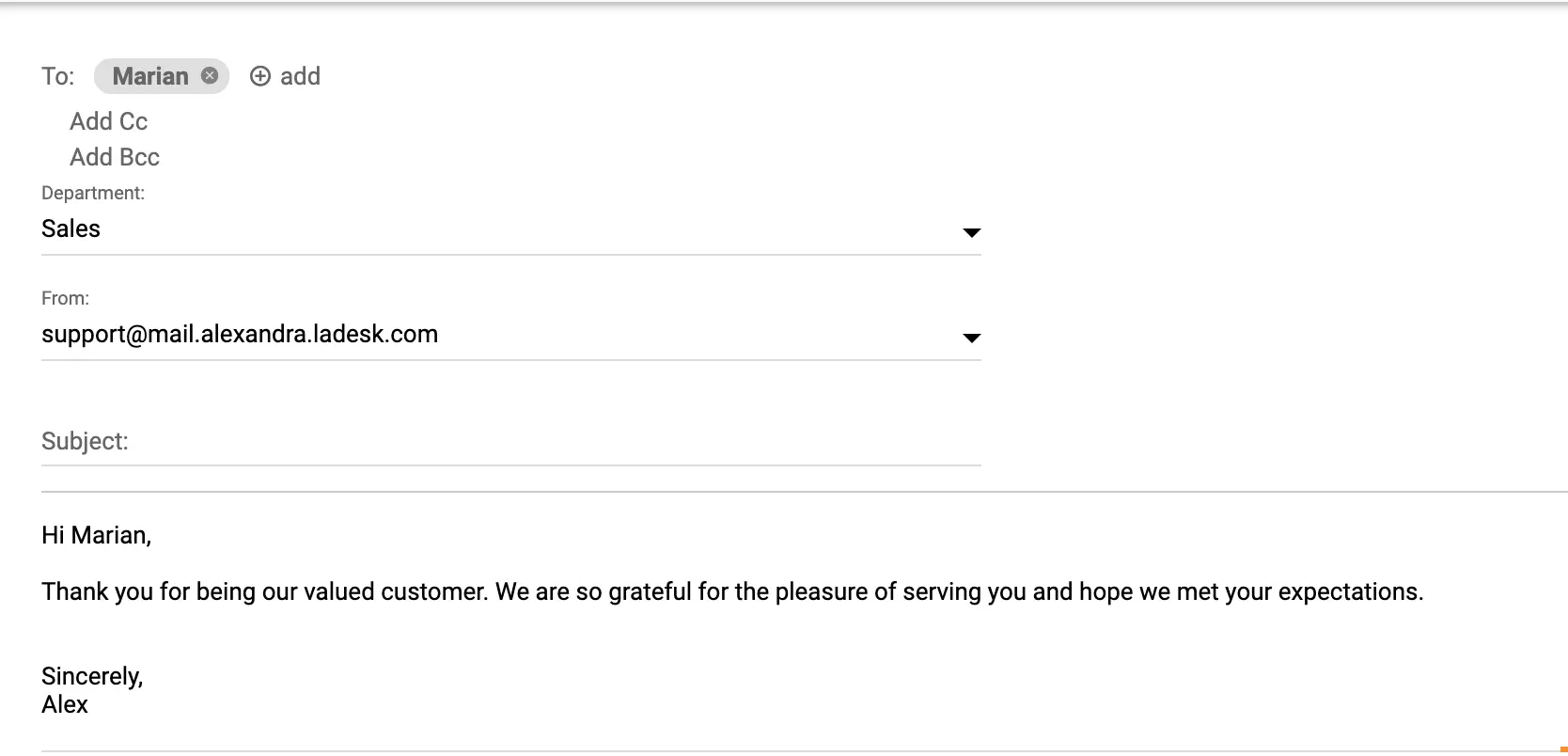
“Hi [Name]” is probably the most common and the most widely used email salutation in the business world. This greeting is generally recommended for semi-formal and informal communication styles. If you want to be slightly more formal, “Hi” can be replaced with “Hello.”
“Dear [Name]” is also appropriate for both formal and informal communication. For your convenience, we’ve prepared a whole list of other generic greetings that you can choose from when starting your professional email. Check them out:
When writing to one or two recipients:
When writing to three or more recipients:
When you are unsure of the recipient’s name:
Following the greeting, you can include a short opening sentence to kick-start your email. However, it’s best to avoid sentences like these if you’re writing a formal email or cold emailing a potential customer, as they can come too friendly. You should also be wary of the tone you’re using in, for example, a company apology letter. Here are some of the most common examples of email openers:
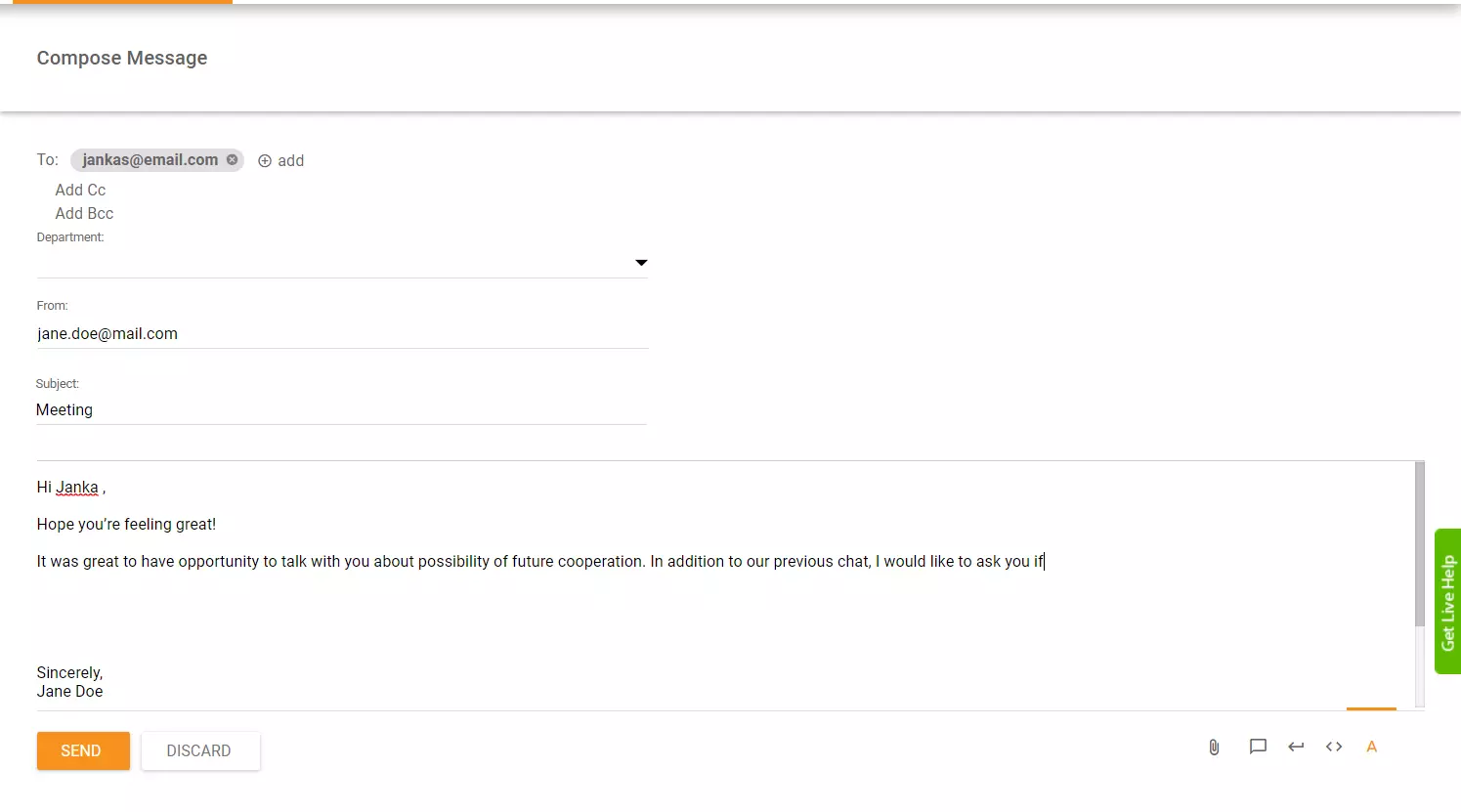
If you’re not sure what to write at the beginning of your follow-up email, consider including one of the following email opening phrases that can break the ice:
When replying to a customer or a prospect, a short ‘Thank you" line is appropriate in many cases. If you’re not sure how to incorporate a ‘Thank you" or need some more inspiration check out some of our alternatives:
When writing a cold email to a prospect, the first paragraph is going to determine whether your prospect will find your message worth reading, so it’s important to impress and stand out. Here are some examples of what you can include in your introductory paragraph:
If you would like to learn more, check out cold sales email templates.
Following up on a prospect, especially if they haven’t replied to your previous message(s) can be tricky. If that’s the case, try out one of these effective email opening sentences– they might be helpful!
If you would like to learn more, check out sales follow-up email templates.
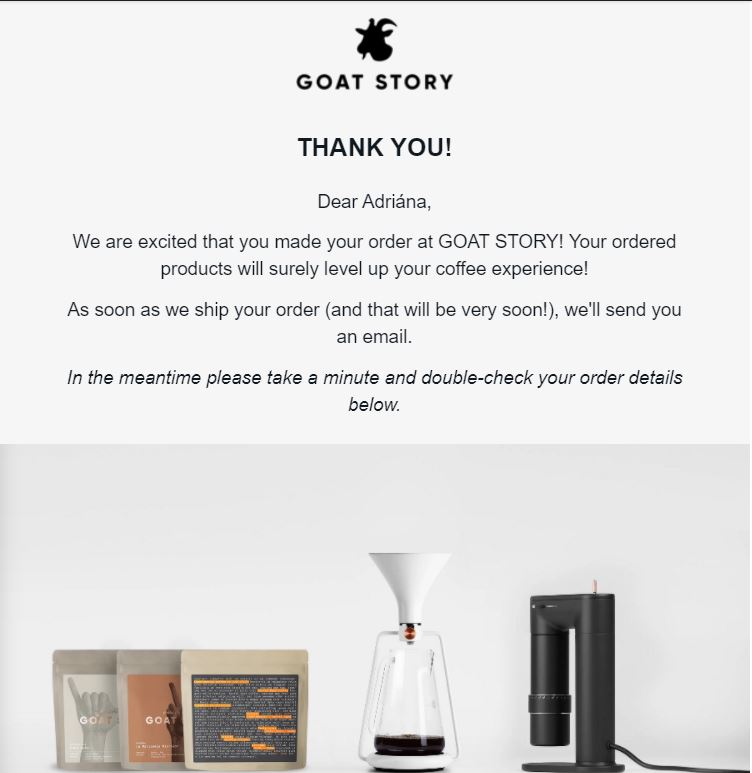
Whenever someone buys your product or signs up for your service, you should thank them, or welcome them to the ‘family’ to ensure your relationship is off to a great start. The best way to do this is by writing a welcome email that includes a thank you note, a short introduction, and any useful information.
Feel free to check more post-purchase email templates and welcome email templates.
Almost every customer service email should start with a “Thank you” note, whether it’s replying to a simple customer service request or answering a customer complaint. Here’s how it can look like:
If you would like to learn more, check out customer service templates.
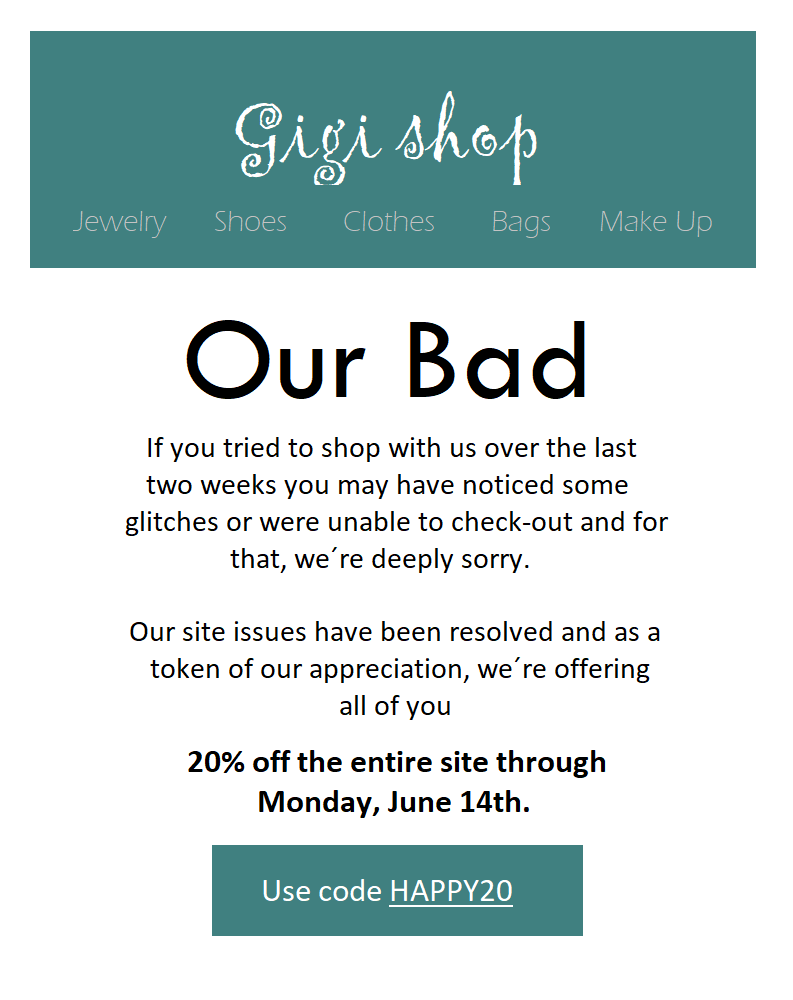
When responding to angry or disgruntled customers, be sure to showcase empathy and send an apologetic email on behalf of your business. Here’s how you can do it:
The start of your business email (the greeting, the opening line, and the first sentence) is the first thing the recipient sees when they open your email. By starting your email in a professional way, you are more likely to create a positive impression on them. The greeting you use and the first few sentences you choose for the start of your professional business emails will depend on your audience and the context of your communication. Use the email greetings and email opening phrases mentioned above as prompts whenever you’re not sure how to start your next email to a customer or a cold prospect.
Remember to double-check your emails for any spelling or grammatical errors, and make sure you always spell the recipient’s name correctly. Our last tip is to keep it short and sweet, as nobody wants to be reading long emails. Get to the point quickly using the right tone of voice, and you’re golden.
LiveAgent is the most reviewed and #1 helpdesk software for small to medium-sized businesses. Try it today with our free 30-day trial. No credit card required.
Learn how to end business emails effectively with tips and templates. Include a smooth closing line, professional sign-off, and contact info. Avoid informal lan...
Learn to craft effective professional introduction emails with tips on subject lines, body text, and common mistakes to avoid. Discover the significance of intr...
Discover what not to do in business emails with examples of unprofessional emails. Enhance your communication skills and professional image by avoiding these co...
Join our community of happy clients and provide excellent customer support with LiveAgent.