
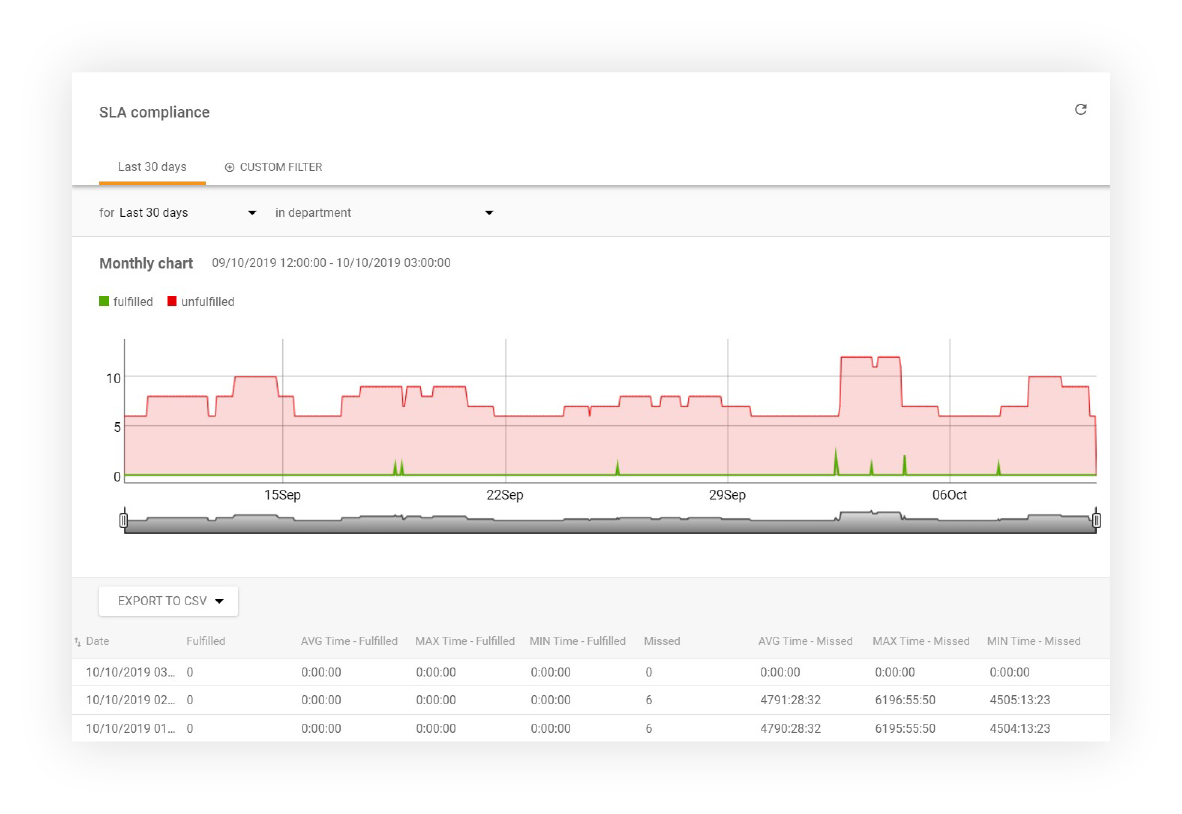
SLA compliance report features
Monitor and track your team's SLA compliance with LiveAgent's reports. Set SLA levels, rules, and export data to CSV. Evaluate performance by department, agent,...
3 min read
SLA
Reporting
+2


SLA (Service Level Agreement) is a contract that defines the level of service expected from a provider, including measurable targets, metrics, and penalties for non-compliance.

SLA is an acronym for Service Level Agreement. A company can define Service Level Agreement policies so that their users can better monitor their service level performance and meet a company's service level goals. Service Level Agreements, or SLAs, are typically agreed upon between companies and their business customers.
SLA usually defines the time in which a ticket has to be replied to or completely resolved. If a company doesn’t comply with the agreed SLA policies, SLA violations occur. Often, they have to undergo penalties associated with SLA Violations, because many companies, especially large businesses, and enterprises, have their Service Level Agreements in writing.
Managing SLAs becomes easier with help desk management software, ensuring timely and efficient service. Many IT help desk ticketing system solutions include SLA rules in their list of features. Contrary to popular belief, not only big IT enterprises rely on SLAs to both receive and deliver the best level of support. Most customer-centric businesses use some form of SLA policy.
SLAs in LiveAgent work as a combination of SLA Levels and SLA Rules. This combination allows organizations to:
An effective Service Level Agreement typically includes:
Monitoring SLA compliance is crucial for maintaining service quality. LiveAgent provides tools to help you:
By implementing and monitoring SLAs effectively, organizations can ensure consistent, high-quality customer service while meeting business objectives.
Define service level agreements and track compliance with LiveAgent's SLA management. Never breach an SLA again.
Monitor and track your team's SLA compliance with LiveAgent's reports. Set SLA levels, rules, and export data to CSV. Evaluate performance by department, agent,...

LiveAgent's SLA Log Report tracks fulfilled and missed SLAs, sortable by various parameters and exportable to CSV, enhancing customer service efficiency. Availa...
Learn about Service Level Agreements (SLAs) and their role in defining customer expectations and provider responsibilities. Discover how LiveAgent's SLAs boost ...
Join our community of happy clients and provide excellent customer support with LiveAgent.