
First Contact Resolution
Boost customer satisfaction and loyalty with first contact resolution (FCR). Learn its benefits, best practices, and how to improve rates.
13 min read
Customer support
Customer satisfaction
+3


First Call Resolution (FCR) is a key customer service metric that measures a company’s ability to resolve issues on the first interaction, enhancing customer satisfaction and reducing costs.

First call resolution (FCR) is also referred to as first contact resolution or one call resolution. It is one of the most critical customer service metrics in the contact center industry. It measures the company's ability to resolve customer issues and inquiries in the first interaction, with no escalations or follow-ups required by the customer service agents.
The customer experience improves with a successful first call resolution, as they get their elaborate or common questions answered and requests resolved during the initial contact.
Having a high FCR rate means preventing any dissatisfied customer and increasing customer retention.
First call resolution is an essential metric to gauge your overall customer satisfaction score. This ties into the quality of customer service and support your business provides.
The speed of service delivery and your support team’s ability to resolve customer issues in the first interaction is an important characteristic of exceptional customer service. Consumers naturally prefer to get their requests handled by a single agent during a single customer interaction.
That is why a high FCR rate is almost always associated with satisfied customers. FCR also helps contact center leaders measure the efficiency of their contact center agents.
To calculate your first call resolution rate (or first contact resolution rate), you need to divide the total number of resolved cases on the first outreach by the total number of received cases during the given period (can be calculated daily, weekly, monthly, etc.).
This FCR calculation method uses the following formula:
FCR = (Total Resolved Cases / Total Number of Cases) x 100%
External FCR measurement methods are considered to be the most accurate. They let customers judge whether their issues were resolved successfully on first contact. A simple question can be asked during the call. You can also use post-call phone or email customer surveys to get customer feedback.
The internal measurement methods tend to have less accuracy since the organization determines whether they achieved FCR based on their own standards (usually whether the customer contacts called back regarding the same complex issue within a certain time period).
Various studies indicate, the industry standard for a good first call resolution rate is between 70 to 75%. Which means that around 30% of customers have to call back regarding the same issue.
In general, over 90% FCR rate is considered high, while anything under 40% is considered low.
The higher your FCR rate, the better the quality service you provide. However, your measure of FCR may greatly differ across industries. Depending on how complex your product or service is.
A higher first call resolution rate results in increased customer satisfaction, efficiency, and cost savings for businesses.
In fact, based on a study by SQM Group, the majority of consumers calling a call center expect their issues to be resolved on the first call. The study also revealed that:

When trying to improve FCR rates, businesses often face a number of challenges. Most call center managers struggle to define and measure it correctly.
Another common challenge may be inefficient internal processes. These could be agent knowledge gaps due to insufficient or inaccessible information, high agent turnover, lack of proper agent training and lack of authority to resolve common issues without escalating them further.
Since first call resolution is a complex call center metric, it can be affected by numerous factors. In addition to the challenges mentioned above, FCR can be influenced by the following:
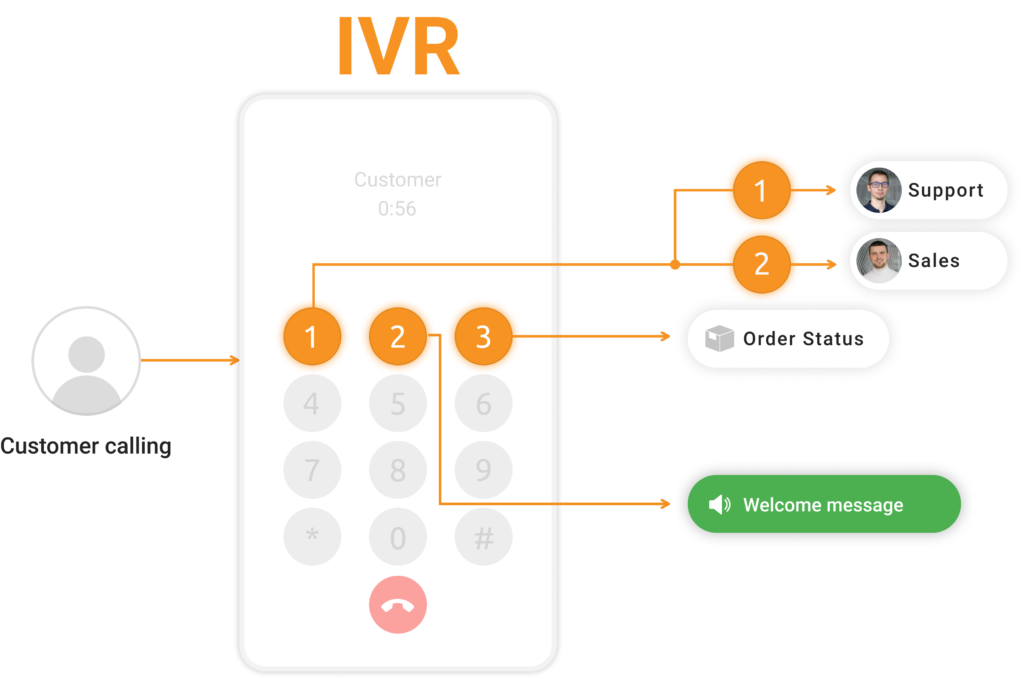
ACDs and IVRs usually route incoming calls to the most appropriate departments or agents that are best suited to meet customers’ needs. The effectiveness of these call routing systems has a major impact on efficient first call issue resolutions.
Companies selling complex products or services (usually IT and SaaS), are likely to have lower first call resolution rates. It is due to the complexity of typical customer calls (e.g., troubleshooting technical issues may require more escalations and follow-ups).
Callers may be put on hold for a number of reasons, such as when an agent needs to refer to a knowledge base or verify customer information. Long hold times may lead to negative experiences and abandoned calls. These ultimately result in lower first call resolution rates.
If agents don’t have immediate access to comprehensive customer information (history of previous interactions, purchase history, etc.), lack accurate product knowledge, don’t have access to an internal knowledge base, they are less likely to resolve customer issues on the first attempt. Equipping agents with professional contact center software that offers a 360-degree customer view and provides easy access to in-depth internal knowledge resources is critical to improving FCR.
If agents aren’t authorized to perform certain actions (like issue returns, apply discounts, handle billing issues) or make decisions without getting approval from their superiors, it might lower FCR rate. Reviewing company policies and procedures and empowering agents with more authority to resolve issues can have a positive effect on FCR rates.
Call center agents should be well-informed about a company’s products/services. They should be trained on how to handle various queries, troubleshoot complex issues and work with difficult customers. The regular coaching and cross-training of agents ensures they always have the right knowledge and are well prepared to handle customer requests within the first contact.
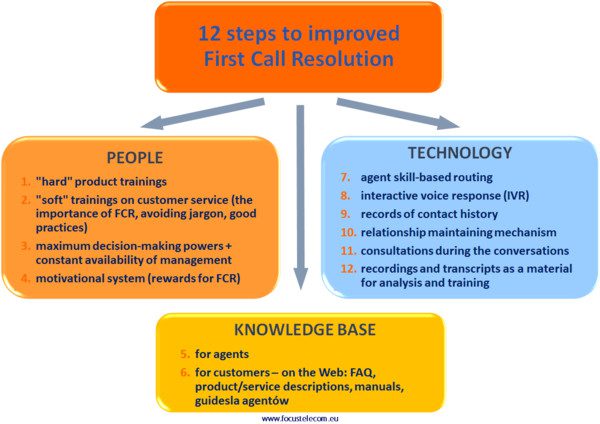
Improving first call resolution is an important goal for call centers. Below are some of the tips and action steps you can take to improve your FCR rate:
Empower agents with instant access to customer data, knowledge base, and CRM integration. Increase FCR rates, reduce costs, and enhance customer satisfaction with LiveAgent.
Boost customer satisfaction and loyalty with first contact resolution (FCR). Learn its benefits, best practices, and how to improve rates.
Boost customer satisfaction with expert tips on call resolution. Learn how to measure, improve, and tackle challenges effectively!
Boost customer service satisfaction with strategies, CSAT tools, and LiveAgent to exceed expectations. Learn how to measure and improve satisfaction metrics.
Join our community of happy clients and provide excellent customer support with LiveAgent.