

12 Must-have customer service soft skills: Do's and dont's
Discover the 12 must-have customer service soft skills for 2025 that are essential for building strong relationships, boosting satisfaction, and creating positi...
12 min read
Soft Skills


Essential abilities needed to interact effectively with customers, including both hard skills (technical abilities) and soft skills (personal attributes like empathy and communication) that drive customer satisfaction and loyalty.

Customer service skills are the abilities you need to interact effectively with customers. Whether you're chatting online, talking over the phone, or meeting face-to-face, these skills are crucial for solving problems, answering questions, and providing a positive customer experience. Skills can be divided into two main categories: hard skills (technical abilities) and soft skills (personal attributes that help you interact and connect with others).
Skills can be divided into two main categories:

To learn more about soft skills, check out our dedicated article. It’s perfect for anyone who wants to master the art of connecting with customers and building long-lasting relationships.
Now that you know the basics, let’s look at the top skills you need to excel as a customer support agent. Plus, we’ll share some tips on how to develop and improve each skill! Developing the right skills requires awareness of the latest customer support trends that shape industry practices.
To master effective listening, you must truly hear what your customer is saying. Take the time to fully understand their issue and let them know you are paying full attention. When you rephrase the issue in your own words and ask the customer if you’ve got it right, it shows that you’re attentive and care about their concerns.
Tips for developing and improving effective listening skills:
Empathy is the ability to understand another person’s emotions and see things from their perspective – it’s about putting yourself in the shoes of others. Being emphatic in customer service helps to build a genuine connection and makes the customer feel valued and understood.
70% of consumers say they are more likely to buy from companies where they feel understood.
Tips for developing and improving empathy:
You’d be surprised how many people struggle to communicate properly with others. Clear communication skills in customer service ensure information is shared accurately and effectively. Losing focus or using unclear language can lead to misunderstandings, resulting in negative customer experiences and frustrated clients.
Tips for developing and improving communication skills:
Knowing the products inside and out is crucial for providing excellent customer service. Otherwise, how will you assist your customers when they encounter a problem?
When customer support agents have deep knowledge of their company’s products or services, they can quickly and accurately answer questions, solve problems, and provide helpful recommendations.
If customer support lacks this knowledge, it can lead to frustration, wasted time, and a negative customer experience.
Tips for developing and improving product knowledge:
In customer service, using positive language is about framing your responses in a way that focuses on solutions and positive outcomes. It helps create a more pleasant interaction and can turn a challenging situation into a constructive one.
For example, instead of saying, “I can’t help you with this issue,’ you could say”, “While this specific issue is outside my scope, let me find a solution for you.”
Using positive language makes customers feel more valued, leading to a more favorable view of your company.
Tips for developing and improving the skill of using positive language:
Problem-solving is mainly about determining the source of an issue and finding an effective solution. These skills are crucial because they help you address customer concerns quickly and efficiently. However, in order to solve a particular problem, you need to identify its cause and fully understand it before offering a solution.
It’s also always a good idea to offer multiple solutions if the situation allows it. Providing various options enables the customer to choose the one that best fits their needs and preferences, making them feel more in control of the situation. It demonstrates your flexibility and willingness to go the extra mile to resolve their issue.
Tips for developing and improving problem-solving skills:
The ability to resolve conflicts is not only welcome but expected in scenarios where there are workplace disagreements or customer disputes. Common conflicts include misunderstandings over product features, billing issues, or even interpersonal conflicts among team members.
To successfully resolve any conflict, you’ll often need to read verbal and nonverbal communication cues, remain calm, and try to understand others’ positions. Finding common ground and ensuring the conflict didn’t arise only because of a small misunderstanding can also help in a peaceful resolution.
Tips for developing and improving conflict resolution skills:
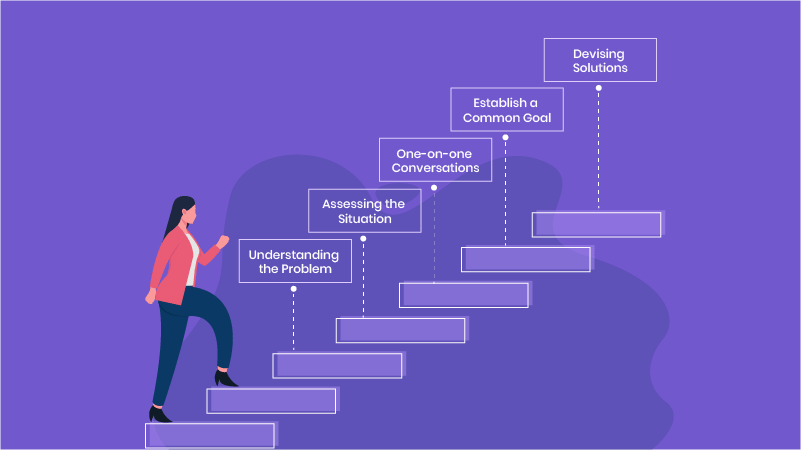
Persuasion skills are about convincing others to see the value in your product or service. When helping interested prospects overcome doubts, these skills are key. With effective persuasion skills, you can ensure that potential customers don’t slip away and instead see how your product or service can truly benefit them.
However, it’s important only to persuade the customer if the product or service will genuinely benefit them. Pushing customers into something they don’t need or that doesn’t fit their requirements can negatively impact the brand.
Tips for developing and improving persuasion skills:
Approaching every interaction with a friendly and helpful mindset is essential to maintaining a positive attitude. In customer service, this is crucial as it can make even difficult situations more manageable. Staying positive will help you calm an upset customer and create a pleasant experience.
Remaining positive can significantly impact customers’ experience and satisfaction. Customers who feel welcomed and valued are more likely to trust you and be satisfied with the outcome of their interaction, even if the initial reason for their contact was a problem or complaint.
Tips for developing and maintaining a positive attitude:
Adaptability and flexibility are all about adjusting to changing factors, conditions, or environments.
Each customer is different, and no two situations are alike.
You need to be able to respond to various scenarios in a way your customers prefer. Being flexible also means you’re open to learning new things and taking on new challenges, which helps improve the service quality.
Tips for developing and improving adaptability and flexibility:
Technical proficiency means having the knowledge and skills to use the tools, equipment, or technology required for your job. It is essential because it allows you to resolve customer inquiries and provide accurate information efficiently. In a customer service context, this could mean knowing how to use customer relationship management (CRM) software, troubleshooting technical issues, or understanding the technical details of your products and services.
For example, if you work for a software company, you need to know how the software works, navigate the interface, and troubleshoot common issues that users might face. Being technically proficient enables you to provide faster and more accurate support, leading to happier customers.
Tips for developing and improving technical proficiency:
You need to find a balance between effectively helping customers and staying efficient.
Time management requires prioritizing tasks, managing multiple inquiries at once, and resolving issues quickly without sacrificing quality.
While it’s important to fully understand a customer’s problem, agents must also recognize when to escalate an issue to another team member to ensure all customers receive timely support.
For example, a customer service agent might receive an email, a phone call, and a live chat request simultaneously. Effective time management would involve assessing which issue is most urgent, addressing that first, and then moving on to the others.
Tips for developing and improving time management skills:
Tools like help desk software offer features such as SLAs (Service Level Agreements) and time rules to help you prioritize issues based on urgency and time sensitivity. These tools ensure that critical tasks are addressed promptly, enhancing overall efficiency and customer satisfaction.

It is not easy to manage multiple tasks and ensure smooth operations simultaneously. Organization skills mean a person can schedule, plan, prioritize, and delegate tasks effectively.
For instance, a well-organized agent can easily keep track of customer inquiries, follow up on pending issues, and ensure timely resolutions. An organized workspace helps boost productivity, meet deadlines, and coordinate resources efficiently.
Tips for developing and improving organization skills:
These skills allow you to collect and thoroughly analyze information to make informed decisions. So why are analytical skills important in customer service? They enable agents to identify the root cause of problems, ensure accurate solutions, and improve overall customer satisfaction.
For example, an agent might notice that multiple customers face the same issue with a product. By analyzing the data and identifying the pattern, the agent can escalate the issue to the product development team to find a permanent solution to prevent this problem from happening again.
Tips for developing and improving analytical skills:
Attention to detail is a highly valued skill in any industry and workplace. Especially when even a small error can become very expensive. Mistakes such as an incorrect number in a budget can lead to financial discrepancies, or a wrong symbol in a code can cause software bugs.
In customer service, overlooking details can result in misunderstandings, incorrect solutions, and dissatisfied customers. Developing strong attention to detail makes you more effective, increases your productivity, and reduces the likelihood of errors.
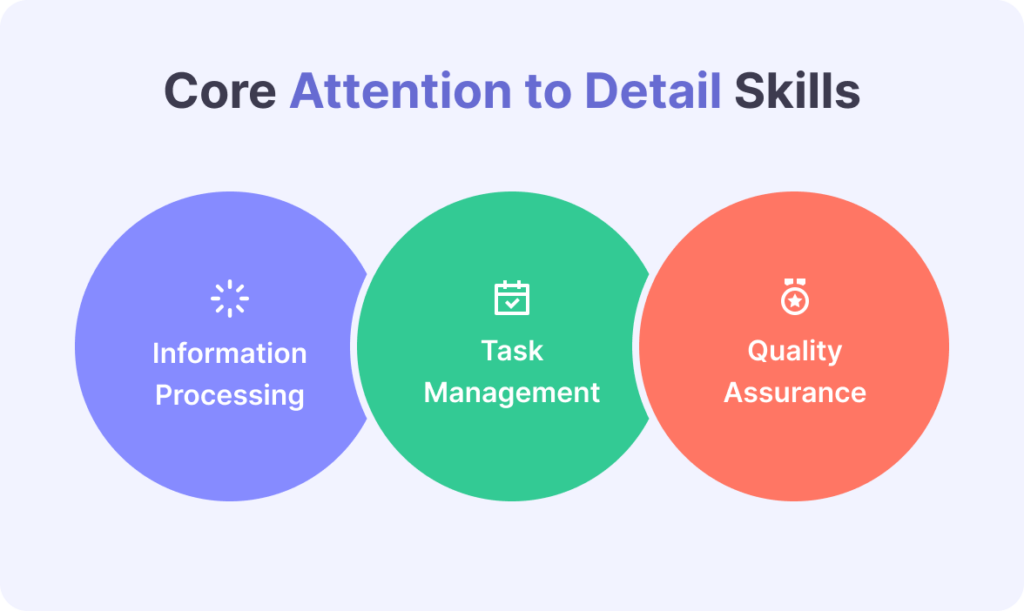
Having attention to detail means carefully reviewing customer inquiries and ensuring every aspect of their issue is addressed. For instance, if a customer reports a problem with their order, you need to confirm the order number, item description, and shipping address to resolve the issue accurately.
Tips for developing and improving attention to detail skills:
As the saying goes: ‘Teamwork makes the dream work." It is the heart and soul of every workplace. Good teamwork can make your work environment more enjoyable and help you complete tasks quickly and efficiently. When everyone works well together, the organization’s goals become easier.
Teamwork skills include conflict management, mutual respect, accountability, workload delegation, trust, and effective communication. For instance, in a customer support setting, agents can rely on each other’s expertise to resolve a complex customer issue faster. One agent might handle the technical aspect while another manages the customer communication, ensuring a smooth and efficient resolution.
Tips for developing and improving teamwork skills:
Every successful business needs dedicated customer service employees who possess certain skills that allow them to go the extra mile. These skills not only help with answering customer questions but also in creating meaningful relationships, fostering a sense of trust, and building customer loyalty. Connecting with customers on a deeper level can give your company a competitive advantage and help differentiate it from others.
People remember their interactions with customer service, both the good and the bad. That’s why it’s crucial to create positive experiences. Skills such as empathy, a positive attitude, active listening, and problem-solving are vital to achieving this. Additionally, attention to detail, organizational skills, and teamwork are essential to being more productive and efficient. These skills can be developed and improved by following simple yet effective tips, ensuring your team is well-equipped to meet customer needs.
To further enhance your customer service, help desk software provides a comprehensive suite of tools to manage customer inquiries efficiently and effectively. Sign up for a free trial and see how it can transform your customer service operations.
Develop top-performing support teams with LiveAgent's training tools, knowledge base, and comprehensive customer service platform.
Discover the 12 must-have customer service soft skills for 2025 that are essential for building strong relationships, boosting satisfaction, and creating positi...
Discover 16 essential customer service skills to enhance interactions and boost productivity, including empathy, effective listening, and clear communication. D...

Learn 12 essential live chat skills for 2025, including communication, empathy, and problem-solving, to boost customer satisfaction and loyalty. Explore best pr...
Join our community of happy clients and provide excellent customer support with LiveAgent.