

Customer Service Call Center
Understand what a customer service call center is, how it works, types of call centers, and best practices for running a successful operation. Learn about call ...
20 min read
Customer support
Call Center software
+1


Customer service consultants bridge the gap between representatives and managers, tackling complex issues and improving processes through strategy, technology, training, experience, and operations.

Customer service consultants can take on various roles, depending on their focus area and the needs of their organization. Think of them as halfway between a customer service representative and a manager.
They will answer customer calls and deal with customers directly, as a representative would, but are more knowledgeable and apt to take on complex customer issues. They will take on managerial and administrative tasks, but focus on customer experience and improving processes, rather than overlooking the daily customer service department operations like a manager would.
There’s also the career path of an independent customer service consultant, serving as an external advisor to businesses. Companies may approach a consulting agency or hire a contractor on a single-project basis, for instance, to advise on automating processes or restructuring the department.
Strategic consultants will analyze and interpret large sets of customer data, create a strategy, provide businesses with a detailed plan, and oversee its implementation. They may often train the staff too. As an example, growing businesses may need them to help set new processes, such as selecting channels, setting SLAs, or determining the performance metrics to focus on.
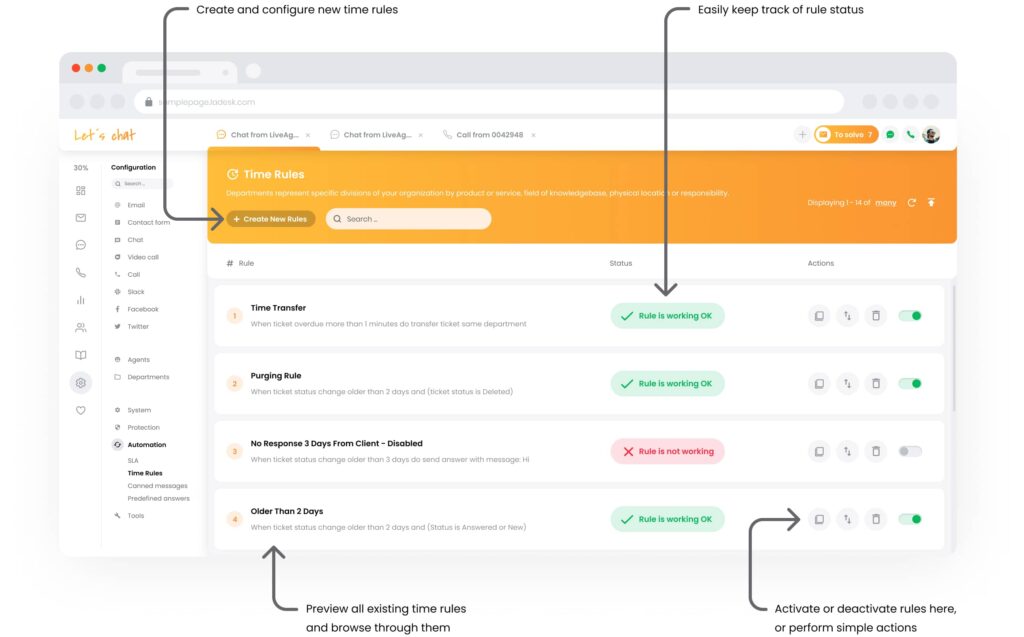
Technology consultants specialize in lowering costs and improving efficiency by suggesting, implementing, and training the teams in the best software solutions. For example, forgetting to automate repetitive tasks causes businesses to bleed money. Additionally, it can overwork existing staff or necessitate unnecessary hiring.
Training consultants evaluate team members’ skills and develop education plans accordingly. Consistently strong customer service is becoming crucial, which is why helping entry-level staff with personal development and soft skills pays off.
Experience consultants specialize in tweaking the existing strategies to enhance every touchpoint of the customer journey, creating a path for consistently positive and memorable customer experiences.
Operations consultants specialize in improving customer service operations. They examine business infrastructure and resource allocation, and recommend changes accordingly. Businesses call on them after seeing a drop in efficiency, when they need help in pinpointing the problem. They can help tweak processes or go on to restructure entire departments.
Excellent customer service is increasingly becoming the best way for businesses to distinguish themselves from competitors. With a yearly average of 49% of customers leaving brands because of bad experiences, and the cost of acquiring new customers rapidly rising, only one thing is for certain — businesses can’t afford bad customer service anymore.
Whether in their customer-facing practice or while advising others, customer service consultants can be considered the architects of customer experience. Today, customers need to know that businesses care about them. That’s why the future of customer service is personalized. Limited staff can’t be fully attentive to a large customer base, but it surely can seem like they are.
Customer service consultants and managers can achieve this effect by using robust customer service software like LiveAgent to set clever strategies, allocate resources, and automate repetitive tasks.
As covered, a customer service consultant may be an internal customer-facing employee or an independent contractor advising the organization and their daily agenda will differ based on this.
The day of an internal consultant will start with catching up on new developments, and seeing if they have any open or unanswered tickets.
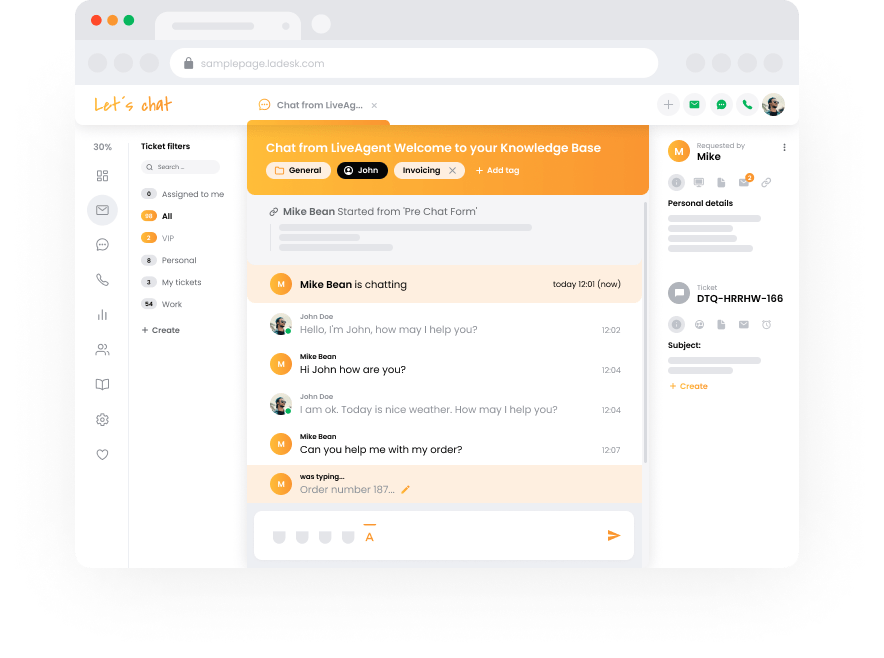
Throughout the day, they will partake in discussions and executive meetings with senior staff, but they’ll also set time apart to attend to and help junior colleagues with their concerns. On top of that, they may engage in any number of activities from the two categories below:
Independent consultants will still need to be backed by the skills and experiences associated with customer-facing tasks, but their daily agenda will consist only of advisory and managerial tasks, with additional tasks focused on their area of expertise.
Like all jobs in customer service, a consulting position is still a people-first position. Recruiters will put natural communication skills as the utmost priority. Even when designing strategies for others, this position is ideal for great listeners and problem solvers who love people and love helping them even more.
Still, this senior role comes with certain experience, hard skills, and education requirements. Each consultant will bring a special set of skills and strengths to the table, but they are generally required to have:
A customer service consultant job can be a dynamic mix of people-centric and data-driven approaches. A true people person with great analytic skills will genuinely thrive in this area.
After years of customer service experience, consultants develop a unique set of skills, being able to develop and materialize improvements, as well as manage and train other staff.
No matter the consultant’s focus area, strong customer service is impossible without comprehensive customer service software. To make both the managerial and customer-facing roles easier, try LiveAgent with the 30-day free trial.
Whether you're an internal consultant or advising clients, LiveAgent provides the comprehensive tools needed to analyze, optimize, and transform customer service operations.
Understand what a customer service call center is, how it works, types of call centers, and best practices for running a successful operation. Learn about call ...

Discover the 10 key customer service duties: resolve issues, process orders, handle complaints & deliver exceptional experiences. Learn essential responsibiliti...
Discover the role of an Escalation Manager in customer service. Learn key skills, best practices, and how they enhance customer satisfaction.
Join our community of happy clients and provide excellent customer support with LiveAgent.