

Customer Service Call Center
Understand what a customer service call center is, how it works, types of call centers, and best practices for running a successful operation. Learn about call ...
20 min read
Customer support
Call Center software
+1


The article covers call center duties, job descriptions, essential skills, salary expectations, and professional development tips. It details the responsibilities of call center representatives, including handling calls, providing information, troubleshooting, and processing orders.

Call center jobs encompass various roles where representatives handle customer interactions across multiple channels. These positions range from entry-level inbound support to specialized outbound sales roles, requiring strong communication skills, product knowledge, and customer service expertise.
Call center jobs represent a diverse range of customer-facing positions where representatives handle inquiries and interactions across multiple communication channels. These roles are fundamental to business operations, with representatives serving as the primary point of contact between companies and their customers. In an industry where first-contact resolution rates range between 70-75%, call center representatives play a critical role in maintaining customer satisfaction and boosting company reputation.
Call center representatives, also known as customer service representatives or call center agents, manage customer inquiries and complaints while providing real-time information about products and services. Whether handling a frustrated customer with a technical issue or assisting a prospect with a purchase, these professionals must balance efficiency with empathy to deliver exceptional service.
Inbound call center positions focus on receiving and responding to customer-initiated contacts. These roles include:
Customer Service Representatives - Answer incoming calls from customers seeking assistance, information, or support. They handle inquiries about products, services, billing, and technical issues.
Order Processing Specialists - Take customer orders, process payments, manage exchanges and cancellations, and handle shipping inquiries. These positions require comprehensive product knowledge and attention to detail.
Technical Support Representatives - Provide specialized assistance for technical issues, troubleshooting problems, and guiding customers through solutions. These roles typically require advanced technical knowledge and may offer higher compensation.
Complaint Resolution Specialists - Focus specifically on managing customer complaints, demonstrating empathy, and finding solutions to resolve issues and prevent escalation.
Outbound positions involve representatives making proactive calls to customers or prospects:
Sales Representatives - Make outbound calls to sell products or services, identify upselling and cross-selling opportunities, and generate revenue for the organization.
Telemarketing Specialists - Conduct cold calling campaigns, market research, and customer surveys to gather valuable business intelligence.
Collections Representatives - Contact customers regarding outstanding payments or overdue accounts, working to resolve payment issues professionally.
Appointment Setters - Schedule appointments or consultations for sales teams, service providers, or other departments.
Call Center Supervisors - Oversee agent performance, provide coaching and training, manage quality assurance, and handle escalated issues.
Quality Assurance Specialists - Monitor calls, evaluate agent performance, identify training needs, and ensure compliance with company standards.
Training Specialists - Develop and deliver training programs for new and existing agents, covering product knowledge, soft skills, and system proficiency.
Answering Inbound Calls - Representatives must be proficient in active listening, clear verbal communication, attention to detail, and politeness. Efficiently navigating customer calls involves proper call answering, call holding techniques, and ending calls on a positive note.
Processing Orders and Payments - Agents assist customers with purchase inquiries, place orders, process payments, track shipments, manage exchanges and refunds, and resolve payment issues. This requires comprehensive company and product knowledge.
Addressing Customer Complaints - Managing unhappy customers requires using active listening skills, asking appropriate questions, demonstrating empathy, and resolving or escalating issues according to company procedures.
Following Up on Customer Calls - Not all queries are resolved in a single call. Agents must maintain follow-up systems to inform customers of issue resolutions and provide updates on escalated matters.
Making Outbound Calls - Utilizing call center dialers and automation tools, agents make proactive calls for sales, telemarketing, appointment setting, or charitable solicitation.
Conducting Market Research - Gathering valuable data on consumer behavior, competitor analysis, and market trends to inform business decisions.
Upselling and Cross-Selling - Identifying opportunities to recommend higher-value products or complementary services during customer interactions, requiring flexibility and creativity beyond standard scripts.
Managing Customer Databases - Reviewing and updating CRM systems with current customer information, purchase history, preferences, and interaction records to enable personalized service.
Collecting and Reporting Customer Feedback - Gathering insights from direct customer interactions and communicating valuable feedback to management regarding product improvements and customer pain points.
Training and Onboarding - Participating in training initiatives for new team members, ensuring they understand company products, culture, policies, and call center software systems.
Reporting Issues and Roadblocks - Identifying operational challenges and escalating them to management for resolution.
Effective Communication Skills - The ability to articulate information clearly and confidently while understanding and resolving customer issues efficiently. This is fundamental to ensuring customer loyalty and satisfaction.
Empathetic Listening - One of the most important soft skills, allowing representatives to understand customer perspectives, validate feelings, and address needs effectively. This skill encourages patience and rapport building.
Problem-Solving Abilities - Representatives face various customer issues daily and must analyze situations, consider solutions, and resolve problems promptly to ensure satisfaction.
Product and Service Knowledge - A thorough understanding of company offerings allows agents to provide accurate information and handle inquiries or complaints effectively.
Time Management - Handling multiple calls simultaneously while resolving issues promptly requires excellent prioritization skills, stress management, and productivity optimization.
Technical Proficiency - Agents must be proficient with call center software, CRM systems, and other tools necessary for handling calls and tracking customer information.
Teamwork and Collaboration - The ability to work effectively within a team promotes a positive environment, increases efficiency, and results in higher customer satisfaction.
Patience and Composure - Dealing with frustrated customers requires maintaining calm demeanor, managing stress levels, and ensuring customer satisfaction even in challenging situations.
Adaptability - The fast-paced, ever-changing call center environment requires representatives to adapt quickly to new procedures, technologies, and sudden call volume changes.
Multilingual Abilities - Speaking multiple languages is a significant advantage, enabling communication with diverse customer bases in their preferred language.
Previous Customer Service Experience - While not always necessary, prior experience provides familiarity with customer service protocols and handling difficult customers, potentially reducing training time.
Higher Education - A degree in communication, business, or related fields can provide insights into corporate communication strategies and customer management.
Professional Certifications - Certifications such as HDI’s Customer Service Representative (CSR) Certification or ICMI’s Certified Contact Center Professional (CCCP) demonstrate commitment and proven expertise.
According to the U.S. Bureau of Labor Statistics (May 2024), the median hourly wage for customer service representatives is $20.59 per hour, translating to approximately $42,830 annually. However, compensation varies significantly based on several factors:
Experience Level - Entry-level positions may start near minimum wage, particularly in areas with lower cost of living. Experienced representatives, especially in technical or specialized fields, can earn significantly higher wages.
Location - Geographic location substantially impacts salary. Metropolitan areas and regions with higher costs of living typically offer higher compensation.
Industry - Different industries offer varying compensation levels:
Company Size and Reputation - Larger, well-established companies often offer higher salaries and better benefits than smaller organizations.
Performance Incentives - Many companies offer performance-based bonuses, commissions, and profit-sharing arrangements that can substantially increase earnings above base salary.
According to Glassdoor data, AT&T ranks among the highest-paying companies for call center agents, offering over $50,000 annually. Other major employers in telecommunications, insurance, and financial services typically offer competitive compensation packages.
Most call center positions require a high school diploma or equivalent. However, certain advanced positions may require:
Standard Training Duration - Most call center positions include 2-4 weeks of on-the-job training covering:
Specialized Training - Positions in finance and insurance may require several months of training to learn complicated regulations and compliance requirements.
To advance in call center careers, representatives should consider:
Online Learning Platforms
Industry Certifications
Continuous Learning
According to the U.S. Bureau of Labor Statistics (2024-2034):
With experience, call center representatives can advance to:
Supervisory Roles - Call center supervisors oversee agent performance, provide coaching, manage quality assurance, and handle escalations.
Specialized Positions - Technical support specialists, quality assurance specialists, or training specialists earn higher compensation and require advanced skills.
Management Positions - Call center managers oversee operations, budgets, staffing, and strategic initiatives.
Other Departments - Customer service experience provides a foundation for roles in sales, account management, or customer success.
Call Center Offices - Most representatives work in dedicated call center facilities with multiple agents in a shared environment. These spaces can be noisy and may include monitoring for quality assurance.
Remote Work - Many companies now offer work-from-home opportunities, providing flexibility and reducing commute time.
Retail Environments - Some customer service representatives work in retail stores, handling in-person customer interactions.
Full-Time Positions - Most call center jobs are full-time positions requiring 40 hours per week.
Part-Time Opportunities - Some companies offer part-time positions for flexible scheduling.
Shift Work - Call centers often operate 24/7, requiring representatives to work:
Busy Periods - Representatives often need to work during peak business times, which may include evenings, weekends, and holidays.
Most employers require:
Highlight Transferable Skills - Emphasize communication, customer service, problem-solving, and technical abilities from previous roles.
Demonstrate Reliability - Show consistent employment history and punctuality.
Express Enthusiasm - Convey genuine interest in customer service and helping customers.
Prepare for Interviews - Practice answering common questions about handling difficult customers and managing stress.
Accessibility - Entry-level positions require minimal experience, making them accessible to job seekers entering the workforce.
Training Provided - Comprehensive on-the-job training prepares employees for success without requiring extensive prior experience.
Advancement Opportunities - Clear career progression paths allow motivated employees to advance to supervisory and management roles.
Flexible Scheduling - Many call centers offer various shift options and part-time positions for work-life balance.
Skill Development - Representatives develop valuable communication, problem-solving, and technical skills applicable to many careers.
Competitive Compensation - Performance-based incentives and bonuses can significantly increase earnings.
High Stress - Handling frustrated customers and managing multiple calls simultaneously can be emotionally demanding.
Repetitive Tasks - Daily work may involve repetitive interactions and scripted responses.
Performance Pressure - Monitoring and quality assurance metrics can create pressure to meet targets.
Turnover - High employee turnover is common in the industry due to stress and demanding work conditions.
Automation Impact - Increasing automation reduces opportunities for routine customer service tasks.
Call center jobs represent a significant employment sector offering accessible entry points for job seekers and clear advancement opportunities for motivated professionals. Whether handling inbound customer support, making outbound sales calls, or managing administrative functions, call center representatives play a vital role in business success and customer satisfaction.
Success in call center careers requires a combination of essential soft skills—particularly communication, empathy, and problem-solving abilities—along with technical proficiency and product knowledge. With proper training, continuous professional development, and dedication to customer service excellence, representatives can build rewarding careers with advancement opportunities into supervisory and management positions.
The industry continues to evolve with technology integration, offering new opportunities for representatives who embrace change and develop specialized skills. For job seekers considering call center careers, the combination of accessible entry requirements, comprehensive training, and advancement potential makes these positions an attractive option in the customer service field.
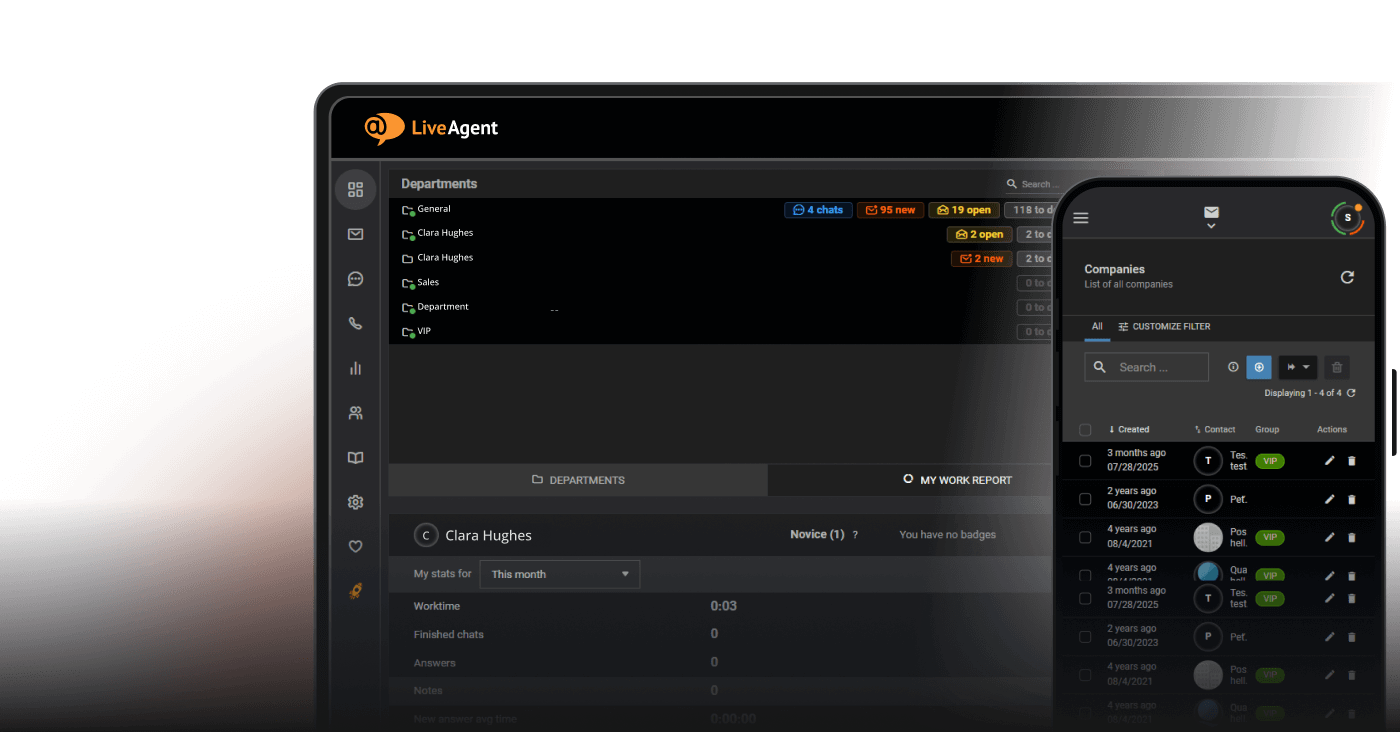
To enhance call center operations and agent productivity, modern help desk software like LiveAgent provides comprehensive tools for managing customer interactions across multiple channels, streamlining workflows, and supporting agent success through integrated CRM systems, call recording, and performance analytics.
Enable your team to excel with LiveAgent's intuitive interface, call management features, performance analytics, and comprehensive agent tools.
Call center representatives handle customer inquiries through phone, email, chat, and other channels. Their primary responsibilities include answering calls, providing product information, troubleshooting issues, processing orders and payments, handling complaints, and escalating complex issues to supervisors. They maintain detailed records of all customer interactions and follow up on unresolved matters.
Essential skills for call center jobs include effective communication, active listening, empathy, problem-solving abilities, product knowledge, time management, technical proficiency with CRM systems, patience, and adaptability. Nice-to-have qualifications include multilingual abilities, previous customer service experience, higher education, and relevant certifications in customer service or sales.
According to the U.S. Bureau of Labor Statistics (2024), the median hourly wage for customer service representatives is $20.59 per hour, or approximately $42,830 annually. Entry-level positions may start near minimum wage, while experienced representatives in specialized fields can earn significantly higher wages. Many companies offer performance-based bonuses and commission structures that can substantially increase earnings.
Call center jobs include inbound roles (answering customer calls, processing orders, handling complaints), outbound roles (making sales calls, conducting market research, upselling), and on-site administrative duties (updating customer databases, training new employees, collecting feedback). Some positions specialize in technical support, sales, customer service, or collections.
Most call center positions require a high school diploma or equivalent. However, some advanced roles may require a bachelor's degree or relevant coursework in business, communications, or related fields. On-the-job training typically lasts 2-4 weeks, with longer training periods for specialized roles in finance or insurance. Many employers provide comprehensive training programs covering company procedures, product knowledge, and software systems.
According to the U.S. Bureau of Labor Statistics, employment of customer service representatives is projected to decline 5% from 2024 to 2034. However, approximately 341,700 job openings are projected annually due to worker turnover and retirement. Despite automation trends, companies continue to value human interaction for complex inquiries and customer retention.
Understand what a customer service call center is, how it works, types of call centers, and best practices for running a successful operation. Learn about call ...

Discover call center duties, job descriptions, essential skills, salary insights, and tips to excel in 2024. Master customer satisfaction!

A call center is a centralized office for managing customer calls, crucial for customer service and sales. Call center software, like LiveAgent, enhances commun...
Join our community of happy clients and provide excellent customer support with LiveAgent.