Knowledge Management: A Game Changer for Your Business
Knowledge management transforms data into insights, enhancing innovation, efficiency, and customer satisfaction. Explore strategies like centralized and decentralized approaches to boost business success and overcome challenges like resistance and data quality.
Published on Jan 20, 2026 by Daniel Pison.Last modified on Jan 20, 2026 at 7:35 am
Knowledge Management
Business Growth
Efficiency
Innovation
Customer Service
But merely having data isn’t enough; knowing how to manage and leverage it effectively can set your business apart from the competition. Knowledge management (KM) transforms raw information into actionable insights, driving innovation, improving efficiency, and enhancing customer satisfaction.
So, why wait? Discover how KM can boost your business and take it to the next level.
What is knowledge management?
Knowledge is what you know from learning or experience.
Management means organizing and overseeing tasks.
Knowledge management means organizing what an organization knows to enhance its performance, innovation, competitiveness, and employee relationships. It uses different methods to meet business goals through optimal knowledge use.
KM is more than just storing data. It transforms data into insights that lead to smart decisions. It uses technology and methods to share and apply important knowledge.
Importance of knowledge management for daily business operations
Knowledge management (KM) is crucial for businesses for many reasons – let’s explore the key ones:
Enhanced decision-making
Knowledge management greatly improves decision-making by giving access to accurate and current information. Decisions should rely on data, and a strong KM system keeps information well-organized and easy to find.
In fact, according to reports, data-driven organizations are 23 times more likely to acquire customers, six times as likely to retain customers, and 19 times as likely to be profitable.
Increased efficiency and productivity
Knowledge management tools remove repetition and simplify processes. They ensure valuable knowledge isn’t wasted. This saves time and resources, allowing employees to focus on important tasks.
But what’s the hidden cost of ignoring this?
Research from IDC indicates that companies lose 20-30% in revenue annually due to inefficiencies. Efficient knowledge management can significantly reduce this loss.
Helps in retaining company knowledge
In tandem with the previous point, knowledge management helps organizations capture and preserve knowledge. This makes sure that expertise and best practices are not lost when employees leave.
For example, a manufacturing company can document experienced engineers’ knowledge, reducing the learning curve for new hires. Even on a general note, employees tend to spend a significant amount of their time searching for information to do their job effectively. Having this knowledge accessible and updated can help combat this from happening.
Enhanced customer satisfaction
Using knowledge management strategies boosts customer satisfaction by improving products, services, and support. A well-managed knowledge base helps customer service agents solve problems faster. This approach significantly enhances the customer experience, building loyalty and trust as customers feel valued and understood.
If you’ve ever encountered this level of service, you know it’s the pinnacle of exceptional customer service.
Organizational growth and sustainability
KM helps growth and sustainability by keeping institutional knowledge and supporting strategic planning. It offers insights into market trends and competition, helping businesses find opportunities and reduce risks.
Companies with strong knowledge management practices experience a 25% improvement in productivity, leading to organizational growth.
Lowers operational costs
Knowledge management can cut costs by simplifying processes and avoiding extra expenses. A well-organized KM system can lead to significant cost savings.
For instance, a manufacturing company can reduce downtime and maintenance costs by using a centralized database of equipment manuals and best practices. According to IDC, companies with effective KM practices can reduce operational costs by up to 30%.
Core components of effective knowledge management
Effective knowledge management depends on several core components that help handle, share, and use information in an organization:
Knowledge creation and capture
Creating and capturing knowledge means gathering and organizing information from different sources like employee skills, customer interactions, and industry research. This process ensures valuable knowledge is saved and easy to find when needed.
Some software, like LiveAgent, helps by letting customer service agents add knowledge directly. They can document common solutions, create FAQs, and write help articles within the platform.
Knowledge storage and organization
A well-organized knowledge base is key to finding and accessing important details quickly and easily. Take advantage of features that help categorize and store information systematically. This includes tagging, indexing, and search functions, which make it easy for users to find what they need.
Knowledge sharing and distribution
Effective KM systems encourage collaboration and communication among employees, allowing them to share insights and expertise. This information should be easy to access and used to improve workflow.
LiveAgent provides tools like internal chat and ticketing systems, which help team members share knowledge and solve problems together. This supports a culture of continuous learning and improvement.
Knowledge application
Applying knowledge involves using the captured and shared information to make informed decisions, solve problems, and improve processes. It’s about transforming knowledge into actionable insights that drive business success.
How exactly does this look?
By providing agents with easy access to relevant information during customer interactions. This leads to faster problem resolution and better customer service.
Knowledge evaluation and feedback
Evaluating and getting feedback on the knowledge management process is crucial for ongoing improvement. This means checking how well KM practices work and making changes to boost performance.
Use reporting and analytics tools to see how the knowledge base is used and how effective it is. You can also set up feedback systems where users can rate and comment on articles. This helps identify areas that need improvement.
Knowledge retention
Retaining knowledge ensures that valuable information remains within the organization, even when employees leave. It involves creating a culture where knowledge is continually documented and updated. Having this on hand also helps with improving the onboarding process.
You can support knowledge retention by enabling the creation of comprehensive documentation and maintaining a centralized knowledge base that remains accessible to all employees.
5 proven knowledge management strategies
Choosing the right knowledge management strategy is necessary to improving how your organization captures, stores, and uses knowledge.
Here are five proven strategies that many organizations use, each with its own benefits and challenges.
1. Centralized strategy
A centralized strategy means storing, managing, and controlling all knowledge in one place. This method keeps information consistent and accurate since all employees access the same data, reducing mistakes and confusion. However, this approach might limit creativity and innovation because of its controlled nature.
Tip: Implement a centralized knowledge base where all important documents, FAQs, and guidelines are stored and regularly updated.
2. Decentralized strategy
A decentralized strategy spreads knowledge across different departments, teams, or individuals in the organization. This approach promotes collaboration, innovation, and quicker decisions by letting knowledge flow freely without a central control. This may come at the cost of being consistent throughout the different repositories.
Tip: Encourage departments to develop their own knowledge repositories while maintaining interconnectivity with other teams to ensure knowledge sharing.
3. Network-based strategy
A network-based strategy uses connected systems and technologies to create, store, and share knowledge. By using tools like intranets, extranets, and cloud platforms, organizations can improve communication and collaboration both inside the company and with external partners.
Tip: Connect your KM system with network tools like social networks and cloud platforms to improve knowledge sharing and teamwork. For example, LiveAgent’s integration features let organizations link their knowledge management systems with different digital tools, supporting a network-based approach to sharing knowledge.
4. Knowledge-focused strategy
This strategy focuses on creating, storing, and using knowledge in an organized way. It captures both clear and hidden knowledge and includes it in business processes to boost innovation and improve decision-making.
Tip: Develop a knowledge repository and promote a culture of knowledge sharing through regular training and collaborative activities.
5. Customer-focused strategy
A customer-focused knowledge management strategy focuses on understanding and meeting customer needs. It uses customer data and feedback to guide decisions. This approach collects and analyzes customer information to improve products, services, and overall customer experience.
Tip: Set up feedback loops to regularly gather and analyze customer insights. Use this information to improve products and services. For example, LiveAgent’s feedback and reporting tools help businesses capture and analyze customer data, supporting a customer-focused KM strategy to enhance service and satisfaction.
Challenges in knowledge management and how to overcome them
Effective knowledge management is essential, but naturally, it comes with its own set of challenges. Let’s identify common challenges that may spring up and provide solutions for them.
Resistance to change
Employees might hesitate to use new systems or processes from the beginning, sticking with familiar methods instead. This resistance can block effective KM practices and hold back the organization’s growth. Overcoming this resistance is key to successfully adopting KM systems.
Solutions:
Training and education: Provide thorough training to help employees understand the benefits of KM and how to use the new systems. Focus on the long-term advantages for both the organization and the employees. This can reduce the fear and stress of learning new processes.
Use easy tools: A steep learning curve can cause more resistance. Software like LiveAgent has user-friendly interfaces that make it easier for employees to adapt. It also offers plenty of support, including tutorials and customer service, to help employees adjust to new KM processes.
Data quality issues
Poor data quality can cause misinformation and poor decisions, harming business operations. Maintaining high data quality is crucial for the effectiveness of knowledge management.
Solutions:
Data governance policies: Set up rules to keep data quality high. This includes clear guidelines on how to enter, check, and maintain data.
Regular audits and updates: Regularly check and update data to keep it accurate and relevant. This proactive approach finds and fixes data problems quickly. Automated checks can also spot inconsistencies or outdated information.
Maintaining up-to-date information
Outdated information can cause inefficiencies and reduce trust in the KM system. Regular updates ensure that all employees have access to the latest information.
Solutions:
Scheduled reviews: Set up a regular schedule for reviewing and updating the knowledge base. This keeps all information relevant and useful.
Employee contributions: Encourage employees to help update and maintain the knowledge base. This keeps information current and promotes a culture of continuous improvement.
Ensuring user engagement
Low engagement can weaken the impact of KM efforts. Encouraging user involvement ensures the system is fully utilized.
Solutions:
User-friendly interface: Create an easy-to-use interface that invites frequent use. The simpler it is for employees to access and navigate the KM system, the more likely they are to engage with it.
Incentives and rewards: Offer incentives and rewards for active participation and contributions. This can motivate employees to share their knowledge and use the system regularly.
Integrating with existing systems
Without integrating the KM system with existing tools and processes, data can become isolated and ineffectively. Seamless integration ensures that information flows smoothly across different systems.
Solutions:
API and integrations: Use knowledge management systems that offer robust API and integration capabilities. This allows for smooth data flow between different systems and processes.
Consultation and planning: Engage in thorough planning and consultation to ensure seamless integration. Consider the needs of all stakeholders and potential integration points.
By understanding and addressing these challenges, organizations can develop more effective KM strategies and leverage tools like LiveAgent to enhance knowledge management practices.
Implementing knowledge management systems
Implementing a knowledge management system requires a strategic approach to ensure it aligns with your business goals and enhances organizational efficiency. Here’s a step-by-step guide to help you successfully implement a KMS.
1. Planning and goal setting
Start by defining clear objectives for your knowledge management system. Identify the specific challenges you want to address, such as improving customer service, increasing employee collaboration, or preserving institutional knowledge.
Encourage key stakeholders to take part in the planning process to make sure the system meets the needs of all departments.
2. Selecting the right tools
Choose tools that align with your organizational needs and integrate smoothly with existing systems. Look for features like knowledge bases, collaboration tools, and analytics capabilities. Make sure the selected tools support both explicit and tacit knowledge management.
Choosing comprehensive software like LiveAgent opens up a whole suite of tools to take advantage of, including a robust knowledge base, internal communication features, and AI-driven analytics.
3. Organizing and structuring knowledge
Organize your knowledge in a way that makes it easily accessible and searchable. Categorize information logically, and create a structure that allows users to quickly find what they need. Consider using tags, categories, and a clear hierarchy to streamline navigation.
Use a knowledge base that allows you to categorize and tag articles, ensuring that information is easy to find and well-organized.
4. Training and engaging employees
Proper training is crucial to ensure that employees are comfortable using the new knowledge management system. Provide comprehensive onboarding sessions and ongoing training opportunities. Encourage employees to contribute to the knowledge base and engage with the system regularly.
It’s also important to choose software that offers an intuitive interface. This minimizes the learning curve, making it easier for employees to adopt and engage with the system.
5. Monitoring and continuous improvement
After implementing the knowledge management system, continuously monitor its performance. Collect feedback from users, track usage metrics, and make adjustments as needed. Regularly update the system to keep the knowledge base relevant and useful.
LiveAgent’s analytics and reporting tools provide valuable insights into how the knowledge base is being used, helping you identify areas for improvement and ensure the system evolves with your organization’s needs.
The role of technology in knowledge management
Modern tools and technologies have greatly changed knowledge management. They help collect, store, organize, and share information in an organization. This creates a central place for all knowledge, making it easier for employees to find and use what they need.
To put this into perspective, here are some ways that technology plays a role in knowledge management.
Knowledge bases and content management systems (CMS)
For starters, knowledge bases and content management systems are key tools in knowledge management. They help capture and store clear knowledge in databases, documents, and manuals.
These systems ensure important information is well-organized and easy to access for future use.
Artificial Intelligence (AI)
AI plays a key role in knowledge management by improving how we capture both clear and hidden knowledge. AI can handle large amounts of data, find patterns, and give personalized insights, making knowledge easier to access and use.
AI tools like chatbots and automated systems can quickly analyze and retrieve information, giving instant access to knowledge.
For example, LiveAgent’s AI features streamline customer support, ensuring agents have the most relevant information at hand.
Collaborative tools
Tools like social networks, discussion forums, and collaboration platforms help capture hidden knowledge. They make it easier for employees to share knowledge and work together.
These tools promote open communication and build a culture of ongoing learning and knowledge sharing.
Knowledge distribution and sharing
Modern communication tools like intranets, emails, and instant messaging help share knowledge quickly across the organization.
These tools help maintain consistency and ensure that all employees are on the same page. This is vital for coordinated efforts and reduces duplication of work and improves productivity.
Data mining and analytics
Technology helps create knowledge through data mining and analytics. These tools let organizations turn raw data into valuable insights.
These insights can guide important decisions, drive innovation, and give a competitive edge.
Knowledge preservation
Technology helps preserve knowledge, making sure important information isn’t lost when employees leave. Keeping knowledge safe protects the organization’s memory and makes it easier to share expertise across teams and generations.
Knowledge management systems store this information and keep it ready for future use.
Building a knowledge sharing culture
Building a culture of knowledge sharing in an organization is key to boosting innovation, improving efficiency, and increasing employee engagement. It encourages employees to share their skills and ideas, leading to better problem-solving and ongoing learning.
This culture helps make better decisions by giving access to different views and information. It also cuts down on repeated work since knowledge is easy to find.
Tips to encourage knowledge sharing and collaboration
Lead by example by actively participating in discussions and sharing their own knowledge.
Provide the right tools like LiveAgent’s knowledge base and communication tools, to make sharing information easy and efficient.
Incentivize sharing by recognizing and rewarding employees who contribute to the knowledge base and collaborate effectively.
Foster a safe environment where employees feel safe to share their ideas and experiences without fear of criticism or negative consequences.
Encourage cross-department collaboration to facilitate the exchange of knowledge across different areas of the organization.
Examples of successful knowledge sharing cultures
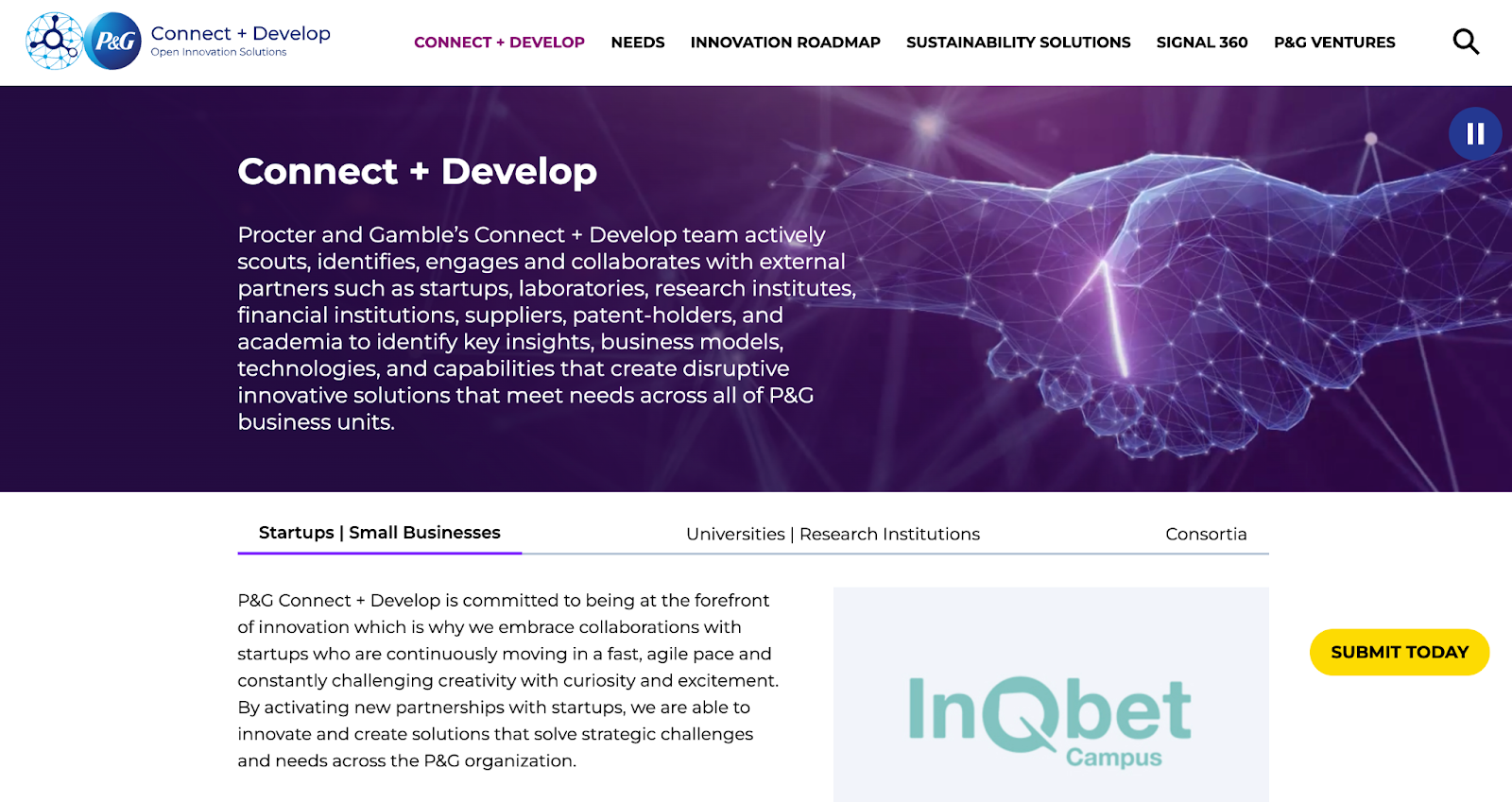
P&G: Procter & Gamble is known for strong knowledge-sharing practices. The company’s ‘Connect + Develop" program promotes innovation by working with external partners and encouraging internal teamwork. P&G motivates employees to share ideas and insights across departments, making sure knowledge flows freely throughout the organization.
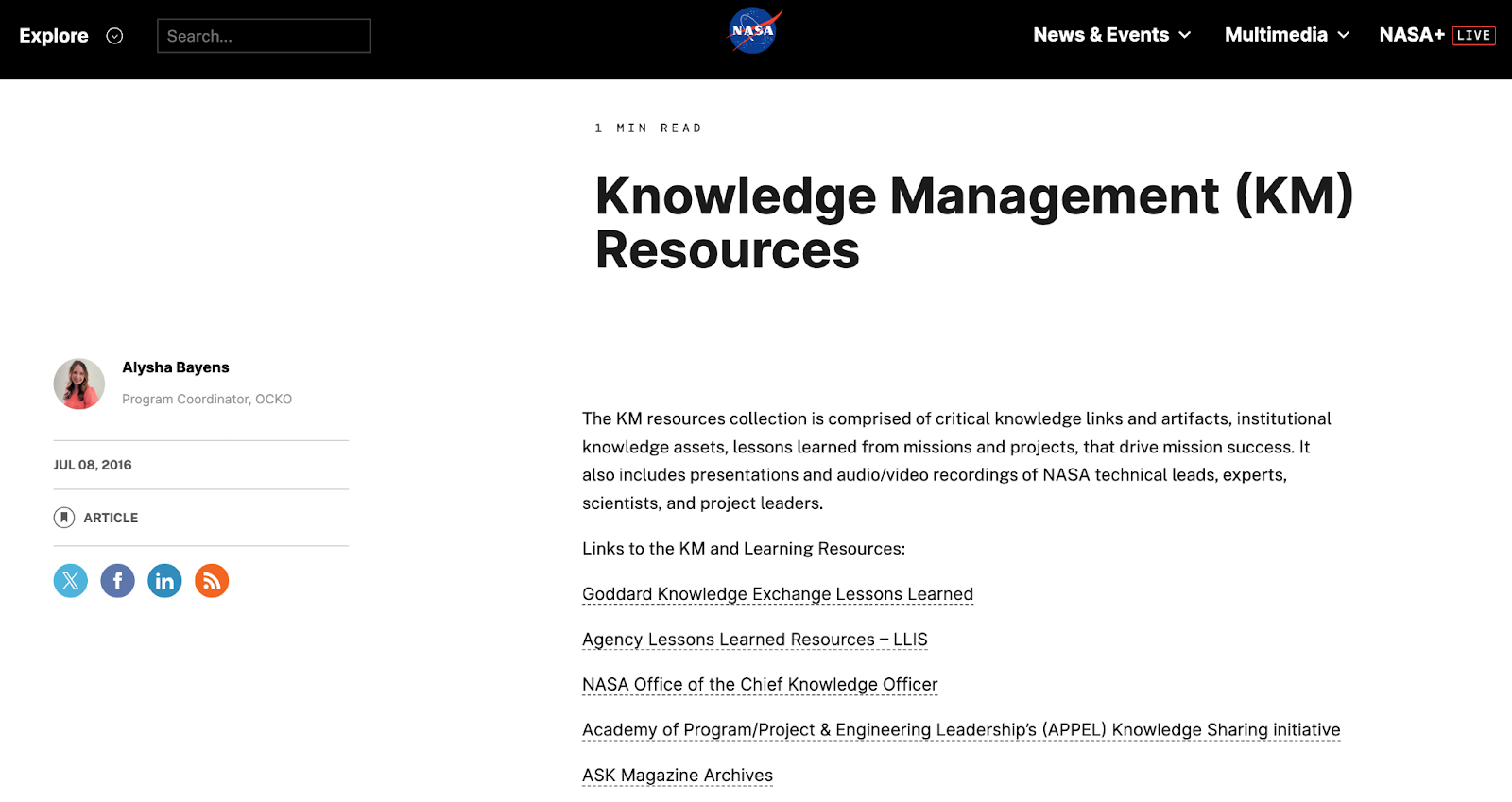
NASA: NASA has a comprehensive knowledge management system that captures lessons learned from missions and projects. This system is accessible to all employees, fostering a culture of learning and continuous improvement.
Training and development for knowledge management
Well-trained employees are more likely to use KM systems, leading to better decisions, more innovation, and higher productivity.
Continuous development programs keep employees current with the latest tools and practices, helping the organization stay competitive. These programs ensure employees have the skills and knowledge to use KM systems and support a culture of learning and improvement.
Training methods for knowledge management
Onboarding programs: Comprehensive onboarding programs that introduce new hires to the KM system and organizational knowledge base.
Workshops and seminars: Regular workshops and seminars that focus on KM tools, techniques, and best practices.
E-Learning modules: Online courses and e-learning modules that allow employees to learn at their own pace. These can cover various aspects of KM, from basic concepts to advanced applications.
Peer-to-peer learning: Encouraging employees to share knowledge through peer-to-peer learning sessions, mentoring programs, and collaborative projects.
Interactive training: Using interactive training methods such as simulations, role-playing, and case studies to make learning more engaging and practical.
Ideas for continuous development programs
Regular updates and refresher courses: Offering periodic refresher courses to ensure that employees stay current with the latest KM tools and practices.
Certifications and advanced training: Providing opportunities for employees to earn certifications in KM and related fields, enhancing their expertise and career prospects.
Knowledge sharing sessions: Organizing regular knowledge sharing sessions where employees can present their insights and learnings from recent projects.
Feedback and improvement loop: Implementing a continuous feedback loop to identify training needs and improve the effectiveness of training programs.
Case studies of successful knowledge management
Implementing effective knowledge management (KM) strategies can have a transformative impact on an organization. Take a look at these two real-world examples of successful KM implementations.
IBM
IBM has long been recognized for its robust knowledge management practices. The company implemented its “Knowledge Management Framework”, " which includes internal wikis, blogs, and online communities to facilitate knowledge sharing across its global workforce.
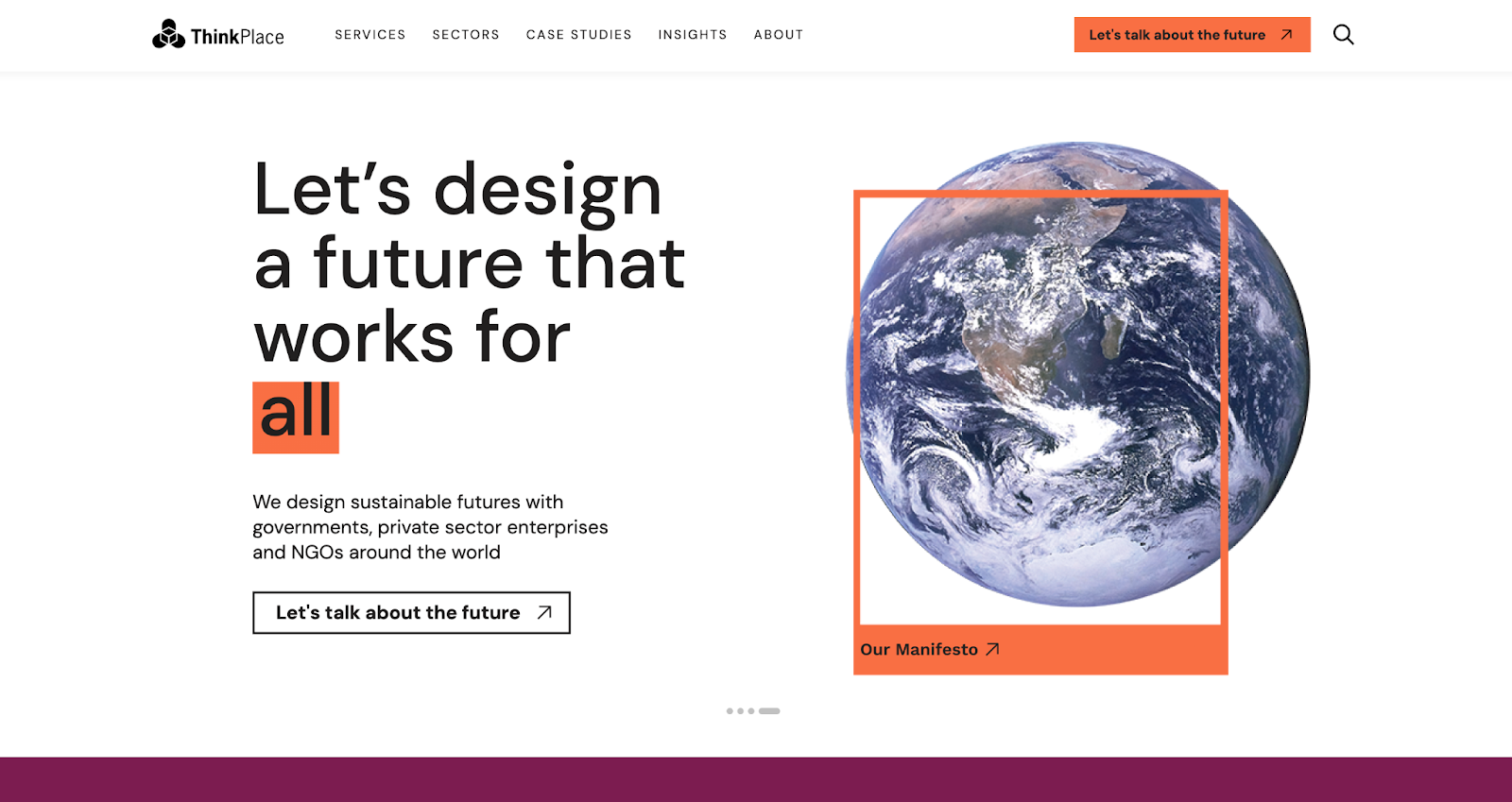
One of IBM’s key strategies is its ‘ThinkPlace" platform. Here, employees can share ideas and work together on solving complex problems. By using social tools and encouraging constant learning, IBM stays at the front of technological innovation. This approach improves internal communication and speeds up problem-solving and product development.
Accenture
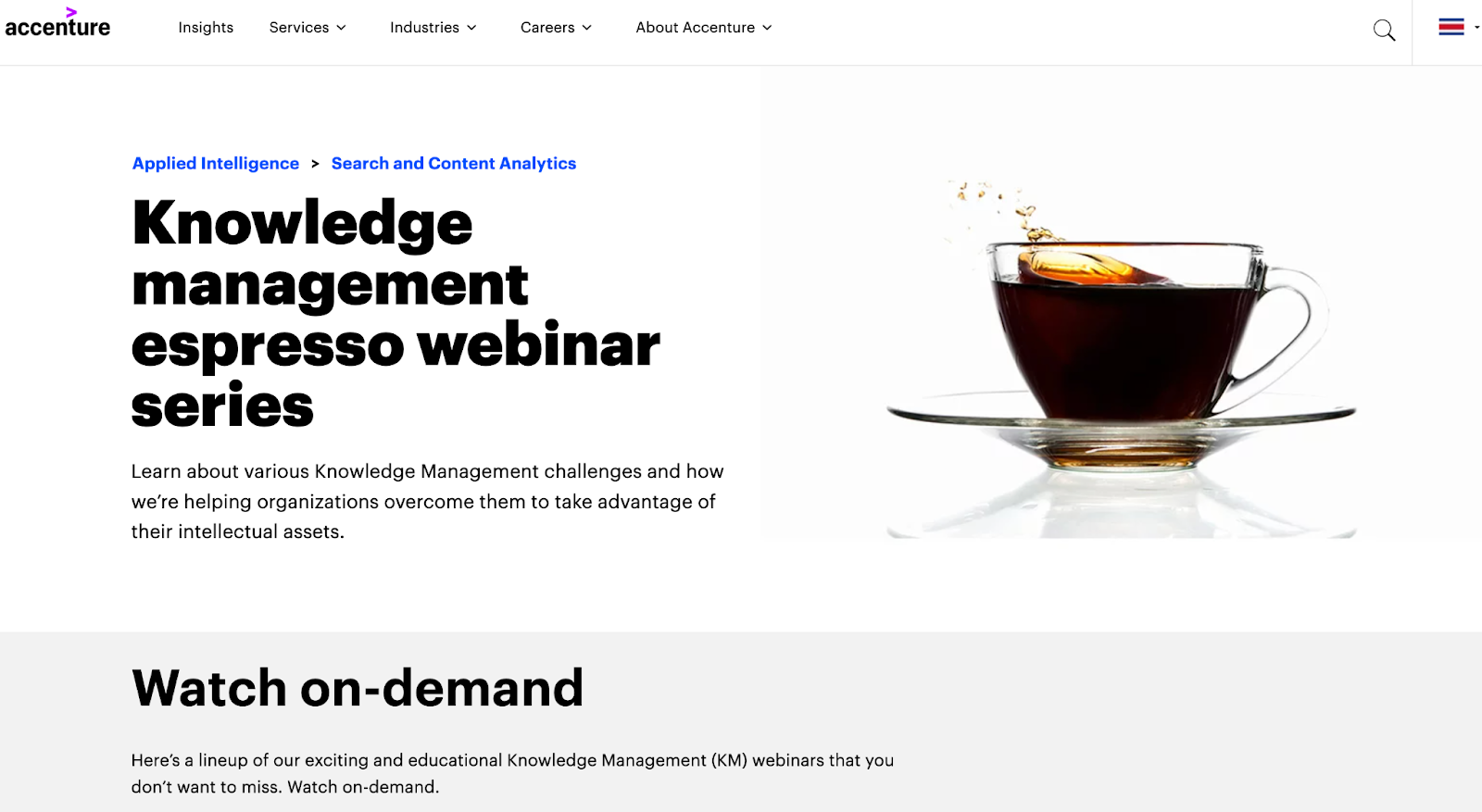
Accenture, a top global professional services company, uses a strong knowledge management system called “Knowledge Exchange.” This platform is a central place where consultants and employees can access industry insights, case studies, and best practices.
Accenture promotes knowledge sharing through “Communities of Practice.” These are groups of experts who work together and share knowledge on specific topics. This approach has greatly improved collaboration and innovation across the company’s global teams.
Future trends of knowledge management: What’s next for knowledge management?
The field of knowledge management is continually evolving, driven by technological advancements and changing organizational needs. Here are some key trends that are shaping the future of KM:
Integration of Artificial Intelligence (AI)
AI is changing knowledge management by making it easier to capture, organize, and find knowledge. AI tools can analyze large amounts of data to find insights and patterns, automate tasks, and give personalized information to users.
For example, AI chatbots and virtual assistants can quickly provide knowledge, improving efficiency and user experience. LiveAgent leads this trend, using AI to improve customer support and knowledge management.
Enhanced collaboration tools
The growth of remote and hybrid work has raised the need for strong collaboration tools. Future knowledge management systems will likely include advanced features like real-time document editing, integrated communication platforms, and social networking tools for the workplace.
Focus on user experience
As knowledge management systems get more advanced, user experience (UX) will become more important. In the future, KM solutions will focus on simple interfaces, personalized content, and mobile access. This will help users easily find and use knowledge resources.
Big data and analytics
Adding big data and analytics to knowledge management will help organizations understand their operations and customer interactions better. By analyzing data from different sources, companies can spot trends, predict future needs, and make decisions based on data.
Knowledge personalization
Personalized knowledge delivery will become more important as employees and customers expect information that fits their needs. Advanced KM systems will use AI and machine learning to offer personalized knowledge based on user behavior and preferences.
Emphasis on knowledge retention
As the workforce becomes more dynamic, retaining organizational knowledge becomes critical. Future KM strategies will focus on capturing tacit knowledge from employees and ensuring its preservation for future use.
Increased adoption of cloud-based KM solutions
Cloud technology offers scalable, flexible, and cost-effective KM solutions. As organizations continue to embrace digital transformation, the adoption of cloud-based KM systems will increase. These solutions enable remote access, real-time updates, and easier collaboration.
Conclusion
Knowledge management is more than just a buzzword; it’s a critical strategy that can drive your business forward. By effectively capturing, sharing, and utilizing knowledge, your organization can improve decision-making, foster innovation, enhance customer service, and boost employee satisfaction.
Embracing modern tools like LiveAgent can make this process seamless and efficient. Ready to experience the benefits? Start your 30-day free trial today and unlock your business’s full potential.
Share this article
Daniel oversees marketing and communications at LiveAgent as a member of the inner product circle and company top management. He previously held various managerial positions in marketing and client communication. He is recognized as one of the experts on AI and its integration into the customer service environment.
Daniel Pison
Marketing and Communication Strategy Lead
Frequently asked questions
Knowledge management enhances customer service by giving support agents quick access to accurate information, enabling faster issue resolution and consistent responses. It also empowers customers to find answers independently, reducing support requests and boosting satisfaction. Overall, it makes customer interactions more efficient and higher in quality.
Yes, knowledge management systems can be customized for specific industries. They can include industry-specific terms, workflows, and regulations. Customization makes sure the system meets the unique needs of the industry, making it more effective and relevant. This also improves how users access and use knowledge.
Data management focuses on storing, organizing, and retrieving raw data to ensure it is accurate and easy to access. Knowledge management, however, is about capturing, sharing, and using knowledge from data and experience to support decisions and innovation. While data management deals with facts and figures, knowledge management turns this data into useful insights and expertise.
The main reasons include enhanced decision-making through access to accurate information, increased efficiency and productivity, retention of company knowledge, enhanced customer satisfaction, organizational growth and sustainability, and lower operational costs. Companies with strong KM practices experience significant improvements in productivity and can reduce operational costs by up to 30%.
Top 20 Business Benefits of Knowledge Management in 2025
Discover the top 20 benefits of knowledge management in 2025, including improved efficiency, increased productivity, innovation, and enhanced customer satisfact...
10 Steps to Create Knowledge Management Strategy + Examples
Learn the 10 steps to create a successful knowledge management strategy, focusing on identifying needs, setting goals, and employee training. This strategy enha...