

Customer Satisfaction Survey Questions
Discover the importance of customer satisfaction surveys to assess satisfaction, improve loyalty, and reduce churn. Learn best practices, smart targets, and eff...
9 min read
LiveAgent
Customer Service
+2


Discover how to measure customer satisfaction with CSAT surveys, calculate scores, and implement best practices to enhance your customer experience and drive business growth.
Are you curious about how satisfied your customers are? If so, understanding the Customer Satisfaction Score (CSAT) is essential. But what exactly is CSAT, and how can it help your business thrive? Dive into our comprehensive guide to uncover everything you need to know about this crucial metric, from its benefits to actionable tips for creating effective surveys.
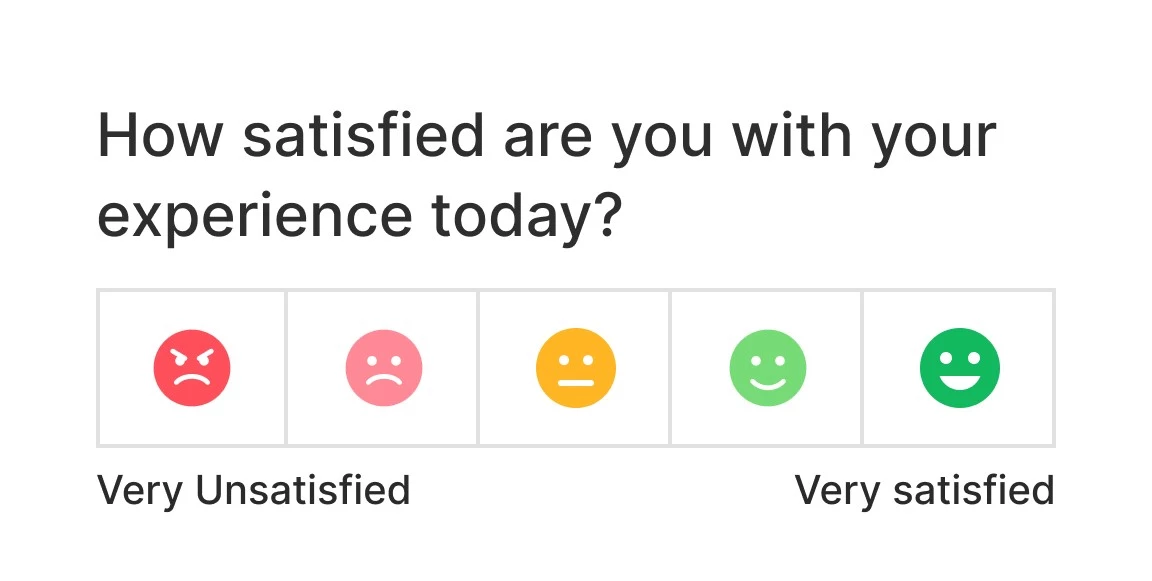
The Customer Satisfaction Score (CSAT) is a metric that measures how happy customers are with a company’s products or services. Businesses gather CSAT data by asking customers a simple question like ‘How satisfied were you with your experience today?" Customers can rate their satisfaction on a scale (usually from 1 to 5).
Companies can regularly measure CSAT scores to spot trends and make changes to enhance customer satisfaction. Keeping your customers happy is crucial for long-term success, and CSAT offers a straightforward way to measure and improve this happiness.
CSAT can be obtained through various channels. Some standard methods include online forms, survey software, or email follow-ups. Some free tools like Google Forms allow you to create and distribute surveys efficiently. On the other hand, paid solutions like Nicereply offer advanced features such as detailed analytics and seamless integration with customer support systems.
The key is to keep your survey simple. Using straightforward questions makes it easy for customers to respond, helping you gather the valuable insights you need to improve your services.
Here are a few questions you can use in your CSAT surveys:
If you want to get reliable results, you need to consider the timing and the placement of your CSAT survey.
Asking for feedback right after an interaction ensures that the experience is fresh in the customer’s mind, which provides more accurate and actionable insights. Another good time is when the customer is still actively engaged with your product after a purchase.
On the other hand, if you ask for feedback long after the interaction, the responses can be less accurate. For example, sending a survey a month after a service call may not gather helpful information because the customer might not remember all the details anymore. Also, asking for feedback while the customer is still browsing your website might be too early, as they haven’t completed their interaction yet.
As mentioned before, CSAT can be incredibly useful, allowing you to gather actionable feedback and make meaningful improvements. Here are a few practical tips on when to use it:
Measuring CSAT right after a customer service chat gives you immediate insights into how well your support team is performing. It’s a great way to evaluate if the customer’s issue was resolved satisfactorily and whether the agent was helpful. This feedback can help train your support team and improve overall service quality.
Phone interactions are still a go-to option for many customers seeking support. Sending a CSAT survey immediately after a call can help you understand whether the customer felt heard and had their issue resolved adequately. This feedback allows you to assess the quality of your call handling and make necessary improvements. It also helps you identify potential gaps in your customer service, ensuring that future interactions are more effective and satisfying for your customers.
Sending a CSAT survey after purchase helps you capture the customer’s opinion about their buying experience. It can tell you if the online store was easy to navigate, the product met their expectations, or the delivery was timely. Getting this feedback can help you tweak your sales funnel and enhance the shopping experience, leading to higher customer retention.
Adding a survey at the end of a knowledge base article helps you understand if the content is valuable and straightforward. If customers rate the article poorly, it might indicate that the information was hard to understand or incomplete. Take this feedback into account and improve your self-service options so it’s easier for customers to find and understand the information they need.
Simply put, the CSAT score is the sum of all the positive responses divided by the total number of collected responses and multiplied by 100. The result gives you a percentage of satisfied customers.
Let’s break it down with a simple example:
Imagine you conducted a survey and received 200 responses. Of these, 150 customers rated their satisfaction as positive (typically 4 or 5 on a 5-point scale).
Using the CSAT formula, you would calculate the score:
(150 positive responses / 200 total responses) x 100 = 75%
This result tells you that 75% of your customers are satisfied with your product or service. Higher CSAT scores generally mean customers are happy with your offer. This, in turn, leads to higher customer retention and potentially more referrals.
With a CSAT calculator, you can quickly determine how satisfied your customers are with just a few inputs. Simply enter the number of positive responses and the total number of responses collected. This quick and efficient tool can help you monitor customer satisfaction levels and improve your services.
If you are unsure how to make your survey, consider following these simple tips:
Different survey types can be more effective depending on your specific goals and customer touchpoints. Here are a few common types:
Crafting the right questions is crucial for gaining meaningful insights. You can use both open-ended and closed-ended questions, each offering unique benefits. By carefully choosing your survey type and questions, you can create an effective CSAT survey that will provide all the information you need to make informed decisions and enhance customer satisfaction.
There are various tools available that can help you create surveys, each of them offering different features and integrations. You should choose a tool that will cater to your specific needs and channels you are planning to use to conduct the surveys. So here are some options:
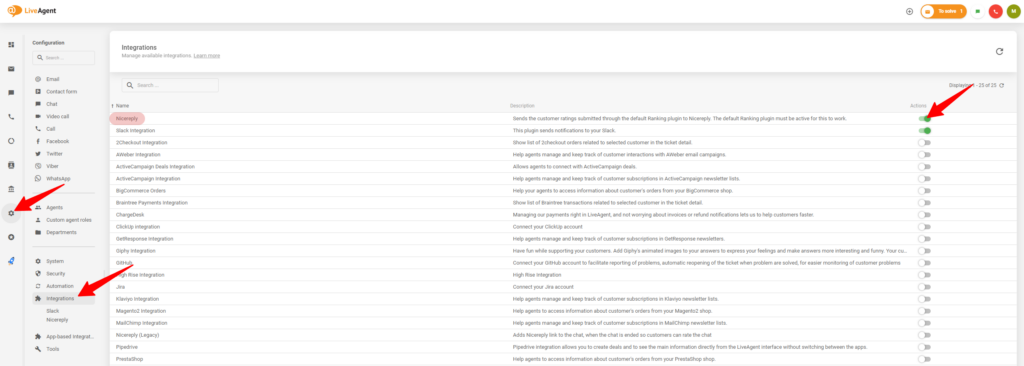
For example, LiveAgent integrates seamlessly with Nicereply, allowing you to gather customer feedback after their support interactions.

Customizing your surveys allows you to capture your brand’s identity and create a cohesive and engaging brand experience. Adjusting colors and buttons or adding animated effects can make the survey visually appealing. Don’t forget to insert your logo as well. It’s a simple but effective way to reinforce brand recognition and trust.
When surveys match your brand’s look and feel, customers are likelier to engage with them and provide thoughtful and honest feedback. This leads to more reliable and valuable insights for improving your customer satisfaction.
Remember that not every customer visits your website for the same reason. Some might be browsing, and others could be signing up for a free trial, upgrading their plan, or even canceling their subscription. A one-size-fits-all survey won’t capture the nuances of each experience.
You can send the proper survey to the right customer segment by segmenting your customers. This ensures each survey is relevant and valuable for you and your customer, leading to more accurate insights and better decision-making.
There’s no point in asking, ‘How satisfied are you with our product?" if the customer only considers signing up for a free trial. They have not interacted with your product, so their feedback would be irrelevant. Instead, customizing each survey based on various customer segments can help you get the most accurate and actionable information.
Once you’ve created and customized your CSAT surveys, it’s time to release them and collect valuable feedback. However, your work doesn’t stop once the surveys are sent out. It’s essential to monitor the performance of your surveys. Keep an eye on response rates, completion rates, and the quality of the feedback. These metrics can help you identify any issues or areas where the survey might need tweaking.
Run A/B tests on different survey designs, question types, and delivery methods to see what works best. Make improvements based on what you learn. If you notice that a particular customer segment consistently skips a question, consider rephrasing it or placing it at a different point in the survey. Regularly updating and refining your surveys ensures they remain practical tools for gathering actionable insights.
Let’s look at some real-life examples of how brands effectively use CSAT surveys to gather customer feedback. These examples showcase various approaches that can help you create your survey.
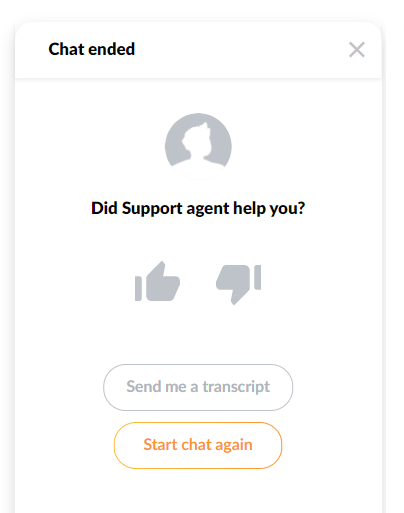
Thanks to its integration with Nicereply, LiveAgent collects feedback on customer satisfaction right after a support interaction. After resolving a support ticket, customers are asked to rate the service they received, helping LiveAgent improve the quality of customer support.
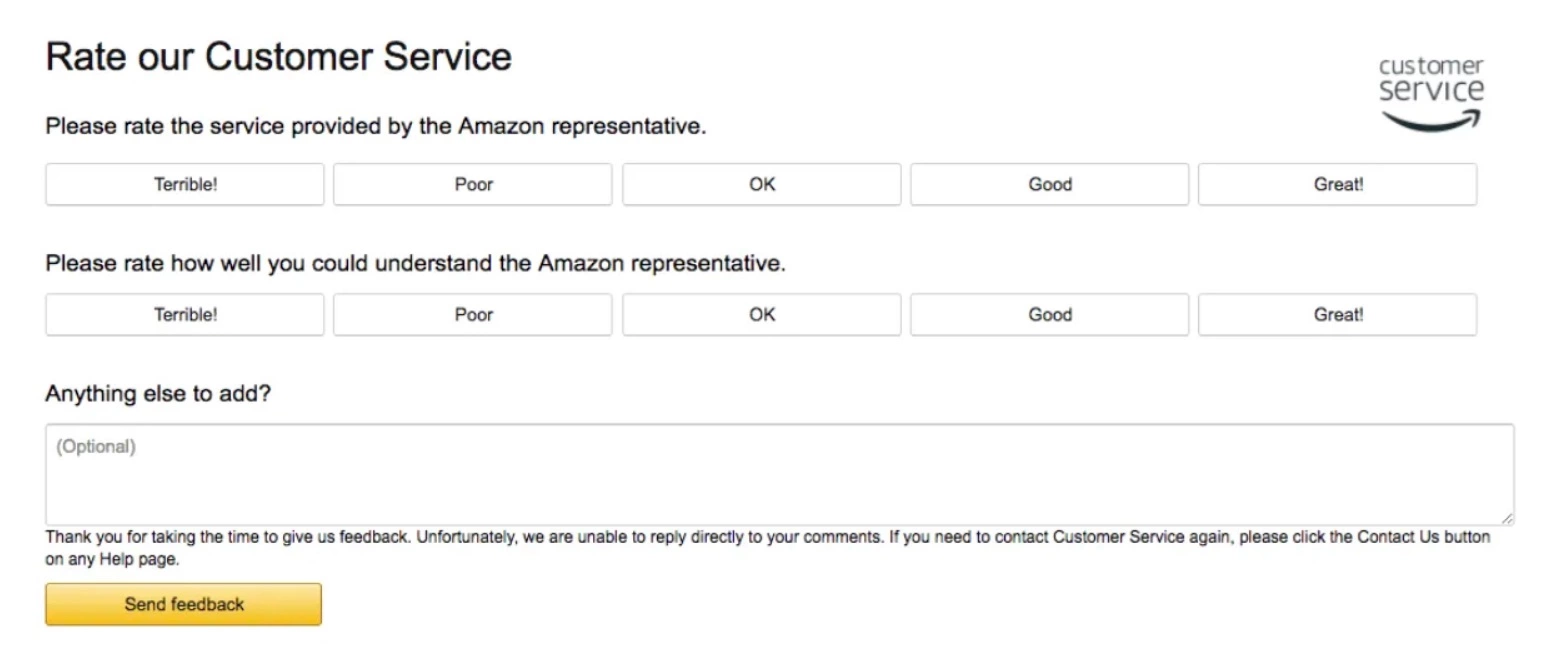
Amazon’s CSAT surveys use words instead of numbers for their satisfaction scale qualifiers, such as ‘Great," “Good”, " “OK”, " “Poor”, " and “Terrible.” At the end of the survey, they also include an optional text window where users can leave additional comments, providing deeper insights into their shopping and delivery experience.
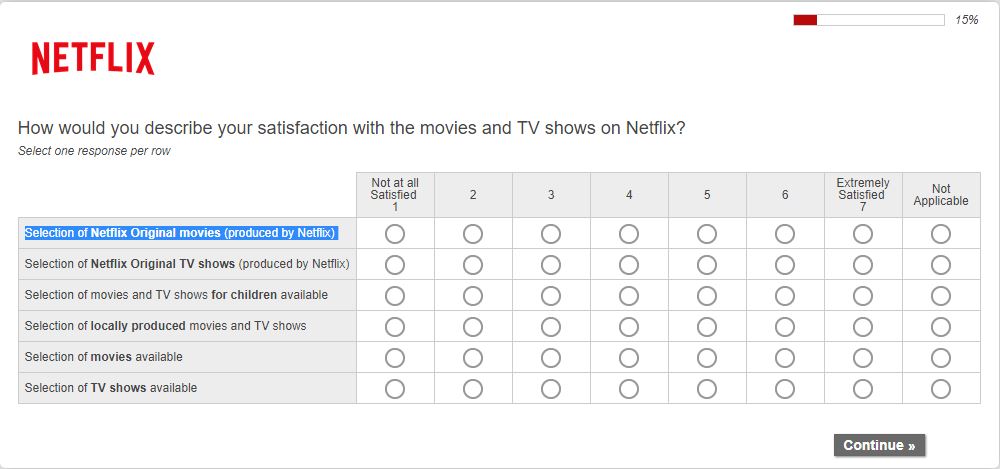
Netflix uses its surveys to understand how customers feel about the content and subscription plans. The survey is slightly longer, taking about 10 minutes to complete. This approach allows Netflix to gather broader feedback, allowing them to customize their offerings and enhance user experience based on the insights they receive.
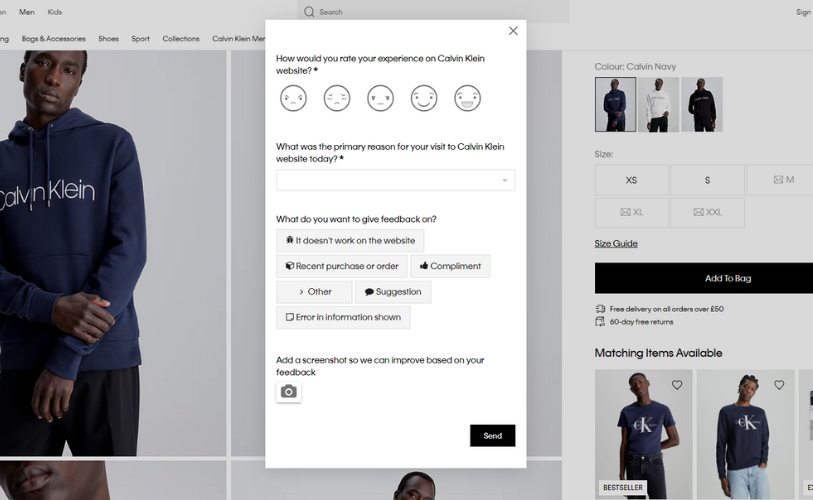
Calvin Klein’s survey starts by asking customers about their general experience on the website. To gather more context, a follow-up question inquires about the reason for their visit. What makes this survey different is that it allows users to add screenshots, providing a clearer picture of their experience and any issues they may have encountered.
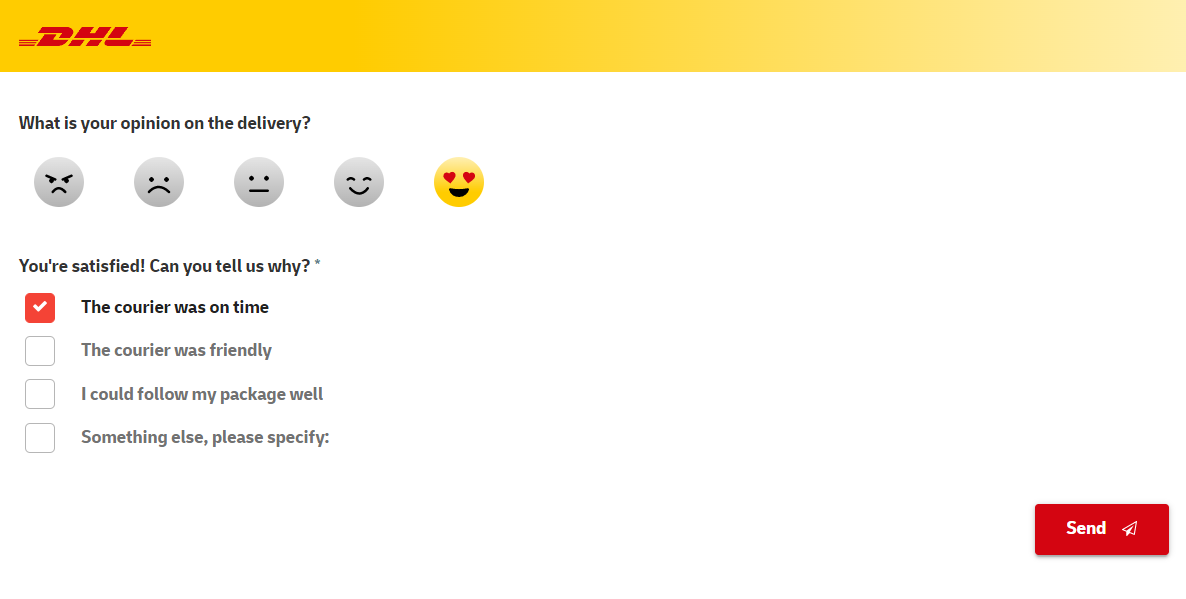
DHL includes the CSAT survey in an email sent to customers after they have delivered the package. It focuses on gaining feedback about the satisfaction levels related to the delivery process. The questions are short and very easy to answer, which helps improve the response rate and ensures DHL gets timely insights into their delivery performance.
A CSAT score can vary significantly depending on the industry you’re in. Generally, a 75% or higher CSAT score is considered good in most industries, indicating that most customers are satisfied with their experience. On the other hand, a CSAT score below 50% signals that improvements are needed to meet customer expectations. Look at industry benchmarks to clarify what constitutes a good CSAT score in different sectors.
| Industry | CSAT Score |
|---|---|
| Travel | 76% (in 2023) |
| E-commerce | 80% (in 2023) |
| Software and SaaS | 78% (in 2022) |
| Internet providers | 68% (in 2023) |
| Streaming | 77% (in 2023) |
| Health care | 76% (in 2023) |
| Banks | 78% (in 2022) |
| Airlines | 76% (in 2023) |
| Fast food restaurants | 78% (in 2023) |
| Social media | 73% (in 2023) |
We’ve highlighted how measuring CSAT can help you understand your customers’ happiness with your offerings. But what benefits can you expect, and what limitations should you be aware of? Let’s take a look.
While CSAT is excellent for measuring customer satisfaction, other metrics, such as Net Promoter Score (NPS) and Customer Effort Score (CES), can also help you gather comprehensive feedback. Each of these metrics serves a unique purpose and focuses on different aspects of the customer experience. So, let’s dive into some of the key differences between them.
Focus: Immediate satisfaction
What it measures: CSAT measures customer satisfaction at a specific touchpoint or after a particular interaction. It usually involves a single-question survey asking customers to rate their satisfaction on a scale of 1 to 5.
Focus: Customer loyalty
What it measures: NPS evaluates customer loyalty and whether they would recommend your business to others. It asks customers to rate, from 0 to 10, how likely they are to recommend your product or service. This helps you understand long-term loyalty and shows how healthy your customer relationships are overall. Unlike CSAT, NPS gives a bigger picture of how customers feel about your brand, not just their immediate satisfaction.
Focus: Ease of experience
What it measures: CES measures how easy it was for customers to complete a specific action or resolve an issue. It usually asks them to rate their experience from 1 (very difficult) to 7 (very easy). Lower effort scores mean customers found it easy, which usually leads to higher satisfaction and loyalty. It is an essential metric for improving customer service processes.
Which metric is the best? The truth is, there isn’t a one-size-fits-all answer. The best customer experience metric depends on what you want to achieve. Each metric offers unique insights and focuses on different aspects of the customer experience.
But who says you only need to use one metric? By leveraging all three—CSAT, NPS, and CES—you can get a comprehensive overview of your customer experience. Using all these metrics together gives you a well-rounded understanding, helping you make better decisions to improve customer satisfaction and loyalty.
Creating effective CSAT surveys requires a strategic approach. But how can you ensure you’re doing it right? Let’s explore some best practices that will help you get the most accurate and valuable data from your CSAT surveys.
The timing of your CSAT surveys is crucial. Asking too early while customers are still exploring or making a purchase won’t give you a complete picture of their satisfaction. On the other hand, waiting too long, like months after the purchase or interaction, means the details may not be fresh in their minds.
To get the best results, consider sending surveys right after an interaction, a few weeks after a purchase to allow them some time with the product, and periodically throughout the year to gauge ongoing satisfaction.
The placement of your survey is just as important. Place the study in the chat window if the interaction occurred over a live chat. For follow-ups after purchases, sending a survey via email can be more appropriate.
CSAT surveys must be easy to complete. Short, relevant questions are more likely to get high completion rates. Customers might feel overwhelmed and skip giving feedback if the survey is too long or complex.
Stick to the basics with one or two quick questions about their satisfaction level. You can also include an optional text field for an open-ended question. This allows customers to elaborate if they wish but doesn’t create any pressure. Simplicity ensures you get the highest possible response rate while gathering valuable insights.
Setting realistic goals is also essential to make a meaningful improvement. Unrealistic expectations can lead to frustration and may even demotivate your entire team. For example, aiming to increase your CSAT score by 2% in the next quarter is achievable and measurable. Remember, small, consistent gains often lead to significant long-term success.
Collecting data is just the beginning. The real value lies in using customer feedback to make tangible improvements. There’s no point in gathering input if you don’t act on it. Analyze the data to identify recurring issues or suggestions. Implementing changes shows that you value your customers’ opinions, which can enhance their loyalty and satisfaction.
This could involve refining product features, improving customer service processes, or even training staff to meet customer needs during interactions better. For example, if multiple customers mention that the product’s interface is confusing, redesign it to be more intuitive and user-friendly.
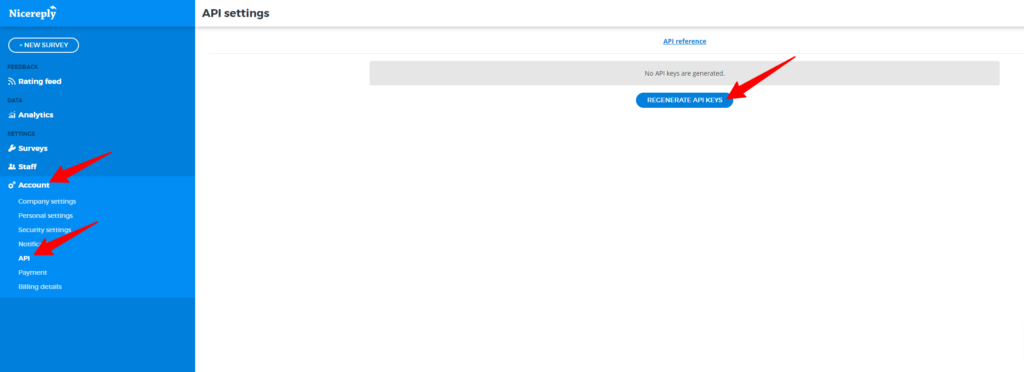
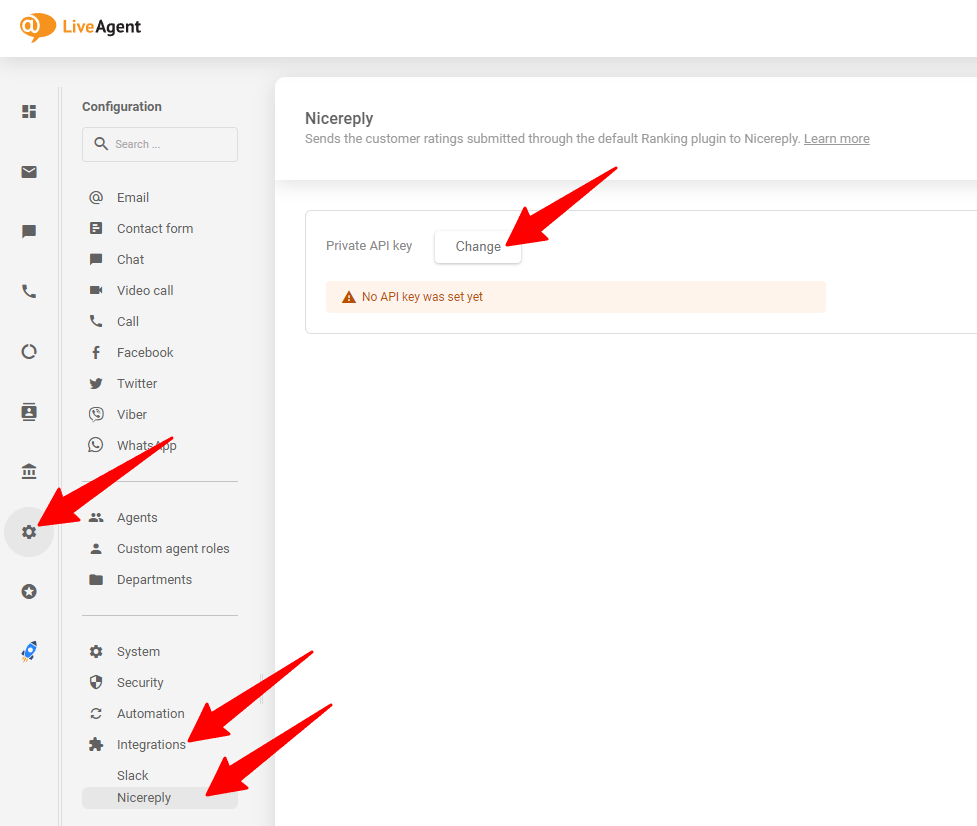
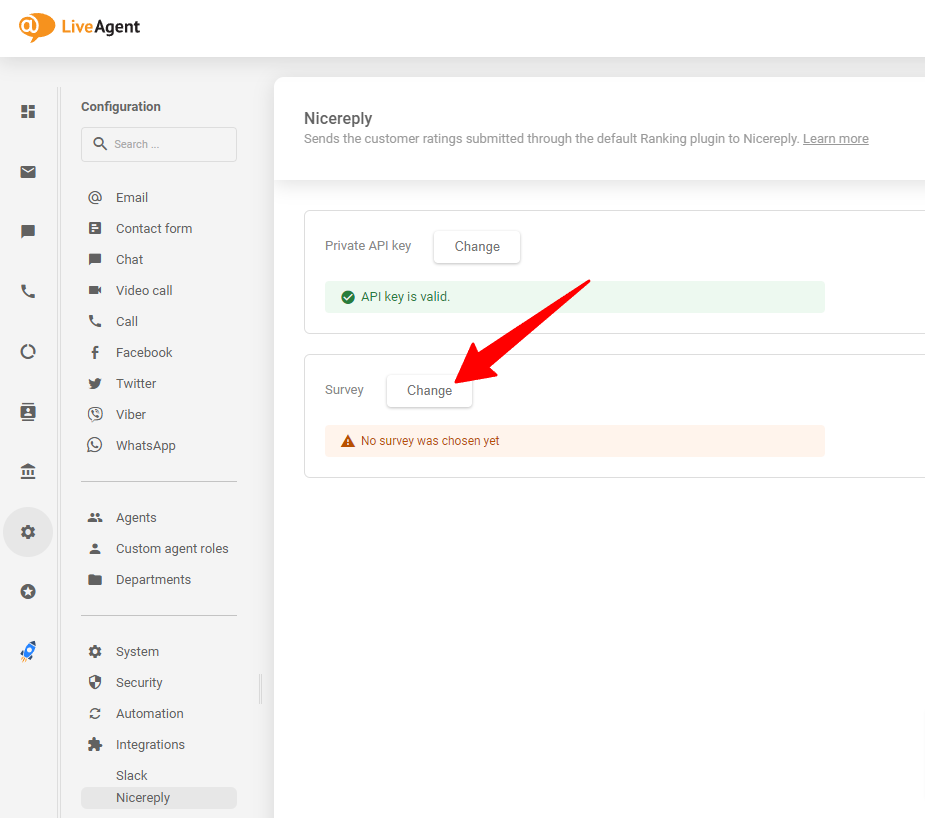
LiveAgent integrates seamlessly with Nicereply, enabling you to conduct surveys during live chat sessions and via email. It also provides comprehensive reports and insights on your agents’ performance and whether customers received the support they expected.
After a chat session ends, customers are given rating options to evaluate their experience. They can choose from the following ratings:
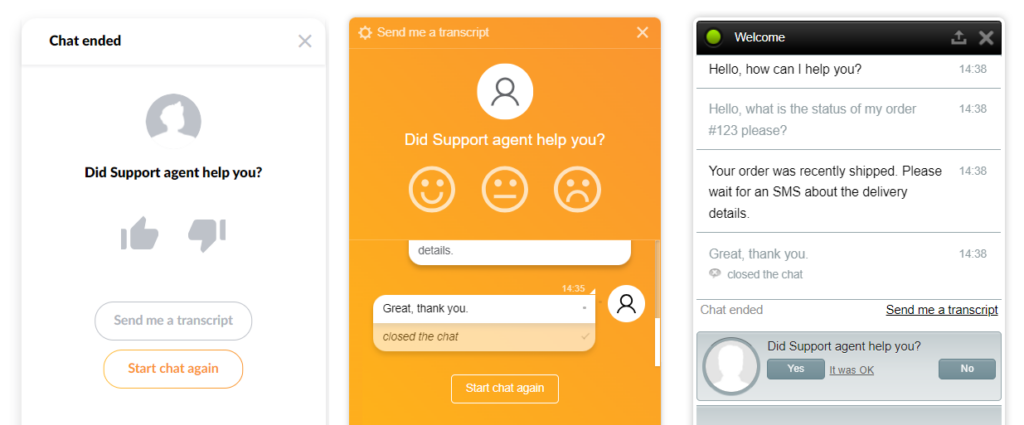
Agents can then see the ranking at the end of the chat, below the last message.
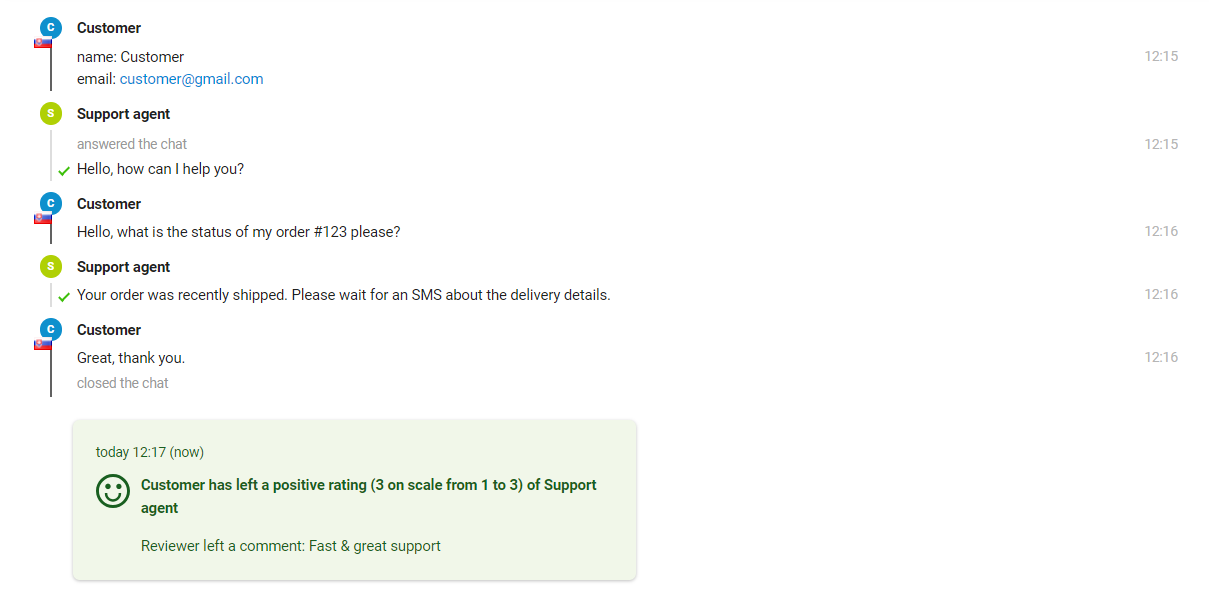
We’ve covered the essentials of the Customer Satisfaction Score, including what it is, how to calculate it, and its pros and cons. Understanding CSAT is crucial for gaining insights into customer happiness and identifying areas for improvement. By regularly measuring CSAT, you can enhance your products and services, improving customer loyalty and business growth.
Creating an effective survey involves choosing the right questions based on your goals and target segment. Choosing the right platform can also significantly affect how effectively you gather and manage customer feedback. Various tools are available, but selecting the right one depends on your needs.
Businesses like LiveAgent, Amazon, and DHL use CSAT surveys to gather helpful customer insights. How these companies implement their surveys can offer practical examples and help you decide the best approach for your business. Also, benchmarking your results against industry standards can indicate what CSAT score is suitable for your type of business.
While CSAT is an important metric, it’s not the only one you should focus on. Other metrics like Net Promoter Score (NPS) and Customer Effort Score (CES) can offer valuable insights. Understanding the differences between these metrics can help you gain a more comprehensive view of your customer experience.
LiveAgent is an excellent tool for boosting customer satisfaction with its robust features and seamless integration options. Plus, LiveAgent offers a free trial, so you can experience how it can elevate your customer service without any initial investment.
Ready to boost the satisfaction of your customers? Transform your customer support experience with LiveAgent! Start your 30-day free trial today and see how easy it is to increase your Customer Satisfaction Score.
Transform your customer support experience with LiveAgent! Start your 30-day free trial today and see how easy it is to increase your Customer Satisfaction Score.
Share this article
Meet Jana, the distinguished head WordPress content editor spearheading operations at LiveAgent, Post Affiliate Pro, URLsLab and FlowHunt. Armed with an unwavering dedication to excellence, she diligently navigates the intricate landscapes of digital content, ensuring pristine quality and seamless functionality across platforms. She enjoys creative activities even outside of work.

Discover the importance of customer satisfaction surveys to assess satisfaction, improve loyalty, and reduce churn. Learn best practices, smart targets, and eff...

Discover the benefits of customer satisfaction surveys and how LiveAgent tools enhance feedback, improve service, and boost customer loyalty!

Discover the top 16 customer service metrics to track in 2025, including CSAT, NPS, CES, and more. Enhance customer satisfaction, retention, and loyalty by meas...
Join our community of happy clients and provide excellent customer support with LiveAgent.