Unlock the secrets of customer loyalty and retention with our comprehensive guide
Explore customer loyalty and retention with 12 strategies to enhance both. Understand the difference, common aspects, and metrics like NPS and CLV. Learn to build lasting customer relationships for sustained growth.
Published on Jan 20, 2026 by Lucia Halašková.Last modified on Jan 20, 2026 at 7:35 am
Customer Loyalty
Customer Retention
Growth
Customer Service
In a world where choices are abundant, what makes a customer return to a brand time and again? Customer loyalty and retention play pivotal roles in the success of any business, reflecting not just satisfaction but also emotional connection. Understanding these concepts can significantly influence a company’s bottom line.
Customer loyalty refers to the emotional bond between a customer and a brand, while customer retention focuses on keeping existing customers engaged over time. Both are essential for sustained business growth, particularly in competitive markets where attracting new customers is often costlier than nurturing existing relationships. Recognizing these dynamics can pave the way for improved revenue and brand reputation.
This article will explore the definitions, differences, and importance of customer loyalty and retention in business. We will delve into actionable strategies and key metrics that help measure these concepts effectively, providing a simple guide to enhance customer loyalty and retention for your organization.
Definitions of customer loyalty and retention
Customer retention and customer loyalty are vital concepts for any business aiming for long-term success. Let’s break down what each term means.
Customer Retention: This is a business’s ability to keep its customers engaged over a period of time. The focus here is on preventing customers from switching to competitors. Retention is often influenced by rational factors like cost, convenience, or necessity.
Customer Loyalty: Loyalty measures a customer’s long-term commitment and preference for a specific brand, product, or service. It indicates the likelihood of repeat purchases and recommendations. Loyalty comes from positive emotional connections to the brand.
Understanding these differences is crucial for developing effective strategies. A strong retention strategy includes reducing churn rate and understanding customer behavior. These can be achieved by offering personalized experiences and gathering valuable insights.
Here’s a quick comparison:
Aspect
Retention
Loyalty
Based on
Rational factors (e.g., cost, necessity)
Emotional connections (e.g., brand preference)
Focus
Keeping customers over time
Building commitment and advocacy
To grow your business, nurturing both customer retention and loyalty is essential. This dual focus helps in building a satisfied and loyal customer base.
Differences between customer loyalty and retention
Customer loyalty and retention are critical concepts in business, but they serve different purposes.
Customer Loyalty is mostly emotional. It focuses on the emotional bonds and deep connections customers have with a brand. Companies aim to create loyal customers who will promote the brand based on positive experiences. Key metrics include Net Promoter Score (NPS) and customer satisfaction.
Customer Retention is functional. It involves strategies to keep customers over a specific time period, thus reducing churn rate. It emphasizes repeat purchases and aims to stabilize revenue and support business growth. Important metrics are repeat purchase rate and customer lifetime value (CLV).
Here’s a quick comparison:
Aspect
Customer Loyalty
Customer Retention
Focus
Emotional bonds
Functionality and repeat business
Main Goal
Brand advocacy
Reduce churn and ensure purchases
Timeframe
Long term
Medium to long term
Key Metrics
NPS, Customer Satisfaction
Repeat Purchase Rate, CLV
Impact
Enhances brand image
Stabilizes revenue
Both strategies are vital for creating a loyal customer base, meeting customer expectations, and achieving long-term success.
The importance of customer loyalty in business
Customer loyalty is crucial for any business aiming for long-term success. A loyal customer base results in higher sales and positive word-of-mouth referrals. Building this loyalty requires a deep understanding of customer needs and an ongoing strategic approach.
Here are key benefits of nurturing customer loyalty:
Cost Efficiency: Retaining current customers is cheaper than acquiring new ones.
Positive Feedback: Loyal customers provide valuable insights that can improve products.
Brand Advocacy: They often become brand ambassadors, driving referrals.
Maintaining customer loyalty is not a one-time effort. It involves prioritizing customer satisfaction and engagement, key metrics that contribute to a business’s growth and sustainability.
Benefits of customer loyalty
Description
Stable Sales
Ensures consistent revenue
Cost-Effective
Reduces acquisition costs
Valuable Insights
Enhances product offerings
Increased Referrals
Expands customer base through word-of-mouth
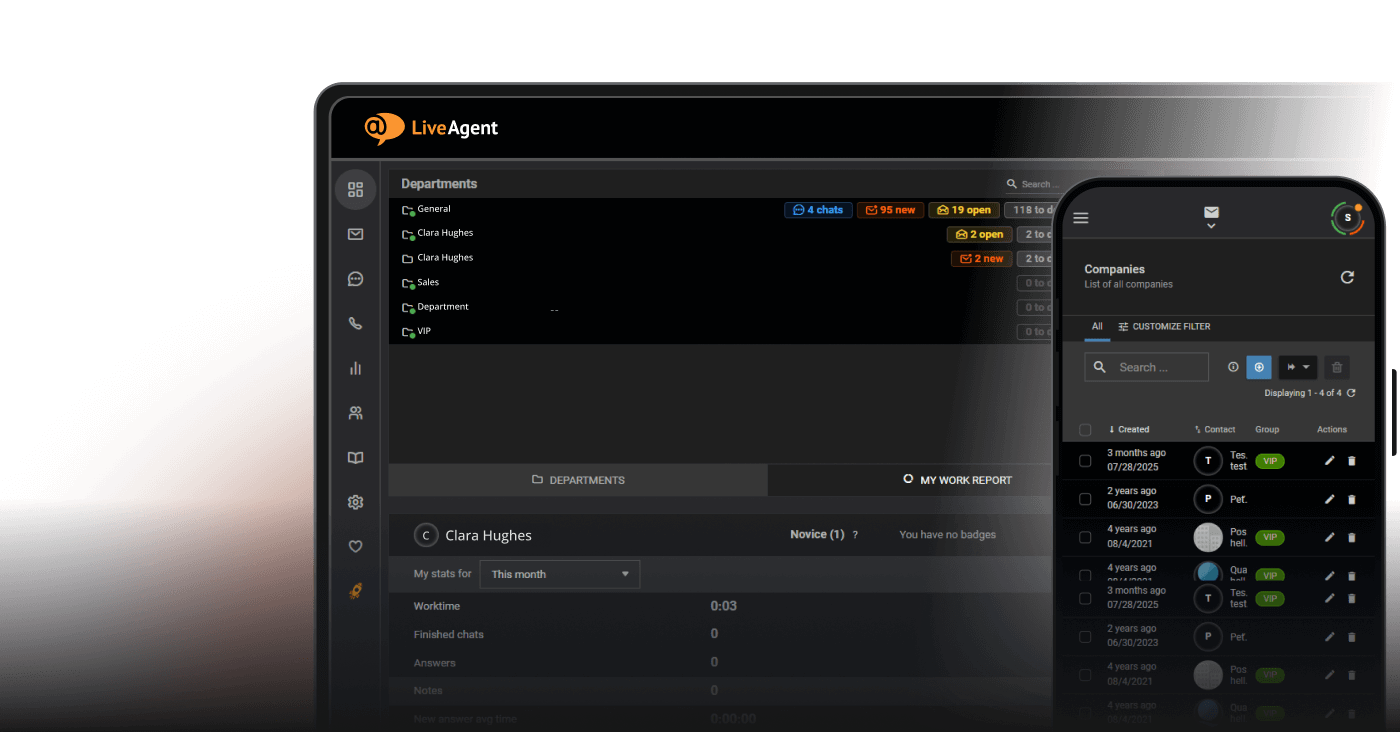
LiveAgent offers a comprehensive suite of features that significantly contribute to enhancing customer loyalty through improved service and engagement. Here’s how its features support customer loyalty:
Efficient Ticketing System: LiveAgent’s ticketing system allows businesses to manage customer inquiries effectively. By prioritizing tickets based on urgency and customer value, critical issues are addressed promptly. Quick and efficient resolutions foster a positive customer experience, which is crucial for building loyalty.
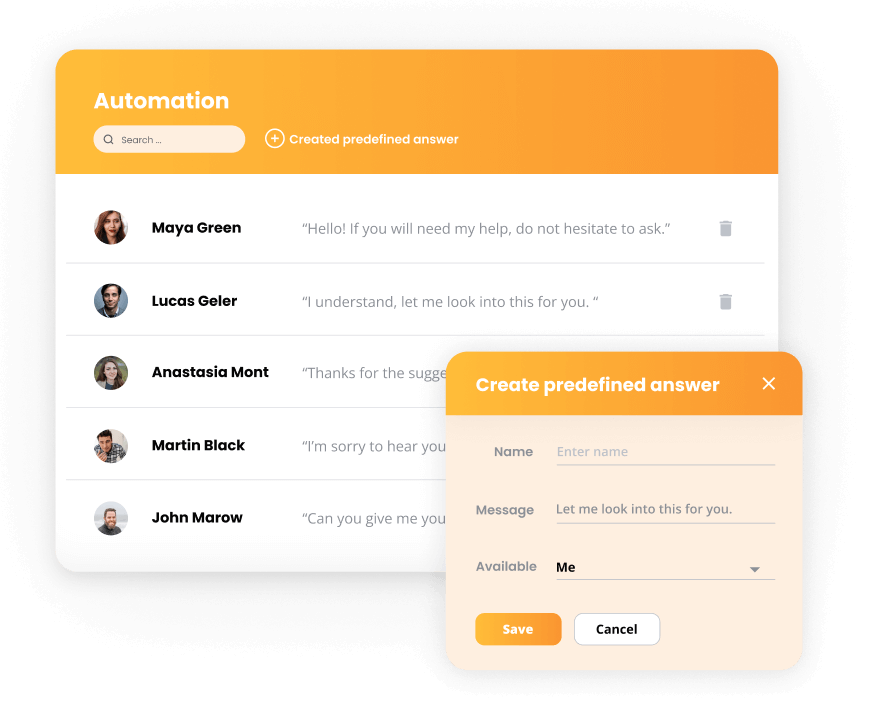
Organized Management: The use of tags, categories (departments), and automation rules streamlines the support process. This organization ensures that customers receive timely and relevant responses, reducing frustration and enhancing the customer’s trust in the brand.
Service Level Agreements (SLAs): Implementing SLAs helps set expectations for response and resolution times. By meeting or exceeding these expectations, businesses can enhance customer satisfaction and demonstrate a commitment to service excellence, which greatly contributes to customer retention.
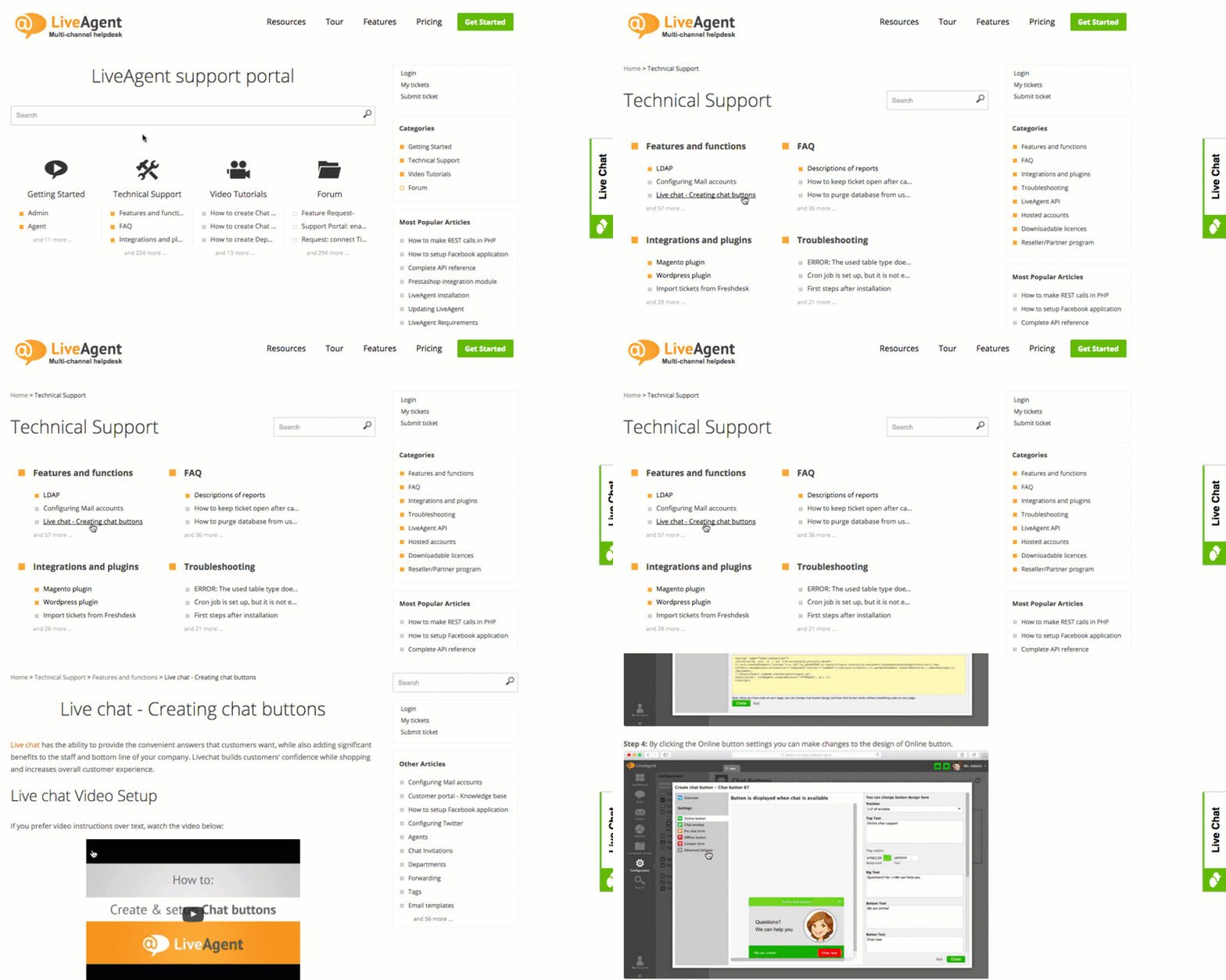
Knowledge Base and Self-Service Portal: LiveAgent enables companies to create a rich knowledge base and self-service portal where customers can find answers to common questions easily. This empowers customers to resolve issues on their own, leading to higher satisfaction and loyalty, as they feel supported even without direct interaction with the support team.
Feedback Collection: The feedback button feature allows businesses to gather insights directly from customers. Each piece of feedback creates a new ticket, allowing companies to respond and learn from customer experiences. This proactive approach to customer feedback not only enhances service quality but also shows customers that their opinions are valued, fostering loyalty.
Proactive Issue Resolution: By monitoring customer interactions and feedback, businesses can identify potential issues before they escalate. Proactively addressing these problems helps maintain customer satisfaction and loyalty, as customers appreciate when companies anticipate their needs.
Simplified Processes: LiveAgent can help simplify cancellation and return policies, making it easier for customers to navigate these processes. A user-friendly approach to handling such concerns can reduce customer frustration and increase retention by ensuring that customers feel supported even when they consider leaving.
Personalized Customer Interactions: The CRM capabilities of LiveAgent allow businesses to personalize interactions based on customer history and preferences. Personalized communication enhances the customer experience and fosters a deeper connection, which is vital for loyalty.
An effective strategy that focuses on personalized experiences and meeting customer expectations can create a loyal customer base. Building customer loyalty is a journey, but it’s essential for long-term business growth.
The role of customer retention in e-commerce
Customer retention is vital in e-commerce. It involves activities that decrease customer defections, impacting profitability and growth. Retention can be measured using key metrics like customer retention rate, churn rate, and customer lifetime value (CLV).
Metric
Description
Customer Retention Rate
Percentage of customers a business retains over a time period.
Churn Rate
Percentage of customers lost over a time period.
Customer Lifetime Value (CLV)
Total value a customer brings over their entire relationship.
High retention boosts repeat purchases, essential for maximizing revenues from current customers. Quality products, excellent service, and meeting expectations are key to effective retention strategies. Satisfied customers are more likely to return, reducing customer acquisition costs.
Loyal customers are less swayed by competitors. They allow businesses to resolve issues and improve satisfaction, building long-term relationships. This creates a loyal customer base, ensuring business growth.
In the competitive e-commerce space, focusing on customer experience and feedback is crucial. Personalized experiences and positive interactions increase retention, paving the way for long-term success.
Key metrics for measuring customer loyalty and retention
Customer loyalty and retention are vital for business growth. They are measured using several key metrics that offer insights into customer behavior and satisfaction. These metrics help businesses in refining their strategies to maintain and enhance customer relationships.
Customer Retention Rate (CRR)
The Customer Retention Rate measures the percentage of customers a business retains over a specific time. It’s an essential indicator of how well retention strategies are working.
To find the CRR:
Subtract the number of new customers gained during a period from the total number of customers at the end.
Divide this number by the initial customer count.
Multiply by 100 to get a percentage.
For example, a CRR of 95% is good. This is the case if a business starts with 150 customers, gains 50, and loses 7, ending with 193 customers.
Customer Lifetime Value (CLV)
Customer Lifetime Value shows the total revenue expected from a customer throughout their relationship with a business. It helps in predicting future cash flows and profitability.
To calculate CLV:
Use the formula: Average Value of Sale × Number of Transactions × Retention Time Period × Profit Margin.
A higher CLV means customers are engaging more deeply with the brand. Loyalty programs encourage repeat purchases, boosting CLV.
Net Promoter Score (NPS)
Net Promoter Score is a common metric used to assess customer satisfaction and loyalty. It asks customers how likely they are to recommend the company to others on a scale from 0 to 10.
Scores of 9 or 10 are ‘Promoters," loyal customers likely to advocate for the brand.
A high NPS points to strong loyalty, while a low score indicates areas needing improvement. However, NPS focuses on intentions rather than actual behaviors. Thus, it should be one of several tools used to gauge loyalty.
By understanding these metrics, businesses gain valuable insights. They enable fine-tuning strategies to promote loyalty and retention, paving the way for sustained business success.
Actionable strategies to improve customer loyalty
Building customer loyalty is essential for long-term success. Loyalty and retention strategies focus on creating satisfying experiences that encourage repeat business. By developing a loyal customer base, businesses enhance their brand reputation and reduce customer acquisition costs. Here’s how you can improve customer loyalty effectively:
Implementing effective loyalty programs
Loyalty programs are excellent tools for boosting customer retention. Acquiring new customers is five times costlier than keeping existing ones. Here’s why loyalty programs are beneficial:
Reward Systems: Points-based, cash back, or tiered programs create a sense of value, making customers feel appreciated.
Enhanced Brand Value: These programs not only encourage repeat purchases but also improve how customers perceive the brand.
Increased Customer Lifetime Value (CLV): By fostering long-term relationships, businesses can gain insights into potential revenue across a customer’s journey.
Consider this example table for types of loyalty programs:
Type
Description
Points-Based
Customers earn points for purchases and redeem them for rewards.
Cash Back
Customers receive a percentage of their purchase amount as a credit.
Tiered
Offers increasing benefits as customers move through different tiers.
Prioritizing exceptional customer service
Exceptional customer service is crucial in retaining customers and building loyalty. Focus on these aspects:
Prompt Responses: Address complaints immediately to keep customers satisfied.
Balanced Pricing: Pair reasonable pricing with excellent service to outperform competitors.
Consistent Support: Support from first contact to post-purchase enhances retention and lowers churn rates.
LiveAgent significantly enhances customer service by integrating a robust ticketing system that allows businesses to effectively manage and prioritize customer inquiries based on urgency and value. This ensures that critical issues are addressed promptly, fostering customer satisfaction.
LiveAgent’s features, including tags, categories, automation rules, and Service Level Agreements (SLAs), streamline workflow and enhance efficiency, ultimately contributing to customer loyalty and retention.
Providing outstanding service leads to satisfied customers, making them more likely to stay loyal to your brand.
Leveraging customer feedback
Customer feedback is vital for retention. It offers direct insights into the customer experience and helps reduce churn rates:
Surveys and Feedback: Conduct both simple and detailed surveys to understand customer needs better.
Engagement: Involve loyal customers in feedback processes, allowing businesses to align strategies with customer preferences.
Feedback Loop: Act on feedback to show customers they are valued, increasing loyalty.
By understanding and tracking customer behavior, businesses can identify key features that drive value and improve overall experiences.
The impact of customer loyalty on repeat business
Customer loyalty is crucial for sustaining repeat business. It stems from strong emotional connections with a brand. Loyal customers tend to stick with a company even when prices rise. This shows their dedication.
A well-designed loyalty program can boost customer retention. These programs make sure current customers prefer your brand. Increasing customer retention is vital because it’s cheaper to keep customers than to find new ones. In fact, acquiring a new customer costs five times more than keeping an existing one.
Here’s why loyalty matters:
Customer Lifetime Value (CLV): Loyal customers bring more revenue over time. They engage with the brand frequently, increasing the CLV.
Cost-Effectiveness: Retaining customers saves on acquisition costs.
Brand Preference: Loyalty ensures customers choose your business over competitors.
Benefit
Description
Cost-Effectiveness
Cheaper to retain than acquire new
Increased Revenue
Loyal customers spend more over time
Brand Preference
Customers choose you consistently
To foster loyalty, focus on personalized experiences and respond to customer feedback. This way, loyal customers will drive your business towards long-term success.
Case studies of successful loyalty programs
Loyalty programs are powerful for boosting customer retention. They reward repeat purchases and referrals, keeping customers engaged with a brand. An effective strategy used in loyalty programs can significantly enhance customer lifetime value. This is done by offering exclusivity and tangible benefits beyond just points.
Let’s look at some successful case studies:
The North Face’s VIPeak Program: This uses a tiered structure to incentivize purchases. Customers gain increasing benefits as they climb tiers, fostering a sense of achievement.
Sephora’s Beauty Insider Program: This program elevates customer loyalty by providing unique experiences. These include early access to new products and exclusive events, creating emotional connections with customers.
Including gamification elements can further boost engagement. By turning the loyalty experience into a fun and interactive journey, brands encourage long-term loyalty. These programs showcase how personalized experiences lead to loyal customer bases, satisfying both customer expectations and business growth goals.
Key Takeaways:
Tiered benefits increase customer engagement.
Unique experiences forge emotional connections.
Gamification enhances long-term loyalty.
Incorporating these strategies can provide valuable insights for improving customer retention and loyalty.
Common challenges in achieving customer retention
Customer retention is vital for business growth yet poses several challenges. Low customer retention rates often hint at issues in the customer experience. When customers aren’t satisfied, they might jump ship, raising the churn rate and potentially hurting revenue.
Retained customers are not a guarantee of loyalty. They might leave for a better deal elsewhere. Thus, constant engagement and offering value are crucial. Effective communication and robust customer support play key roles here. They ensure customers feel valued and understood.
Implementing strong retention strategies is a must. Such strategies can build emotional connections, turning satisfied customers into loyal advocates. This, in turn, lowers attrition rates.
Key challenges in customer retention:
Low Retention Rates
High Churn Rates
Competition’s Better Offers
Lack of Ongoing Engagement
Inadequate Communication and Support
To tackle these, businesses can develop customer loyalty programs, enhance personalized experiences, and gather continuous feedback. Understanding these challenges and implementing solutions can lead to long-term success and a loyal customer base.
Conclusion
In conclusion, nurturing customer loyalty and retention is key to long-term business success. Building a sense of community among your loyal customers fosters a deeper connection to the brand. This drives not only customer loyalty but also retention.
Implementing loyalty programs with rewards for repeat purchases and referrals can be a highly effective strategy. These programs motivate customers to stay committed over a period of time. Furthermore, continuous engagement through follow-up emails and personalized experiences shows dedication to customer satisfaction.
A loyal customer base creates ongoing positive experiences. These satisfied customers are likely to make repeat purchases and provide valuable word-of-mouth referrals. This contributes significantly to business growth.
Consider our 30-day free trial to experience our commitment to enhancing customer satisfaction.
Master loyalty and retention
No strings attached. Start your free account today and experience how LiveAgent can help you build lasting customer relationships.
Lucia is a talented WordPress content editor who ensures the seamless publication of content across multiple platforms.
Lucia Halašková
WordPress Content Editor
Frequently asked questions
Who is responsible for maintaining customer loyalty & retention?
Maintaining customer loyalty and retention is a collective effort involving multiple departments. Primarily, it falls under the responsibility of the customer service and support teams. However, marketing, sales, and product development teams also ensure customer satisfaction through targeted campaigns, quality products, and continuous engagement.
How can small businesses enhance customer loyalty and retention with limited resources?
The right strategy in such circumstances could be to focus on personalized customer service to build strong relationships, and to leverage affordable technology. Simple gestures like customized thank-you notes, loyalty programs, and regular communication through emails or social media can make a significant impact.
What is the impact of social media on customer loyalty and retention?
Since social media provides a platform for real-time engagement, feedback, and community building, it can be used to share valuable content, address customer concerns promptly, and showcase customer testimonials. Positive interactions on social media enhance customer trust and loyalty, while active engagement helps maintain ongoing relationships, encouraging repeat business and long-term retention.
Customer retention and customer loyalty: Simple guide, strategies, and metrics
Explore customer loyalty and retention with 12 strategies to enhance both. Understand the difference, common aspects, and metrics like NPS and CLV. Learn to bui...
Customer Loyalty 101: Importance, Strategies, Metrics & More
Explore the significance of customer loyalty, its difference from satisfaction, effective strategies, key metrics for measurement, and current trends. Learn how...
14 min read
CustomerLoyalty
CustomerRetention
+2
You will be in Good Hands!
Join our community of happy clients and provide excellent customer support with LiveAgent.