


Help Desk
Discover the benefits, functions, and importance of help desks. Enhance customer satisfaction, streamline support, and boost productivity today!
22 min read
Customer support
Help desk software
+2

Discover the differences between help desks and service desks to choose the best option for your business. Learn their unique benefits and explore LiveAgent’s help desk software with a free trial to enhance support and streamline operations.
Have you ever wondered what the difference is between a service desk and a help desk? These terms are often misinterpreted or interchanged, but they actually have some key differences that you need to keep in mind.
Therefore, we are going to dive into what exactly a help desk and a service desk are, explore their unique features, and discuss which one might be most suitable for your business. By the end of this article, you’ll have a clear understanding of these terms and be able to choose the right tool for your business needs.
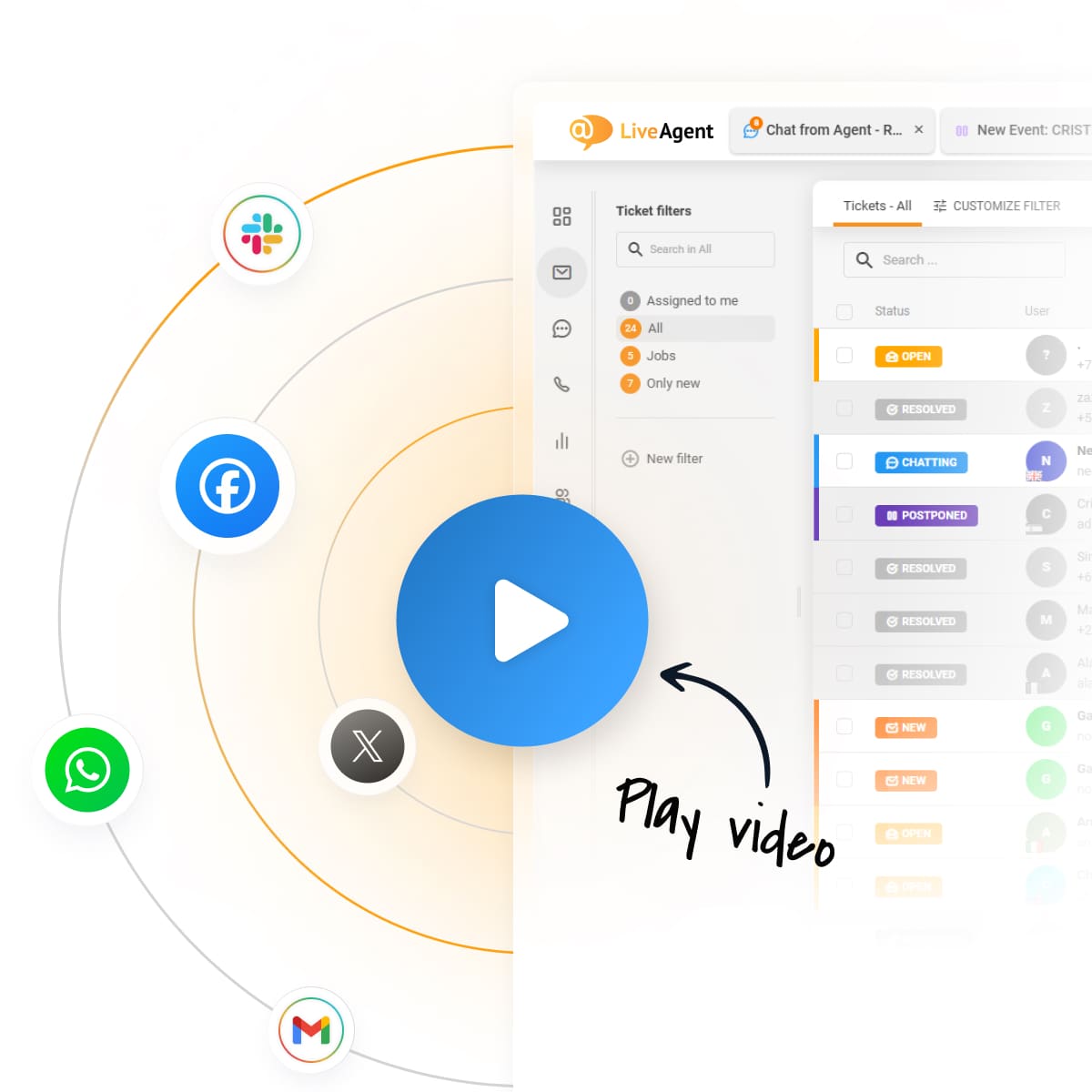
Picture a help desk as a virtual support center that acts as a bridge between businesses and their customers. It’s a support software that gathers customer queries and tackles them effectively. Acting as a central point for customer service, it lets businesses sort, monitor, and solve issues or requests from multiple channels such as emails, live chat, or social media.
Help desk as a service can greatly enhance customer and employee satisfaction by streamlining the process of handling customer issues in a timely and organized manner. It allows businesses to provide efficient support and maintain a positive brand image by ensuring prompt responses and resolutions to customer problems. All this is possible thanks to its advanced features that extend its usefulness.
Help desk or helpdesk? If you are wondering what the difference is between helpdesk vs help desk, it lies in how the terms are commonly used.
A service desk is similar to a help desk, but it goes beyond just addressing customer inquiries. It serves as a comprehensive IT service management (ITSM) solution that provides support not only to customers but also to employees. The ITSM help desk is a part of the service desk that provides efficient management of IT service-related incidents, requests, changes, and problems. It ensures that IT service management processes are followed and enables the service desk to deliver high-quality support. One of its essential components is the IT service desk ticketing system, which helps in organizing and tracking user requests.
Unlike a help desk, which primarily focuses on customer support, a service desk focuses on a broader approach. It manages and coordinates IT services for the entire organization, ensuring smooth operations, minimizing downtime, and enhancing productivity. It is also responsible for managing service level agreements (SLAs), incident tracking, and service request tracking, and even facilitating internal communication among teams or departments.
When explaining the difference between a help desk and a service desk, it’s important to note that despite sharing some features, they have several distinct characteristics.
The primary function of help desk support software is to handle incidents and service requests. Help desks aim to resolve customer issues quickly, ideally on the first contact, to reduce overall wait times. Efficient request handling is at the core of help desk activities for many organizations. Therefore, the help desk is concerned with end-user functionality.
On the other hand, the service desk software focuses on the needs of a business rather than the user’s needs/requests. Instead of simply responding to incidents and fulfilling requests, a service desk reviews the overall IT and business processes within an organization with the goal of continual improvement. Ultimately, service desks focus on business goals and best practice processes.
| Help desk software | Service desk software |
|---|---|
| Main features | A help desk generally includes a ticket management system and self-service capabilities. |
| Issue resolution | A help desk is tactical and reactive. |
| Main focus | A help desk focuses on solving the problem of end-users. |
| Main approach | A help desk operates on a break-fix issue approach. |
| Required resources | A help desk can often be run with minimal staff. |
The biggest difference between a help desk and a service desk is that the help desk can literally be considered a subset of the service desk due to the tool’s limited scope and capabilities. Help desks typically have a narrower scope and focus mostly on customer support. They handle specific types of issues, such as troubleshooting technical problems or answering customer inquiries.
A service desk offers a broader range and more complex services. This is in addition to ticket management and the integration of business processes into the service management infrastructure. Most of the service desk software systems on the market can be used as help desks. However, it does not apply the other way around. Many organizations incorporate the help desk as a part of their service desk.
A help desk is a stand-alone solution performing tasks related to ticket management, allowing businesses to track and prioritize customer inquiries. It also offers knowledge management in the form of a self-service functionality which enables customers to find answers to their questions by themselves.
A service desk is a more complex system with a full range of IT management capabilities. It is integrated with other IT service management processes and is capable of providing advanced services such as change management, release management, asset management, configuration management database (CMDB) management, and more. When integrated, it can create a unified solution for managing IT services within an organization.
Help desks are designed to quickly address users’ immediate problems. They primarily function as break-fix solutions for when things go wrong—users report issues through a ticketing system, which is then addressed. This means help desk ticketing systems are reactive, responding to problems as they arise.
Although service desks perform certain reactive tasks as well, their major function is to proactively ensure that IT operations run smoothly. This may involve monitoring systems and identifying potential issues before they can escalate. A proactive approach can help minimize disruptions and maximize efficiency.
Both help desk and service desk tools offer the benefit of easy ticket handling. When customers or employees raise an issue or request assistance, these tools allow businesses to manage and handle these tickets efficiently.

Another benefit of help desk and service desk tools is facilitating clear and effective communication between the support team and the customers or employees.
By having a centralized platform to manage tickets, businesses are able to establish efficient workflows because of effective ticket prioritization. Help desks and service desks typically include features like ticket categorization, assignment rules, and automated workflows. These tools assist in directing tickets to the appropriate team members, ensuring they’re resolved promptly.
Multichannel support refers to the ability of help desk and service desk tools to receive customer inquiries and provide support across multiple communication channels. This includes more traditional channels like phone and emails, as well as newer channels like live chat, social media platforms, and even mobile apps. According to the CMO Council statistics, 86% of customers prefer contacting support through email, 65% prefer phone, 53% website support such as live chat, and around 48% prefer in-person support.
A centralized knowledge base is a well-organized, searchable repository of valuable information. It includes resources like guides, articles, FAQs, troubleshooting tips, product documentation, videos, and other support-related content. According to SupperOffice research, 67% of customers try to solve their problems independently before reaching out to customer support because it takes less time and effort. Therefore, the content should be concise, easy to understand, and relevant to help users find the information they need.

A knowledge base can be highly beneficial to:
Customers:
Support agents:
Employees and internal teams:

The latest tips and deals delivered straight to your inbox.
When it comes to choosing between a help desk and a service desk, it’s important to consider your specific industry, the size of your business, the scale of your operations, and your specific needs.
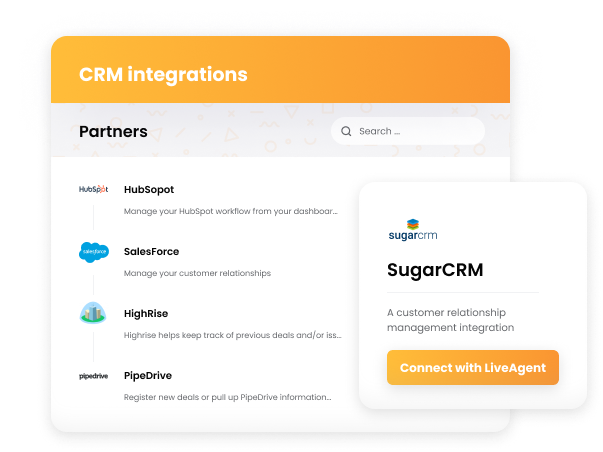
Our tip: When choosing between help desk software, look for essential features like ticket management, automation, easy integration with other tools and communication channels, and a user-friendly interface that supports efficient customer service.
Our tip: When choosing a service desk software, look for features like ITIL compliance, inventory management, service catalog, and robust reporting capabilities to manage and optimize your IT services efficiently.
Selecting and investing in the right type of software is important. With countless options available on the market, it’s important to approach the selection process strategically. Therefore, we want to give you some key considerations and steps to follow when choosing the right tools for your business needs.
The level of support complexity can vary depending on factors such as the size of your company, the type of industry you operate in, the volume of incoming customer inquiries, or your IT service management requirements. Therefore, choosing a tool that matches your support complexity will ensure that you have all the necessary features and integrations to manage your operations. Taking this into account can minimize the risk of outgrowing the tool as your needs evolve.
The complexity of support can impact your choice in several ways:
Automation can significantly improve the efficiency and effectiveness of your operations because it allows you to reduce manual tasks and deliver faster resolutions. Here’s why you should consider automation:
It’s also very important to plan for the future and consider the potential growth of your business. The software you choose should be capable of accommodating your growing needs.
Gathering feedback provides valuable insights into the experiences and perspectives of current users, helping you make a decision about which tool will best meet the needs of your business. Here are some reasons why gathering user feedback matters and why it should be a consideration when choosing between help desk and service desk tools.
ITIL (Information Technology Infrastructure Library) is a widely recognized framework that provides best practices for IT service management. Checking the ITIL compatibility ensures that the tool aligns with industry standards and supports the implementation of ITIL processes in your organization. Here’s why it’s important:
Improving your processes on a regular basis is essential for businesses to stay competitive and meet the changing needs of customers. This is why you should prioritize process improvement and why the tool you choose needs to be adaptable to these changes:
In conclusion, understanding the difference between service desk vs helpdesk is crucial for businesses to effectively manage their support operations. Help desk tools are focused primarily on customer service and are ideal for businesses that prioritize efficient communication with customers. On the other hand, service desk tools provide a more comprehensive solution, catering to complex IT service management needs within larger enterprises.
Both types of tools offer valuable benefits, such as streamlined communication, efficient workflows, and self-service capabilities. When choosing between these tools, it is important to assess the complexity of your support operations and consider the specific needs of your business. Factors such as the type of industry, business size, growth potential, desired automation capabilities, and ITIL compatibility should be taken into account.
To make the right decision, consider gathering feedback from existing users, reading reviews, and taking advantage of trial periods offered by software providers.
LiveAgent offers a comprehensive and user-friendly help desk software that aligns with the needs of businesses of all sizes. You can try our 30-day free trial and experience the benefits of LiveAgent firsthand. Take the next step to optimize your support operations and deliver exceptional customer experiences.
Discover the benefits, functions, and importance of help desks. Enhance customer satisfaction, streamline support, and boost productivity today!
Learn what a service desk is, its features, and how LiveAgent's flexible tool enhances customer support. Start your free trial today!
Discover the essentials of helpdesk support with LiveAgent, a versatile software offering ticket management, automation, and multichannel communication to boost...
Cookie Consent
We use cookies to enhance your browsing experience and analyze our traffic. See our privacy policy.