The Ultimate Guide to Call Center Setup: Key Steps & Insights
Learn to set up a call center with a 10-step guide covering goal setting, budget planning, software selection, staffing, and equipment. Optimize processes and create a disaster recovery plan. Also, get 5 bonus tips for successful call center management.
Customers demand quick, responsive, and efficient support, making call centers a vital component of customer service strategy. Knowing how to set up a call center can be the difference between a loyal customer base and a high churn rate.
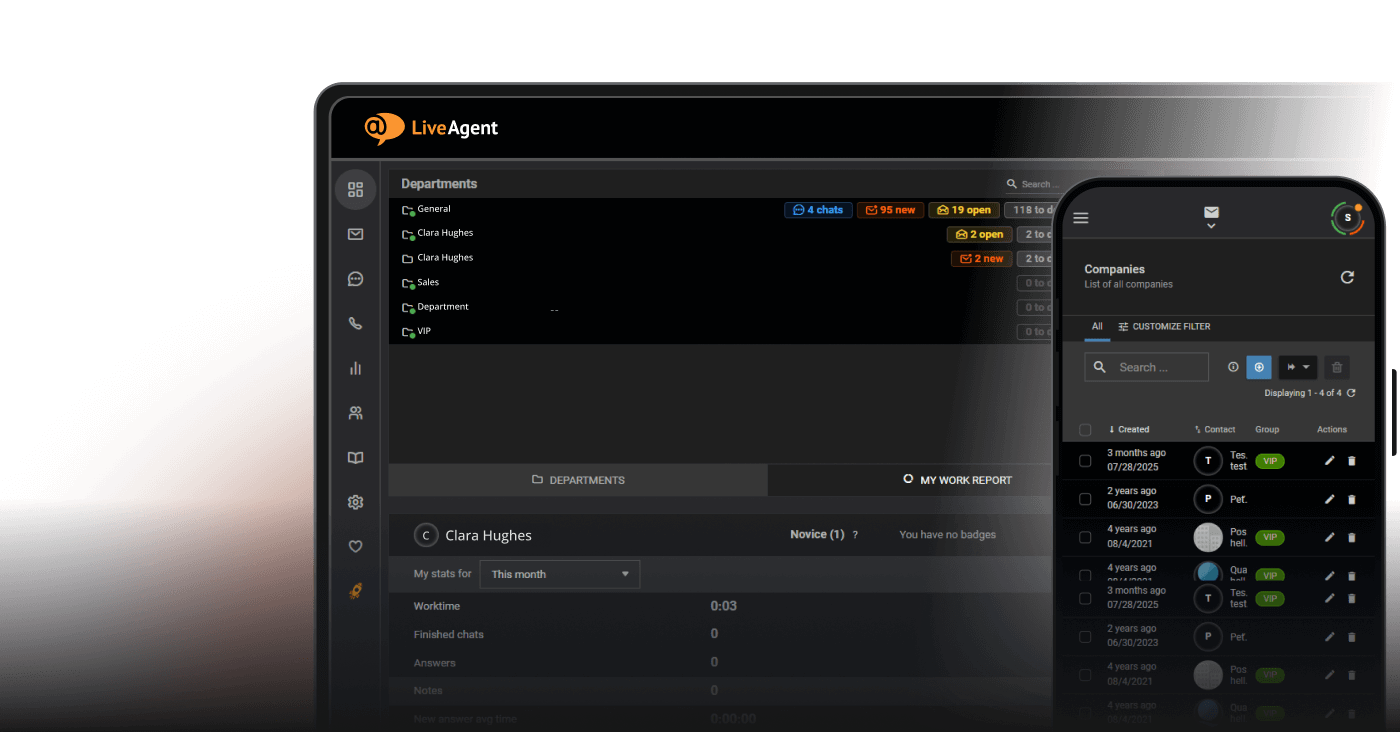
Establishing a successful call center involves several key steps, from defining its purpose to selecting the right technology and team. Innovative solutions like LiveAgent can streamline customer interactions, offering essential tools such as Automatic Call Distributors and CRM systems. These features not only solve customer problems but also enhance the overall efficiency and effectiveness of call center operations.
This article will guide you through the ultimate steps for setting up a call center, providing invaluable insights and expert advice along the way. We’ll delve into every aspect of the process, from budgeting and team assembly to overcoming common challenges and implementing best practices tailored for success.
With the rise of remote workers, call centers can now tap into a broader talent pool, offering flexibility and reducing overhead costs.
Define the purpose of your call center
Defining the purpose of your call center is the first crucial step in creating a successful business plan. Clear objectives ensure alignment with overall business goals and enhance center operations. Creating a solid business plan for your call center ensures alignment with overall business goals and establishes clear objectives for success.
Call centers typically fall into different categories:
Inbound Call Center: Focuses on handling incoming calls and inquiries.
Outbound Call Center: Specializes in making calls for sales or market research.
Blended Call Center: Manages both inbound and outbound communications, improving customer engagement.
Establish objectives for your call center such as increasing customer satisfaction or boosting sales. This alignment with business outcomes will guide your center manager and team. Consider key performance indicators (KPIs) like first-call resolution and customer satisfaction to measure success.
Also, focusing on customer retention through personalized service and efficient call handling helps build long-lasting relationships with clients. Managing remote workers effectively requires strong communication and collaboration tools, such as video conferencing and cloud-based call center software.
To visualize, here’s a simple table:
Call Center Type
Purpose
Inbound
Handle customer inquiries
Outbound
Conduct sales calls and research
Blended
Enhance engagement with mixed calls
With these goals and KPIs in place, you can tailor a strategy to improve agent performance and meet customer expectations. By defining the purpose clearly, your call center will effectively support your overall business objectives. Also, monitoring the abandonment rate is crucial to understanding how many customers are hanging up before reaching an agent, which can indicate issues with call routing or wait times.
Establish a budget for your setup
Establishing a budget for your call center setup is a vital step in ensuring its success. Start by determining your projected monthly expenses and compare them with your expected ROI and overall company budget. The average cost of setting up a call center includes not only employee salaries and equipment but also software, infrastructure, and maintenance costs.
The upfront investment for a call center can be substantial, but it is crucial for ensuring long-term success and operational efficiency.
Factors to Include in Your Budget:
Employee Costs: Consider the number of employees, their salaries, and training expenses.
Required Equipment: Plan for phones, headsets, and computers.
Infrastructure: Account for VoIP systems, utilities, and software like LiveAgent for managing customer interactions.
Unexpected Expenses: Set aside funds for unforeseen costs.
Developing a detailed budget helps you prepare for both initial and ongoing expenses such as software upgrades and hiring. A comprehensive budget will inform your decision whether to build a physical on-site call center or opt for a cost-effective remote workforce.
Even though the upfront investment may seem high, the returns in terms of increased customer satisfaction and retention can be invaluable.
Ready to grow your business?
Start your free trial today and see results within days.
Choose between an on-site or virtual call center model
When deciding between an on-site or virtual call center model, consider your operational needs and customer base. On-site call centers centralize operations, making them ideal for high compliance and security. They also excel at managing large teams and sourcing local talent effectively.
Choosing between a traditional on-site call center and a remote call center model depends on your need for physical office space and team collaboration. Virtual call center software enables businesses to manage calls remotely, offering flexibility for remote workers while maintaining high service levels.
By adopting virtual call center software, businesses can reduce operational costs associated with physical office space and equipment maintenance. Virtual call centers, on the other hand, are cloud-based and offer flexibility and scalability. They allow agents to work from various locations with just an internet connection.
These centers allow easy access to advanced call management features across devices. Improving the resolution rate by empowering agents with the right tools and training is essential for maintaining high customer retention rates. VoIP phones offer a cost-effective solution for call centers, providing crystal-clear communication and enabling seamless integration with customer relationship management (CRM) systems.
Hybrid call centers combine the flexibility of remote work with the efficiency of on-site operations, providing the best of both worlds.
Here’s a quick comparison:
Feature
On-site Call Center
Virtual Call Center
Location
Centralized
Distributed
Flexibility
Limited
High
Security & Compliance
Strong
Variable (based on setup)
Team Management
Local Talent Focused
Remote Team Capable
Scalability
Less Flexible
Highly Scalable
Choose the model that best aligns with your company’s operations and client expectations. Factors like the existing phone system and call center service needs should guide your decision. By aligning these elements, you can enhance customer satisfaction and ensure smooth center operations.
Understanding preferred channels of communication, whether through phone, email, or social media, helps tailor customer interactions for better engagement and focusing on increasing the conversion rate leads to greater profitability and enhances the overall success of your call center.
A remote call center model offers businesses the flexibility to manage customer interactions without being confined to physical office space. Integrating virtual call center software with CRM and other tools provides a unified platform for managing both inbound and outbound customer interactions.
Select necessary equipment and technology
Before launching your call center, it’s essential to define the center setup requirements, such as choosing the appropriate technology, software, and physical space or remote infrastructure. Predictive dialers automatically dial numbers from a pre-loaded list, improving efficiency by connecting agents only to live calls, reducing downtime.
Also, a stable internet connection is a critical requirement for ensuring seamless communication in both on-site and remote call center operations. Here are key components to consider:
Computers or Laptops: Choose devices that can seamlessly run contact center software without lag. This ensures your center agents can manage both inbound calls and outbound calls efficiently.
Headphones: Invest in quality headphones with noise-blocking features. Clear communication is vital for enhancing customer experience.
Internet Connection: A reliable and high-speed internet connection is crucial. It supports call volume effectively, whether in a traditional call center or a remote setup. Implementing Voice over Internet Protocol (VoIP) systems can significantly reduce communication costs while enhancing call clarity.
Ergonomic Seating: Comfortable chairs and workstations improve agent performance and their overall satisfaction.
Technology Systems: Implement systems like CRM integration for managing customer data, and IVR for efficient call routing. These reduce Average Handle Time and improve satisfaction.
Here’s a quick table to summarize:
Equipment/Technology
Purpose
Computers/Laptops
Run software efficiently
Headphones
Ensure clear communication
Internet Connection
Manage high call volume
Ergonomic Seating
Enhance comfort and productivity
CRM & IVR Systems
Streamline operations and improve service
Consider solutions like LiveAgent for comprehensive customer relationship management and seamless center operations.
Join our newsletter
The latest tips and deals delivered straight to your inbox.
Desktops and workstations
A computer or laptop forms the core of a call center agent’s workstation. It’s essential for managing software and handling incoming calls efficiently. While you don’t need the most advanced systems, having computers with sufficient storage and a recent operating system is necessary. These machines are affordable and easy to find, making them practical for business setups.
Every agent should have their own desktop or laptop. This is crucial for managing operations, storing data, and referencing customer information. Even if data storage is cloud-based, a personal workstation ensures smooth call center operations. Call centers that offer a wide range of services, from technical support to sales, can effectively meet the diverse needs of customers.
USB headsets and other audio devices
USB headsets are a must for call center employees. They offer comfort and ease of use during long calls. Each headset serves as both a microphone and listening device, allowing agents to multitask effectively. Bluetooth headsets are also viable alternatives, providing flexibility and freedom of movement.
Using headsets improves efficiency by freeing agents from traditional phone limitations. This allows them to manage calls and tasks seamlessly, boosting productivity and enhancing communication.
CRM systems and software solutions
Customer Relationship Management (CRM) systems are crucial for organizing customer data. These systems help make better customer-centric decisions, enhancing interactions. Integrated CRMs show customer details during calls, enabling personalized responses.
Having a CRM is vital for sales call centers. It stores contact details and interaction histories, ensuring a consistent customer experience. Proper integration reduces repetitive queries and improves productivity, leading to higher customer satisfaction.
Integrating these preferred channels into your call center software ensures that customers receive consistent, high-quality service across all platforms. Equipping your sales team with the right tools, such as CRM systems and automated dialers, can improve lead conversion rates and ensure better customer engagement.
Automatic Call Distributors (ACD)
Automatic Call Distribution (ACD) software enhances call center efficiency by directing incoming calls to the right agent. It uses factors like skill level or availability to ensure optimal call routing. ACDs can integrate with other systems like CTI and IVR to boost functionality.
By customizing ACD rules, you can reduce call transfers and wait times. This not only manages high call volumes effectively but also improves the overall customer experience. Improving operational efficiency through automation and workflow optimization allows call centers to handle a higher volume of calls without compromising service quality.
Call recording tools and analytics software
Call recording tools are essential for quality control. Managers can listen to recorded calls or monitor them in real time, aiding in coaching and feedback. Analytics software tracks important performance metrics like call times and customer satisfaction scores.
These tools help improve service delivery by identifying areas needing enhancement. They also support consistent training approaches, empowering agents to deliver better customer interactions.
Assemble a strong team of agents
A successful call center begins with a strong team of agents. Hiring managers should seek candidates with a mix of industry experience and both hard and soft skills. These include excellent verbal communication, problem-solving abilities, and the ability to actively listen and show empathy. Improving agent efficiency through streamlined workflows and automated tools ensures faster response times and better customer interactions.
Empathy helps build lasting customer relationships and makes customers feel valued. Remote agents need to be independently motivated, demonstrating self-discipline and solid organizational skills to manage their schedules and meet deadlines effectively.
Teamwork and collaboration are key, so agents must communicate clearly and consistently with each other. Multitasking is another vital skill, allowing agents to handle multiple calls and manage pre- and post-call work efficiently. Training programs aimed at improving agent efficiency should include regular coaching sessions and access to performance analytics.
Craft effective training programs
Creating effective training programs for call center agents is crucial to ensure high customer satisfaction. These programs should emphasize essential skills such as clear communication, empathy, and maintaining top service levels. This focus prepares agents to meet and exceed customer expectations consistently.
Ongoing training is vital, enabling agents to tackle the ever-changing challenges of customer support. Covering core issues relevant to contact center operations helps agents handle real-life scenarios they might face during both incoming and outgoing calls.
Utilizing modern contact center software, like LiveAgent, can transform training. It offers real-time, scalable training methods during live calls, enhancing agent performance and reducing average handle times.
Developing comprehensive training materials, like scripts and internal knowledge bases, is also essential. These resources provide agents with quick access to critical information, helping them resolve issues promptly.
Here’s a brief checklist for effective training:
Focus on communication and empathy
Provide ongoing and scenario-based training
Integrate modern software solutions
Develop scripts and knowledge bases
By following these steps, businesses can prepare their sales teams and call center agents for success, improving both customer experience and overall center metrics. Optimizing the conversion rate of your call center involves using advanced tools like predictive dialers to increase sales opportunities. Implementing strategies to improve operational efficiency helps reduce call handling times, allowing agents to resolve customer issues faster.
Onboarding new hires
Start by establishing clear qualifications, like strong communication and tech-savvy skills. This forms a solid foundation for effective hiring. An engaging onboarding experience is key. It equips agents with tools and insights to perform well from day one.
A comprehensive training program is crucial. New hires should learn call center software, complaint handling, and proper etiquette. Training can be conducted through various methods, such as offsite workshops, online platforms, or onsite sessions. This flexibility caters to the unique needs of each call center.
Regular communication of clear KPIs and expectations supports new hires. Feedback ensures they understand their role and can improve continuously. Showcasing the importance of etiquette, scripts can help maintain consistent brand messaging and enhance customer interactions.
Continuous skill development
Developing training programs ensures agents’ skills stay sharp and effective. Regular sessions and e-learning platforms keep agents updated on new products, tools, and techniques, fostering a culture of ongoing learning.
Incorporating call recording for quality monitoring helps agents receive constructive feedback, allowing them to identify and improve weak areas. Feedback loops encourage agents to share experiences and suggestions, enhancing workflow efficiency and contributing to skill development.
Providing self-paced learning resources empowers agents to refine their skills independently, promoting growth and adaptability. Regular training also helps maintain proficiency in communication, empathy, and service standards.
Designing efficient workflows with standardized guidelines and performance metrics ensures a consistent and effective training environment. By investing in continuous learning, call centers can boost agent performance, leading to better customer satisfaction and experience.
Cultivate a positive work culture
Cultivating a positive work culture in a call center is vital for keeping employees and reducing turnover. A supportive environment helps lower call center costs and increases job satisfaction. Strong leadership plays a crucial role in maintaining this atmosphere, especially when employees feel overwhelmed by high call volumes.
Regular communication and outreach from management help identify the challenges faced by employees. By doing so, employees feel supported and valued, which boosts their overall happiness and performance.
Creating a culture that encourages continuous improvement is also essential. Holding team meetings to discuss call center metrics and gathering feedback from agents ensures better performance. This collaborative approach keeps everyone focused on shared goals.
Investing in employees’ well-being by providing a positive work environment enhances job satisfaction. Here are some steps to foster this culture:
Schedule regular team meetings
Discuss and analyze call center metrics
Encourage feedback from agents
Actively support employee well-being
Develop processes for handling customer inquiries
Organizing call center processes is key to agents working efficiently and providing top-notch customer service. A well-structured procedure for handling inquiries and sales calls reduces confusion and enhances operational effectiveness. Investing time in developing these processes during the launch phase sets the foundation for success.
For example, LiveAgent offers features that support hierarchy and organization, making it easier to manage and improve call center processes effectively. Improving operational efficiency through automation and workflow optimization allows call centers to handle a higher volume of calls without compromising service quality.
An efficient call center management approach is vital for boosting customer service experiences. Implementing effective performance monitoring can further aid in continuous improvement of customer interactions.
Regular performance tracking helps assess center performance, ensuring that KPIs such as abandonment rate and resolution rate are consistently met. Having clear processes for managing customer issues ensures that agents can respond quickly and effectively.
Script development
Scripts offer agents a structured framework to ensure they convey accurate information and maintain a professional demeanor. A thoughtful sales call script should include:
A friendly introduction
Confirmation of the customer’s availability
Explanation of company offerings
Addressing customer pain points
Delivering the sales pitch
Handling objections
Concluding with a strong call to action
Creating scripts for common scenarios ensures consistent messaging while retaining flexibility to prevent sounding robotic. Including escalation processes within these scripts will further guide agents on what to say and whom to contact.
The adaptability of communication can be enhanced through drag-and-drop script builders, enabling easy customization according to changing needs.
Escalation procedures
Escalation procedures are essential for consistent and clear handling of calls that require additional support. By providing detailed processes in call scripts, agents can confidently escalate calls quickly, reducing resolution times. A robust escalation procedure includes a clear method for transferring calls to the appropriate team or personnel, which leads to improved customer satisfaction.
Collecting feedback from agents about the process can drive continuous improvement. Documenting these procedures helps maintain accurate records of customer interactions and follow-ups if a call is dropped.
Also, implementing self-service options like knowledge bases and FAQs helps reduce call volume by empowering customers to find answers on their own.
Implement performance monitoring systems
Implementing performance monitoring systems is crucial for tracking productivity and deliverability. Tools like call recording and monitoring provide valuable insights. Real-time analytics offer perspectives on customer sentiment, common support topics, and key metrics, which can greatly enhance the customer experience.
Analyzing call center data regularly helps pinpoint areas for process and training improvements. Real-time service level agreement (SLA) alerts notify managers of any drop in performance levels, allowing for prompt action.
The use of AI-powered analytics helps managers monitor and analyze all customer interactions across channels, refining call center operations with insightful data. Tracking the resolution rate helps ensure that customer inquiries are resolved in a timely manner, which is crucial for improving overall customer satisfaction.
Key performance indicators (KPIs)
KPIs are vital metrics for assessing the health and success of a call center. They ensure alignment with the center’s goals. Common KPIs include:
Abandonment Rate: The percentage of calls hung up before reaching an agent.
Average Handle Time (AHT): The average time agents spend on a call, including talk time and after-call work.
Average Speed to Answer (ASA): The time taken to connect customers to an agent after entering the queue, impacting satisfaction.
Tracking these KPIs allows for data-driven decisions, helping to improve call center operations and enhance customer experiences. Improving your Customer Satisfaction Score through faster resolution times and personalized interactions is key to building customer loyalty.
Quality assurance practices
Quality assurance procedures are important as they track the level of service provided and highlight improvement areas. By implementing these practices, call centers can boost customer service and potentially drive higher sales. Effective methods include regular customer surveys, reviewing agent call recordings, and mystery shopping audits.
Designing an effective organizational structure ensures that roles are clearly defined, with appropriate support and accountability for all agents. Quality assurance software plays a key role in monitoring and maintaining service standards.
Properly monitoring service ensures all customer interactions meet established expectations, guaranteeing a consistent and satisfying customer experience.
Address common challenges faced by call centers
Setting up a call center is no small feat. Business owners face obstacles like agent burnout, compliance issues, and high contact volumes. But with the right planning, these challenges can be managed effectively.
Recruitment and Retention Issues
Call centers often deal with high turnover and burnout rates. With 74% of agents facing burnout, it’s crucial to focus on retention strategies. The turnover ranges from 30% to 40%, which strains resources and drives up costs. Here are some effective steps:
Offer Competitive Pay and Benefits: Attract top talent with a solid compensation package. Consider benefits like healthcare, paid time off, and bonuses.
Career Growth Opportunities: Develop paths for advancement within the company. This will not only retain employees but also engage them.
Positive Work Environment: Focus on employee well-being by promoting work-life balance. A conducive environment can lower attrition rates.
Gamification and Recognition: Implement programs that reward agents for good performance. Recognition boosts morale and job satisfaction.
Effective Recruitment: Utilize assessments or trial periods to ensure that new hires have qualities like empathy and resilience. This will help select individuals who are likely to succeed in call center roles.
Adapting to Evolving Customer Needs
The landscape of customer communication is always changing. Call centers must adapt to meet these new expectations and preferences.
Omnichannel Support: Offer multiple platforms for customer interaction, like phone calls, email, chat, and social media. Millennials, for instance, prefer text messaging over being on hold, while older clients might stick to traditional calls.
Survey and Feedback: Regularly collect customer feedback through surveys and social media. This allows the center to adjust services to meet their needs.
Flexibility and Insight: Train agents to be flexible in their communication methods. Agents should understand how to effectively use various platforms to meet diverse customer expectations.
Use tools and features of trusted customer support solutions, like LiveAgent, to maintain service quality. LiveAgent offers features such as ticketing systems and chat solutions that can streamline call center operations and improve agent performance.
Explore best practices for call center operations
Setting up a call center requires thoughtful planning and execution. It begins with establishing a clear purpose. This serves as the blueprint for hiring, process creation, and staff training. Understanding the ultimate goal of your call center helps tailor each element to meet those specific needs. For instance, if the goal is customer satisfaction, the focus should be on hiring empathetic agents and providing them with rigorous training.
Next, a realistic budget is crucial. This helps ensure your investment leads to higher customer satisfaction and increased sales leads without overspending. Consider all overhead costs such as technology, salaries, and training. By doing so, you protect your business’s financial health while boosting your call center’s performance.
Organizing call center processes is key. Effective onboarding, comprehensive training, efficient complaint handling, and thorough reporting set a solid foundation for operation. These processes help streamline tasks and enhance customer service. Setting specific business goals like improving sales or customer service can guide your success measurement.
Using the right tools is indispensable. Project management software and spreadsheets can enhance organization and tracking, ensuring tasks are completed efficiently. LiveAgent is an excellent example of a tool that streamlines call center operations by integrating various communication channels and offering robust reporting features.
Streamlining workflows for efficiency
Workflow automation is a powerful ally in call center operations. By automating routine tasks like call routing and data entry, you enhance overall efficiency. Establishing standardized workflows with clear scripts and performance metrics helps ensure consistency and quality in call handling. This minimizes confusion and allows agents to deliver top-tier customer service from day one.
Continuous monitoring of call quality is essential. Collecting and utilizing feedback can improve agent performance and workflow efficiency. Implementing project management tools is also effective. These tools keep track of processes and ensure tasks are completed on time. LiveAgent features workflow automation and standardized ticket management, which streamline operations and improve efficiency.
Enhancing customer experience through feedback
Customer feedback is invaluable. Surveys and social media monitoring help understand evolving customer needs and preferences. Adapting service offerings and communication strategies in response to this feedback can boost satisfaction levels.
Offering omnichannel support is another way to enhance customer experience. It allows customers to connect through their preferred communication channels, whether it’s phone, email, live chat, or social media. Training agents to handle inquiries across these channels ensures a seamless customer journey.
Leveraging customer feedback also allows for service offering adjustments, fostering a more responsive and customer-centric approach. LiveAgent excels in providing omnichannel support, gathering feedback, and adjusting services to meet customer needs swiftly.
Conclusion
Setting up a call center, whether traditional or virtual, can enhance your business operations significantly. Understanding the key requirements—such as choosing the right location, securing the necessary equipment, and selecting reliable call center software—is crucial for success. Virtual call centers offer the advantage of lower overhead costs and flexible operations.
LiveAgent is an excellent solution for managing call center activities, offering features tailored to address customer issues effectively. These include ticketing systems, call routing, and customer relationship management tools that ensure smooth interactions for both inbound and outbound calls.
Before committing, why not explore LiveAgent’s robust capabilities with a 30-day free trial? Experience firsthand how it can elevate your call center operations and help meet customer expectations, ensuring that your business stands out in customer service.
Establishing an IVR call center involves determining its purpose and scope, setting up necessary hardware and software, and designing the menu structure, scripting, and voice prompts. Ensure user-friendly navigation and test the system, refining where needed. Staff should be trained to handle non-automated calls, and all ethical considerations, such as user accessibility and opt-out options, should be addressed.
The four types of call center software solutions are on-premises, hosted, cloud-based, and browser-based. These options differ in terms of cost, deployment model, maintenance, scalability, and robustness.
When researching the call center options, apart from the feature set, take into account ease of deployment, use, scalability, security, integration options, tech support, and pricing.
To run a successful call center, you need to take a look at generated data. This is the best and most accurate indication of your call center business performance.
When setting up a small call center, first define its purpose, expected call volumes, target audience, and infrastructure needs like phone systems and CRM software. Then, establish the location and necessary workstations, recruit and train skilled agents, and implement robust phone and CRM systems. Constantly monitor and assess performance to ensure efficiency and effectiveness, making necessary improvements. Success requires careful planning, technology investment, and a focus on capable staff.
Setting up a home call center requires a reliable computer, high-speed internet, headset and possibly call center software. Allocate a quiet, distraction-free area as your workspace. Establish a work schedule to maintain work-life balance. Ensure you meet any legal requirements, like obtaining permits or licenses. Ethical considerations, such as customer privacy and data security, are vital to maintain a trustworthy relationship with callers.
A call center leadership structure usually involves a manager or director who oversees operations. Team leaders or supervisors manage specific agent teams, handling training, coaching, and performance monitoring. Quality assurance managers ensure service standards, monitor calls and implement improvements. Workforce management and operations managers schedule, forecast, and optimize resource use. This structure aims to provide efficient customer service while supporting and guiding call center agents.
Boost your call center operations
Set up an efficient call center with the right tools, team, and processes. Discover how LiveAgent can streamline your customer support operations.
Call Center Detailed Guide: Function, Benefits, and ROI Impact
LiveAgent offers a comprehensive call center solution with features like automatic call distribution, call recording, and VoIP integration. Easily set up and ma...
Set up your call center efficiently with our comprehensive checklist. From goals to KPIs, software to staffing - everything you need to launch successfully.
Discover what a call center is, how it works, types of call centers, and best practices for running a successful call center operation. Learn about inbound, out...
10 min read
Customer support
Call Center software
+1
You will be in Good Hands!
Join our community of happy clients and provide excellent customer support with LiveAgent.