



The ultimate call center checklist
Streamline your call center setup with our ultimate checklist! Learn goals, tools, onboarding, and tips for success. Start now!
17 min read
Call Center
Setup
+2

Explore call center management essentials: strategies, best practices, and challenges. Boost efficiency through effective scheduling, performance monitoring, and training. Enhance customer satisfaction, employee productivity, and cost efficiency with advanced tools and automation.
What keeps a call center running smoothly, even during peak hours or unexpected circumstances? And what does it take to handle frustrated customers and keep motivating your employees? The answer lies in three words – call center management.
Let’s explore call center management, its importance, and the essential strategies to ensure success. We’ll also discuss effective management practices, vital roles and responsibilities, and more.
Managing a call center means being in charge of daily activities to ensure everything runs smoothly, aiming for excellent customer service. The roles and duties in call centers are diverse. Managers are responsible for scheduling, monitoring performance, and implementing strategies to improve efficiency.
The main goal is to deliver excellent customer service. By keeping the team well-organized and motivated, customers have their problems fixed fast and effectively, leading to higher satisfaction and business success.

Start your free trial today and see results within days.
Good call center management can be a game-changer in several areas, such as customer satisfaction, employee productivity, and cost efficiency.
Luckily, there are tools and software options that can simplify call center management efforts and ensure everything runs smoothly. LiveAgent offers reliable call center software with a VoIP (voice over internet protocol) phone system packed with advanced features.
LiveAgent helps boost customer satisfaction with an IVR system that guides customers to the correct department or agent, reducing wait times and ensuring quicker resolutions. Allowing customers to request a call back rather than waiting on hold improves their overall experience. Automatic call distribution (ACD) also increases employee productivity, reducing the time spent transferring calls. Additionally, smart call routing optimizes resource allocation, contributing to cost efficiency.
Effective call center management involves several key components to ensure smooth operations and high-quality customer service:
The latest tips and deals delivered straight to your inbox.
Managing a call center is more than just keeping things organized. You need strategies that boost both agent performance and customer satisfaction. We’ll share key strategies, practical tips, and examples to elevate your call center management.
First, you need to determine a clear purpose for your call center. What are you focused on? Is it customer retention, cross-selling, upselling, winning back lost customers, gathering feedback, or something else? Knowing your main goal will shape everything you do, from training your staff to measuring performance.
Defining your purpose gives you clear direction and focus. For example:
Tips on defining your purpose:
The best way to understand your customers is to put yourself in their shoes. Doing so helps you identify areas that need improvement and ensure that your service meets their expectations.
Tips to help you understand your customers’ needs better:
Setting goals will guide your call center toward success. Using the SMART criteria—Specific, Measurable, Achievable, Relevant, and Time-bound—ensures your objectives are clear and attainable.
Here’s an example of SMART goals that could apply to a call center strategy:
| Criteria | Details |
|---|---|
| Specific | Reduce the average call wait time. |
| Measurable | Decrease the average wait time from 5 minutes to 2 minutes. |
| Achievable | This can be achieved by optimizing agent schedules and improving call distribution. |
| Relevant | Customer satisfaction is heavily impacted by wait times, making this goal directly relevant. |
| Time-bound | Accomplish this within the next three months. |
Remember to align your goals with customer needs. For example, if customer feedback indicates that quick resolution times are a high priority, your goals should reflect that.
Tips on how to set these SMART goals:
Create a well-defined structure to ensure everyone knows their roles and responsibilities. This will lead to smoother operations and better results.
A typical call center structure consists of various roles, each with specific duties. These roles may vary depending on the organization, but here are some common positions:
When creating the structure, it’s important to remember that it should be adjusted to your specific needs and goals.
By addressing these questions, you can tailor the structure to suit your organization.
Equipping your agents with knowledge and tools will help them handle various scenarios, provide better customer service, and resolve issues effectively and promptly.
Tips for training call center agents:
We know managing a call center can be tough. Following certain practices can help you enhance overall customer satisfaction and empower your agents to deliver excellent service. If you’re unsure where to begin, consider the following:
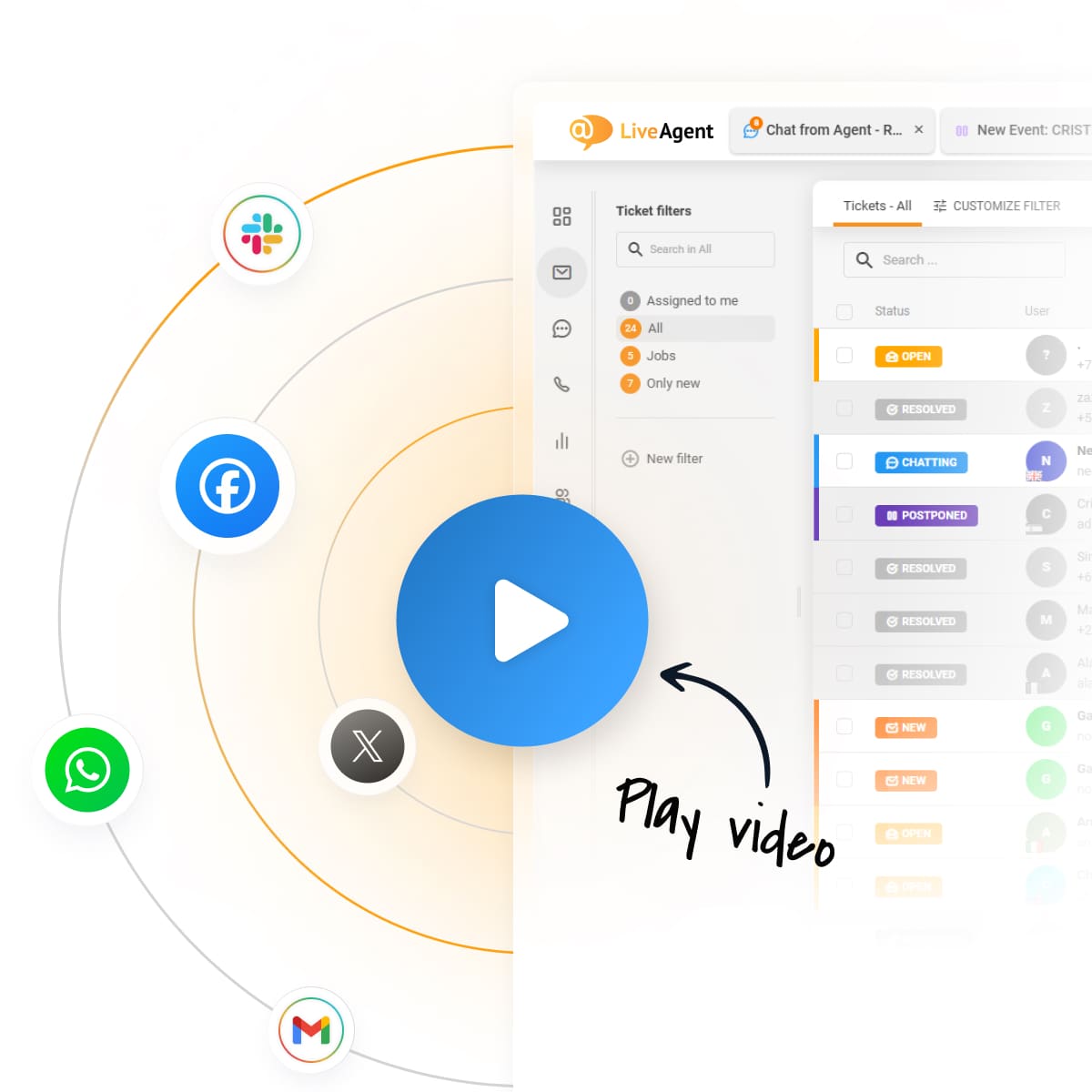
Connecting your call center software with other tools, such as CRM systems, social media platforms, and help desk software, can streamline operations. When these systems are linked, agents can see all customer details in one place, helping them respond faster and better.
LiveAgent integrates with many third-party apps to gather all information in one spot. This saves time and reduces mistakes. As a result, agents can give more personalized and efficient service.
"We've had a great time using LiveAgent. With its comprehensive feature set and integration with our other systems, we can provide significantly more efficient customer support than ever before. We have observed increased customer satisfaction since implementing LiveAgent, and we recommend it to anyone looking for a user-friendly and comprehensive solution.'Capterra review
Empowering customers to solve problems on their own benefits both them and your team. Offering self-service can reduce your agents’ workload and improve customer satisfaction. About 73% of customers prefer the ability to solve their issues through self-service because it is available 24/7. They only want to contact support as a last resort.
To set it up, create a strong knowledge base with FAQs, product guides, video tutorials, step-by-step manuals, and community forums. But remember, it is important to keep it updated at all times.
Also, an internal knowledge base is very helpful for your agents. It provides necessary information like company policies, procedure guidelines, troubleshooting steps, and product details.
With tools like LiveAgent, you can easily create and maintain both external and internal knowledge bases, boosting your call center’s effectiveness.

Even with a well-managed call center, problems will happen. It’s important to be ready and know how to handle them. Common problems include:
The best way to tackle these issues is to find a solution that can solve multiple problems at once. For example, call center software can help by:
Monitoring key metrics is a great way to keep your call center performing well. It helps you identify areas for improvement and make decisions based on data. Tracking metrics also lets you see trends, fix issues before they become bigger, and keep operations running smoothly.
Key metrics to monitor:
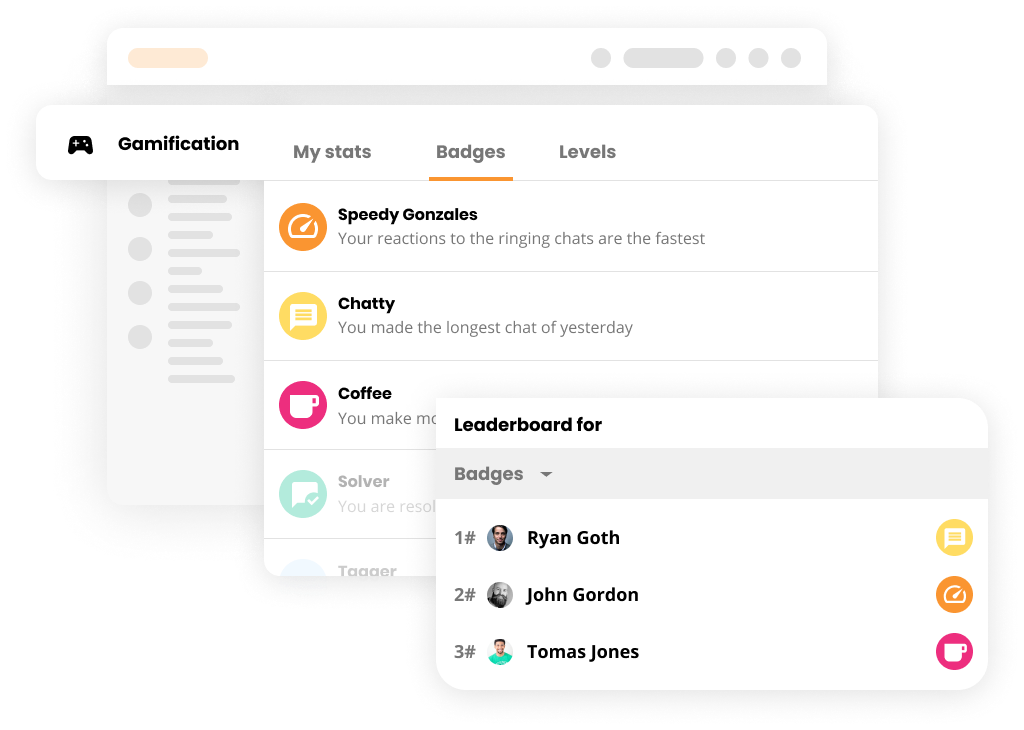
Gamification means adding game-like elements to motivate employees and make work fun and engaging. In a call center, this can include points, badges, leaderboards, and rewards.
Engaged workers deliver better customer service. They’re more motivated to solve customer problems. Gamification can also boost their morale and create a positive work environment.
Rewarding your employees for good work is important. Simple things like ‘Employee of the Month,’ extra perks, or even simple acknowledgments can drive performance and loyalty.
Quality assurance means checking how agents interact with clients to maintain consistently high standards. Knowing what agents do well and where they need to improve helps keep customers happy.
How to perform QA?
Using automation can boost your agents’ productivity and overall performance. It frees your agents from repetitive tasks so they can focus on more complex issues that need their attention. Automation helps businesses streamline processes, reduce wait times, and keep customers happy.
In a call center setting, automation can:
| Roles | Responsibilities |
|---|---|
| Call center manager | • Overseeing daily operations and developing goals and action plans • Implementing and monitoring performance • Developing and enforcing policies and procedures • Managing budget and resource allocation • Hiring and onboarding employees • Preparing reports for upper management |
| Team Leader/Supervisor | • Monitoring team performance and providing feedback • Handling escalations and complex customer issues • Assisting with training and development • Ensuring adherence to company guidelines and policies |
| Quality assurance analyst | • Evaluating calls and monitoring agent compliance with protocols • Developing strategies for quality improvement • Creating and maintaining evaluation forms and records |
| Training specialist | • Conducting regular training sessions • Developing and updating training materials • Assessing training effectiveness • Supporting continuous learning and professional development |
| Customer service representative | • Handling inbound and outbound calls • Resolving inquiries and complaints and providing customers with information • Recording interactions and updating CRM systems • Seizing opportunities for upselling/cross-selling |
| IT support | • Maintaining call center technology and infrastructure • Troubleshooting technical issues • Ensuring data security and compliance • Updating support software and hardware |
Dealing with too many calls and long wait times is a common issue in call centers. It often happens due to understaffing or poor resource management. This leaves agents overwhelmed and customers frustrated. When there are more calls than agents can handle, performance drops, and both customers and employees become unhappy.
Solution:
Working in a call center can be tough. Agents deal with upset customers and spend long hours on the phone, often working overtime. Without career growth opportunities, many agents lose motivation. This leads to burnout and high turnover.
Solution:
Most customers consider customer experience as important as product quality. When they call with a problem, they want a quick and efficient solution. If you don’t meet these expectations, customer satisfaction declines.
Solution:
Many call centers use multiple tools and systems to handle their daily tasks. Agents often need to switch between different systems to solve one issue, which can take time and be confusing.
Solution:
Customers expect a lot from these days. They expect tailored experiences, multiple ways to reach you, quick responses, fast solutions, and great service. Meeting all these standards can be quite hard.
Solution:
While no one can predict the future, we can make educated guesses based on current trends and technology. Here are some trends that are likely to shape the future of call center management.
AI and automation are growing in many industries, including call centers. In the future, AI will handle more routine tasks, freeing up agents to deal with more complex issues.
AI can also be used for quality assurance purposes. It can automatically score calls based on criteria like appropriate greetings or upsell opportunities. This saves time and helps ensure consistent quality in every interaction.
Coaching improves agent performance and fixes problem areas. Traditional one-on-one coaching can be hard to scale, especially with call centers using remote agents in different time zones.
Virtual coaching is a scalable solution. It offers timely feedback and custom training modules no matter where agents are located. This way, all agents get consistent coaching and support, which leads to better performance and job satisfaction.
Effective call center management ensures smooth daily operations, fair task distribution, and service quality. It also affects customer satisfaction, agent productivity, and overall cost efficiency. Key elements such as scheduling, performance monitoring, training, or escalation management are vital. Call centers can improve all this by implementing effective strategies.
To make your job easier, consider tools like LiveAgent. It offers many features to help manage your call center efficiently. With a 30-day free trial, you can see for yourself how it can improve your call center operations. Transform your call center with LiveAgent!
Sign up today and discover how LiveAgent can streamline your operations, boost agent productivity, and enhance customer satisfaction with advanced call center management tools.
Streamline your call center setup with our ultimate checklist! Learn goals, tools, onboarding, and tips for success. Start now!
Learn to set up a call center with a 10-step guide covering goal setting, budget planning, software selection, staffing, and equipment. Optimize processes and c...
Discover what a call center is, how it works, types of call centers, and best practices for running a successful call center operation. Learn about inbound, out...
Join our community of happy clients and provide excellent customer support with LiveAgent.
Cookie Consent
We use cookies to enhance your browsing experience and analyze our traffic. See our privacy policy.