



Call Center Jobs
Explore call center jobs, roles, responsibilities, salary expectations, and essential skills needed for success in 2025. Comprehensive guide for job seekers and...
11 min read
Customer support
Call Center software
+1

Discover call center duties, job descriptions, essential skills, salary insights, and tips to excel in 2024. Master customer satisfaction!
If you’ve ever been curious about the bustling hub of activity that many of us have interacted with — the call center — then this is the article you’ve been waiting for. In an industry where the resolution rate on first contact ranges impressively between 70-75%, there’s more than meets the eye.
This article demystifies the role of call center representatives, offering an in-depth analysis of job descriptions and essential call center agent duties. Additionally, you’ll gain insights into the crucial skills and qualifications required to excel as a call center representative. So whether you’re considering a career within this field, or you simply strive to gain a better understanding of the person at the other end of your line, sit tight, we’ve got a lot to cover.
A call center representative, also known as a customer service representative, or a call center agent, plays a critical role in maintaining customer satisfaction and boosting a company’s reputation. They manage customer inquiries and complaints, and provide information about products and services. All of that is done in real-time, on the phone with often a demanding or frustrated customer.
For example, imagine you’re a call center representative for a company that sells home appliances. A customer calls in saying their newly-purchased washing machine isn’t working correctly. You would start by assuring them you’re there to help. You’d ask appropriate questions to better understand the matter. Based on the problem, the solution might be as simple as guiding the customer through re-setting the machine. If the problem seems to be a technical fault, you’d escalate it to the technical team. After the call, you’d log the details in the customer’s account, so there’s a record of the situation.
To better understand what a call center job entails, let’s look at some of the key responsibilities and daily tasks these customer-facing employees encounter, typically outlined in the job description template. Also, tracking and managing CDR records is an essential duty in any call center to monitor performance and ensure compliance.
Call center representatives are usually responsible for:
Some of the daily tasks of a call center representative include:
Of course, we have to note that the specific job description and tasks for a call center representative may vary depending on the organization and the industry it operates in.
Now is the time to discuss call center agents’ essential duties. We’re going to look at the three main aspects of call center operations – inbound, outbound, and on-premise duties.
Inbound call center functions revolve around answering customers’ calls, addressing their inquiries and providing solutions to their issues.
Inbound call center agents that work on inbound duties typically handle incoming calls from customers who are looking for assistance or have inquiries about a product or service. The number of inbound calls handled each day can greatly vary depending on factors such as industry, call center size, and complexity of concerns.
To ensure effective and efficient phone conversation, call center agents must be proficient in many areas, including active listening, clear verbal communication, attention to detail and politeness. Efficiently navigating customer calls also involves everything from proper call answering to call holding techniques and ending the call on a positive note.
One of the fundamental roles within the inbound duties of a call center rep is taking and processing customer orders. Agents need to assist prospects and customers with their purchase inquiries about the company’s products or services.
Once the customer has decided on a product, the agent can even place an order for them. Contact center agents are also responsible for tracking orders, resolving payment issues, managing exchanges/cancellations, and dealing with shipping problems and returns.
All of this of course requires agents to have comprehensive company knowledge, including its inner workings, as well as detailed product knowledge.
Managing customer complaints and interacting with unhappy customers is one of the core call center representative duties. To ensure customer satisfaction and avoid additional complaints, agents need to:
Although desired, not all customer queries can be resolved over one single call. Especially when it comes to SaaS companies offering complex products. Therefore, further troubleshooting and escalations are common procedures. Inbound call center agents must have a follow-up system in place to inform customers of the resolution of their issue once it’s been addressed.
Agent’s daily inbound duties:
An example of an inbound call center representative’s workday
Jane works as an inbound call center representative for a company that sells computer software. Her day starts with answering incoming calls, with customers usually seeking assistance regarding product setup and usage. A caller expresses difficulty downloading a purchased software, so she patiently guides them through the process.
Later, she takes a call from a customer interested in buying a new product; she provides detailed information about it and then processes their order and payment. However, not all calls go smoothly; one customer complains about a late shipment. Jane listens empathetically, apologizes, and escalates the issue to the shipping department.
She ends her day by following up with customers, providing them updates about previously reported issues that were solved.
Outbound call center roles require agents to make calls to customers or prospects. These calls usually aim to sell products or gather information.
Outbound call center agents are tasked with making proactive calls to customers or prospects. These may include cold calling, telemarketing, proactive customer service, appointment setting, or charitable solicitation, among others.
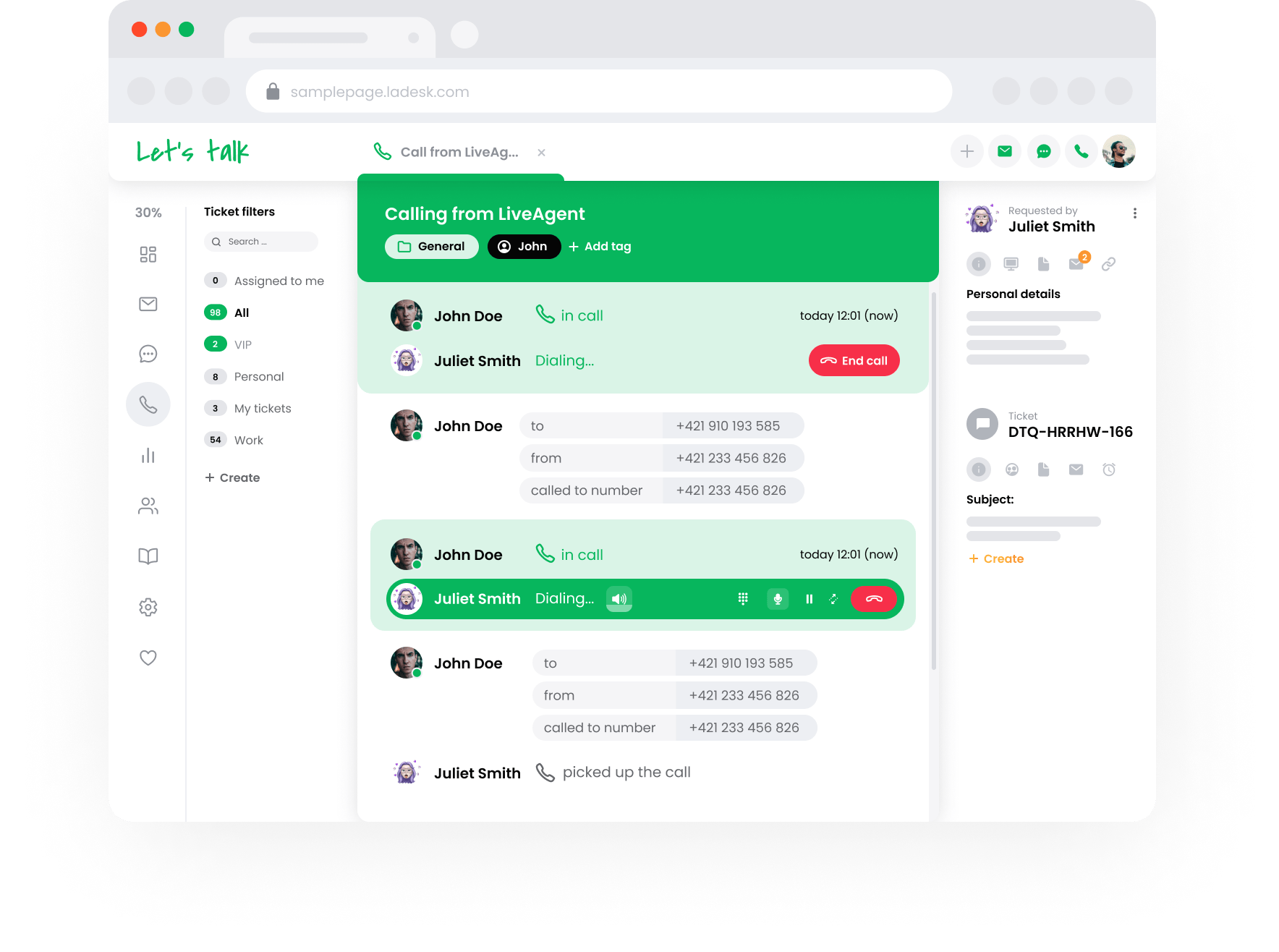
Many outbound agents utilize various call center dialers to automate the dialing process and improve productivity, and the overall call center performance.
Outbound call center agents often engage in market research activities. This research provides valuable data on consumer behavior, competitors’ analysis, and evolving market trends. This information aids company executives in making insightful business decisions, such as rolling out new products, updating existing services, and addressing customer pain points.
To conduct market research efficiently, call center agents often use outbound call center software that features call recordings, auto-dialing technology, and other automation functions. All of these call center features enable agents to make hundreds of automated outbound calls daily, without losing precious time on dialing and manually logging all the call details.
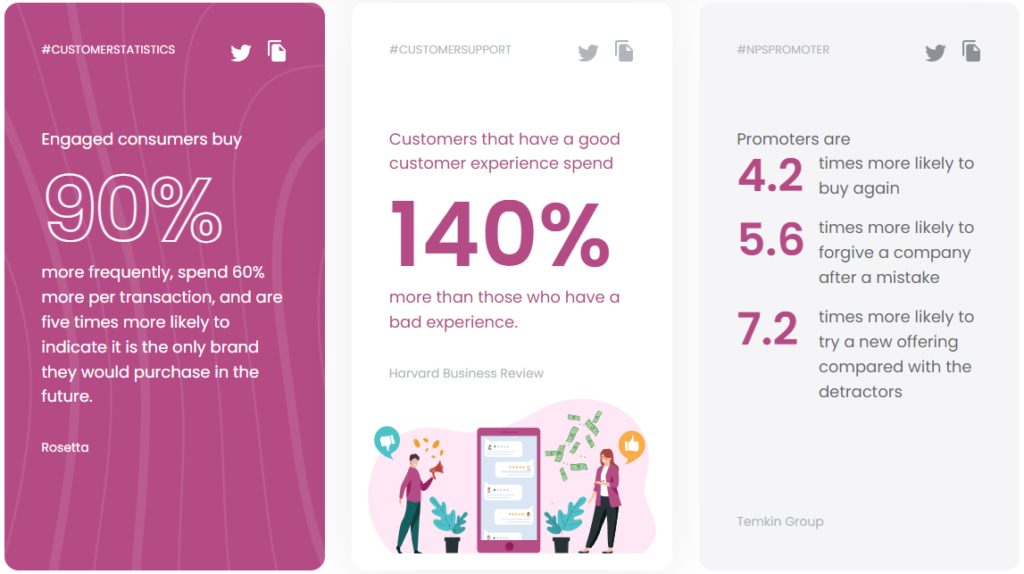
Call center representatives are often urged to recognize and utilize potential opportunities for upselling and cross-selling during customer interactions. Upselling involves a call center agent highlighting a product or service of higher value or additional benefits to a customer.
On the other hand, cross-selling entails an agent encouraging a customer to buy a product or service that complements or relates to their existing purchase. Going beyond standard communication scripts, cross-selling or upselling necessitates that agents demonstrate flexibility, creativity, and a unique approach to each customer.
Agent’s daily outbound duties:
An example of an outbound call center representative’s workday
Matthew, an outbound call center representative at a tech company, begins his day by checking the list of targeted clients he needs to call for the day.
Utilizing the auto-dialer function, he reaches out to clients and potential customers, with the objective to sell the company’s newly developed software. During these calls, he collects crucial information about customers’ tech requirements and preferences for market research. Later, the collected data aids the company management in fine-tuning their current offerings and developing new ones.
Whenever Matthew interacts with an existing client, he keenly identifies potential opportunities to upsell a premium version of the software or cross-sell an added warranty service. This way, his daily duties significantly contribute to the firm’s product counsel, customer insight, and overall revenue.
On-site duties of a call center agent involve managing and maintaining administrative tasks within the call center.
Among the most common administrative responsibilities is reviewing and updating the customer relationship management (CRM) system. CRM serves as a contact center database, storing all the available customer data, including contact details, purchase and interaction history, billing and shipping preferences, and more. All agents have access to this data, so they can use it during customer service calls. To provide effective and personalized customer service, all of this information needs to be up-to-date.

Often, the only direct human interaction a business has with its customers comes through call center agents. These agents therefore represent a crucial channel for gathering vital customer feedback and communicating it to upper management.
By engaging in direct, real-time telephone conversations with customers, these agents gain valuable insights into customers’ perceptions about the company’s products or services. They learn about the challenges the customers face and get their suggestions on how the business can enhance its offerings to better align with their expectations.
Call center representatives may also participate in initiatives managing personnel, such as the training and integration of new colleagues into the customer service team. To be effective and productive, representatives should possess a thorough understanding of the company’s product or service, its culture, and its policies.
A comprehensive knowledge of the call center software they utilize is also crucial to maintain operational efficiency. When new team members are brought in, the training and technical onboarding is typically overseen by the call center manager and experienced representatives.
Agent’s daily on-site duties:
An example of an on-site call center representative’s workday
Every morning, Alex, a call center agent for an online retail company, starts her day by logging into the company’s CRM software. She reviews and updates the CRM with new customer details and the most recent purchase history recorded from the previous day.
Throughout the day, she answers incoming calls, dealing directly with customers. She handles their inquiries, records their complaints, and receives their feedback on the company’s offerings. Every bit of information she gathers during these calls is entered into the CRM for future reference and to provide personalized service. She also reports key insights to the management team, such as repetitive complaints about a particular product.
Toward the end of her shift, Alex spends time with the newest team member, showing them how to navigate the CRM and explaining the company’s policies. Her day is filled with different tasks, all contributing to customer satisfaction and the smooth operation of the call center.
A call center agent’s salary can vary widely depending on several factors, including years of experience, location, specific role, and the industry the call center services. Entry-level positions may start close to the minimum wage, particularly in areas with a lower cost of living. In contrast, experienced call center representatives, especially those in technical or specialized fields, can earn significantly higher wages.
Bonuses and commission structures can also significantly impact a call center agent’s salary. Some companies offer performance-based incentives that can substantially increase an agent’s earnings above their base salary.
Now, let’s talk some numbers.
Based on data gathered by Glassdoor, an average call center agent in the United States can anticipate an annual salary that typically falls between $39,709 and $43,780. This includes a base pay that ranges from $32,000 and $43,000, paired with an additional pay component of up to $2K – $4K. The additional pay encompasses perks such as a cash bonus, commission, tip or profit sharing.
Interestingly, the same research shows that AT&T comes up as the highest-paying company, offering their call center agents over $50K per year.

The latest tips and deals delivered straight to your inbox.
Operating a successful call center can be a daunting task. That’s why we have a comprehensive call center requirements checklist of all the essential requirements that will guide you throughout the whole process.
However, in today’s article, it’s all about the call center staff. Below, we are going to look at all the skills and capabilities you need to possess to become a successful call center rep while feeling fulfilled in your job.
The level of experience required can vary depending on the size and nature of the organization, as well as the complexity of the calls the agent will be handling. However, most employers require at least a high school diploma or equivalent and some experience in a customer service role.
Employers typically look for qualified candidates who can demonstrate strong verbal communication skills, both verbal and written. They should be able to display patience, empathy, and understanding when dealing with customers. They should also have a good working knowledge of basic software applications and any relevant CRM software.
Experience can be gained in a variety of ways: taking on entry-level customer service roles, participating in internships, or even volunteering at organizations that require a lot of customer interaction. Online courses or certificates in customer service or communication can also be beneficial for honing relevant call center agent skills.
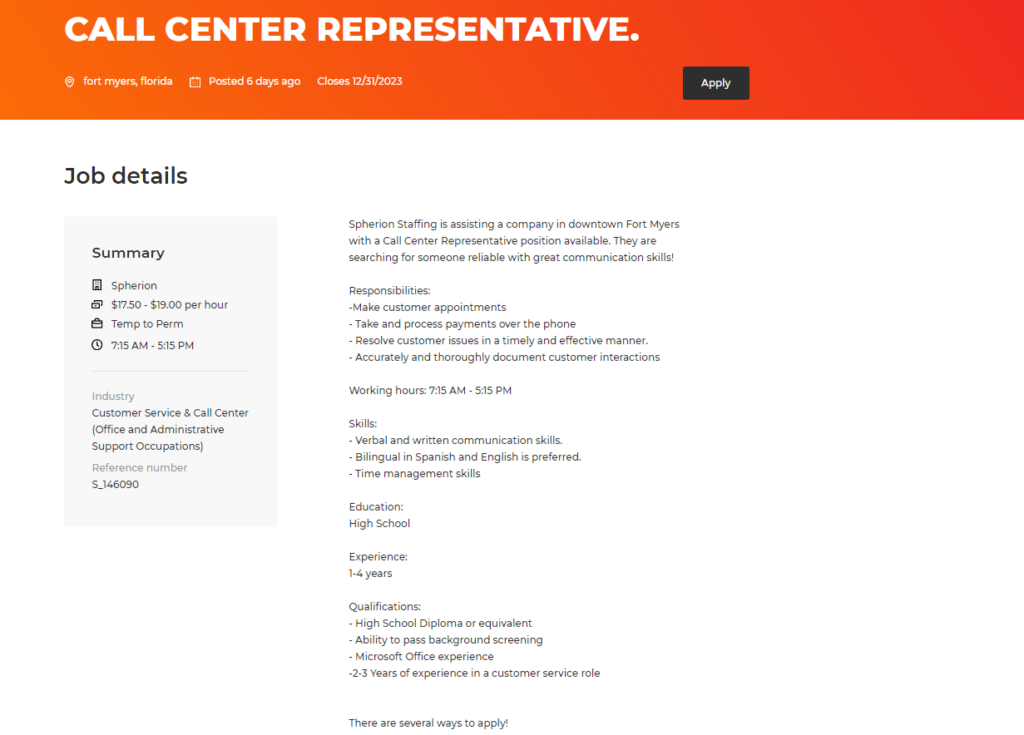
In the next section, we will delve deeper into how one can gain relevant experience efficiently and the steps to take in order to become an effective call center representative.
The job of a call center representative requires some specific skills and educational standards. In the United States, the minimum educational requirement is often a high school diploma or equivalent.
However, certain advanced positions may require a bachelor’s degree or some relevant coursework, depending on the complexity of the customer service role. Excellent communication skills, both verbal and written, fluency in the English language, and basic computer skills are often a prerequisite too.
Supplementary training programs are critical for your further skill growth. They are typically provided by employers, but can also be pursued independently. These programs may cover areas such as handling difficult customers, effective communication techniques, software applications used in CRM, call handling protocols, and more.
There are notable online platforms offering comprehensive call center training programs, often led by industry experts:
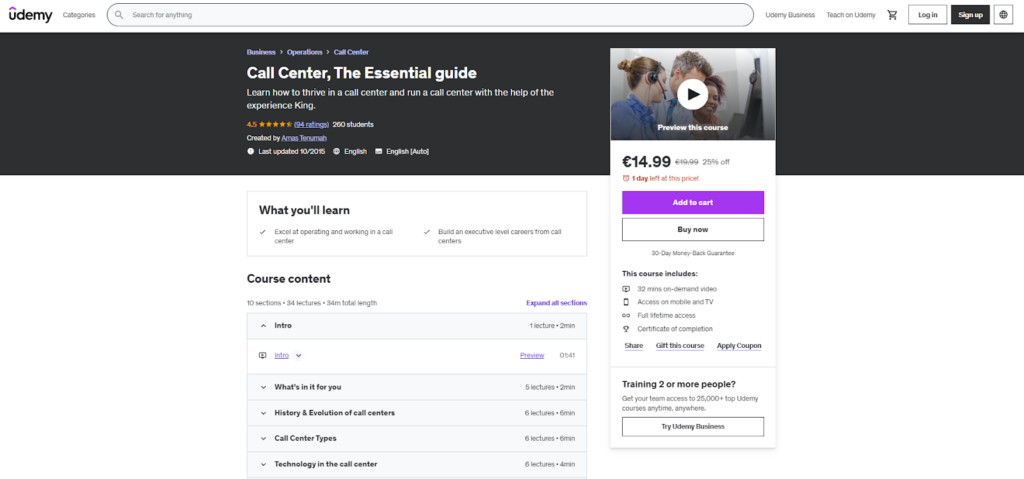
These platforms cater to both beginners and advanced learners, and often provide certificates upon course completion.
In addition to these, gaining a professional certification can enhance a representative’s recognition and credibility. For example, HDI’s Customer Service Representative (CSR) Certification and ICMI’s Certified Contact Center Professional (CCCP) are widely recognized in the industry.
Moreover, if you are interested in learning about the specific skills needed to be a successful call center representative, we have a separate article further discussing call center skills that delves into it comprehensively.
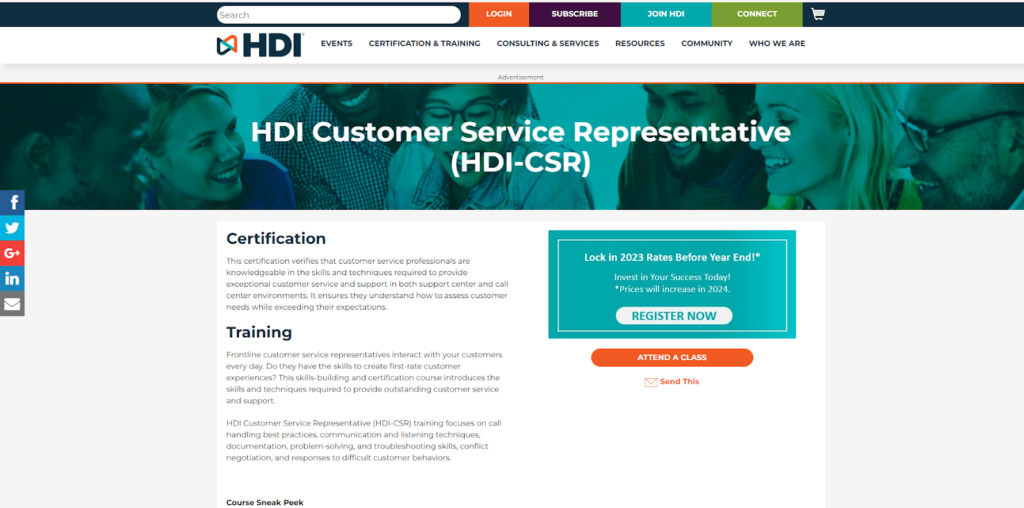
The learning process for a call center representative is continuous and involves active engagement with industry trends and customer service best practices.
Here are a few ways you can go the extra mile to excel in your career in customer service:
Remember, the most successful call center representatives are those who view their role as more than a job – it’s a craft that requires continuous learning and refinement. With the right mix of education, training, and constant learning, you can certainly excel in a customer support role.
The role of a call center representative is vital in maintaining the reputation of a company while ensuring customer satisfaction. The duties of this role vary from handling incoming and outgoing calls, providing information, troubleshooting issues, processing orders and payments, and working closely with other departments.
A successful call center representative needs to possess excellent communication skills, problem-solving abilities, thorough product knowledge, excellent time management, and much more. These are significantly complemented with a sound educational background and relevant job experience.

To further enrich your experience in the field, adopting software tools such as LiveAgent can significantly boost efficiency and productivity in customer service operations. Experience LiveAgent’s comprehensive software designed for smoother calls, efficient ticketing, and effective customer service management with its 30-day free trial.
Explore call center jobs, roles, responsibilities, salary expectations, and essential skills needed for success in 2025. Comprehensive guide for job seekers and...
Discover the role of a Customer Representative—a key player in managing customer interactions and enhancing satisfaction. Learn about essential skills, training...
Discover what a call center is, how it works, types of call centers, and best practices for running a successful call center operation. Learn about inbound, out...